 Save
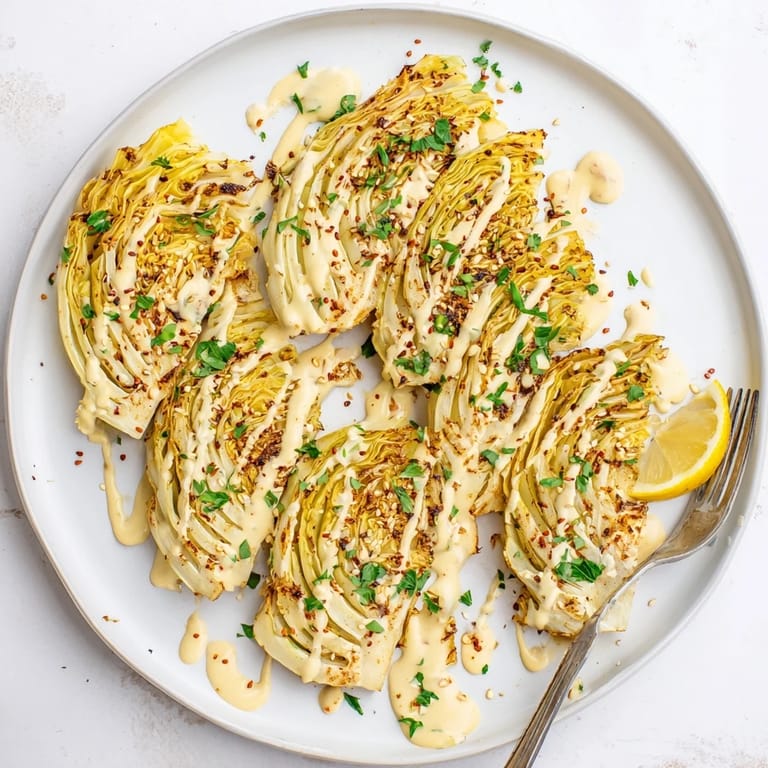
Save The first time I served roasted cabbage to skeptical dinner guests, they actually asked what restaurant I'd ordered from. That's the magic of cabbage steaks—something so humble transformed into something utterly crave-worthy with just heat and time. I love how the natural sugars emerge, creating those caramelized edges that make each bite feel like a revelation.
Last autumn, during a particularly frantic week, I made these on repeat for quick dinners. My roommate kept wandering into the kitchen asking what smelled so incredible. Now its our go-to when we need something nourishing but dont have the energy for anything complicated.
Ingredients
- 1 large green cabbage: Look for a firm heavy head with tight leaves—this ensures those beautiful intact steak slices that hold together during roasting
- 3 tbsp olive oil: Dont be shy here—this oil helps achieve that golden crispy exterior that makes roasted vegetables irresistible
- 1 tsp ground cumin: Earthy and warm, this spice adds depth that bridges the gap between ordinary and extraordinary
- 1 tsp smoked paprika: This brings a subtle smokiness that makes people think you spent way more effort than you actually did
- ½ tsp garlic powder: Distributes evenly and wont burn like fresh garlic might during high-heat roasting
- Salt and freshly ground black pepper: Essential for enhancing the cabbages natural sweetness—be generous but taste as you go
- ⅓ cup tahini: The velvety backbone of your sauce, choose a well-stirred brand for the smoothest consistency
- 2 tbsp lemon juice: Freshly squeezed is non-negotiable here—it cuts through the rich tahini and brightens the entire dish
- 1 small garlic clove: Finely minced so it disperses evenly through the sauce without overwhelming the palate
- 2–4 tbsp cold water: The secret to transforming tahini from a thick paste into a silky pourable drizzle
- 2 tbsp chopped fresh parsley: Adds a fresh herbal pop that cuts through the richness and makes everything look inviting
- 2 tbsp toasted sesame seeds: Optional but recommended—they add crunch and echo the sesame notes in the tahini
- Lemon wedges: For serving, letting everyone add an extra bright squeeze if they please
Tired of Takeout? 🥡
Get 10 meals you can make faster than delivery arrives. Seriously.
One email. No spam. Unsubscribe anytime.
Instructions
- Get your oven ready:
- Preheat to 425°F (220°C) and line a baking sheet with parchment paper—this temperature is key for achieving those caramelized edges.
- Prep your cabbage:
- Peel away any tough outer leaves, then slice the entire head into 1-inch thick rounds. Handle them gently so they stay intact as beautiful steaks.
- Season generously:
- Brush both sides of each steak with olive oil, then sprinkle with cumin, smoked paprika, garlic powder, salt, and pepper. Really massage those spices in.
- Roast to perfection:
- Arrange on your baking sheet and roast for 25-30 minutes, flipping halfway through. You want those edges golden and centers tender when pierced with a fork.
- Whisk up the magic sauce:
- In a bowl, combine tahini, lemon juice, minced garlic, and a pinch of salt. Gradually whisk in cold water one tablespoon at a time until smooth and pourable.
- Bring it all together:
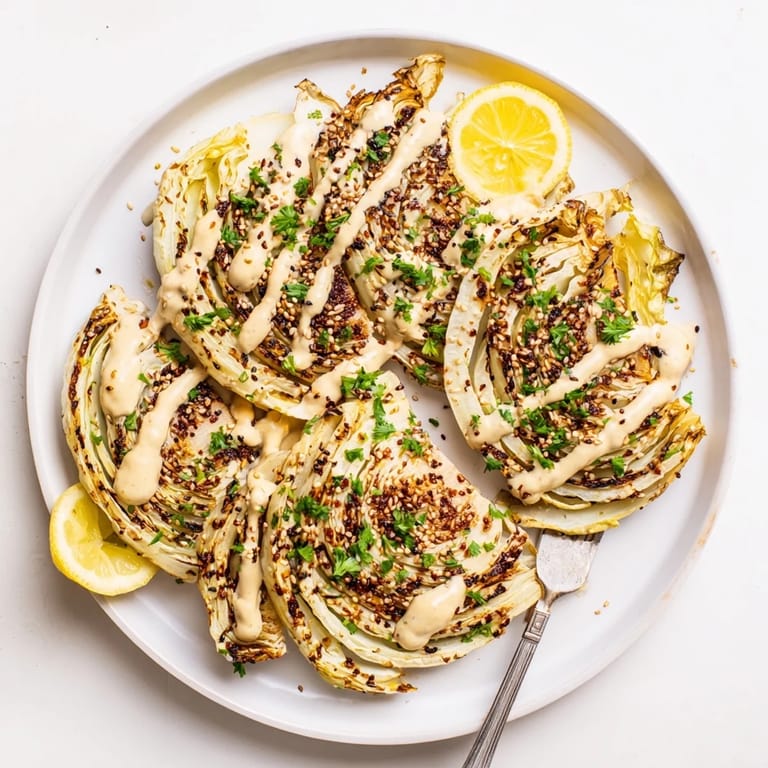
- Transfer those gorgeous roasted steaks to a platter and drizzle with tahini sauce generously. Let it pool in all those nooks and crannies.
- Finish with flourish:
- Sprinkle with fresh parsley, those toasted sesame seeds if you're using them, and serve with lemon wedges on the side.
 Save
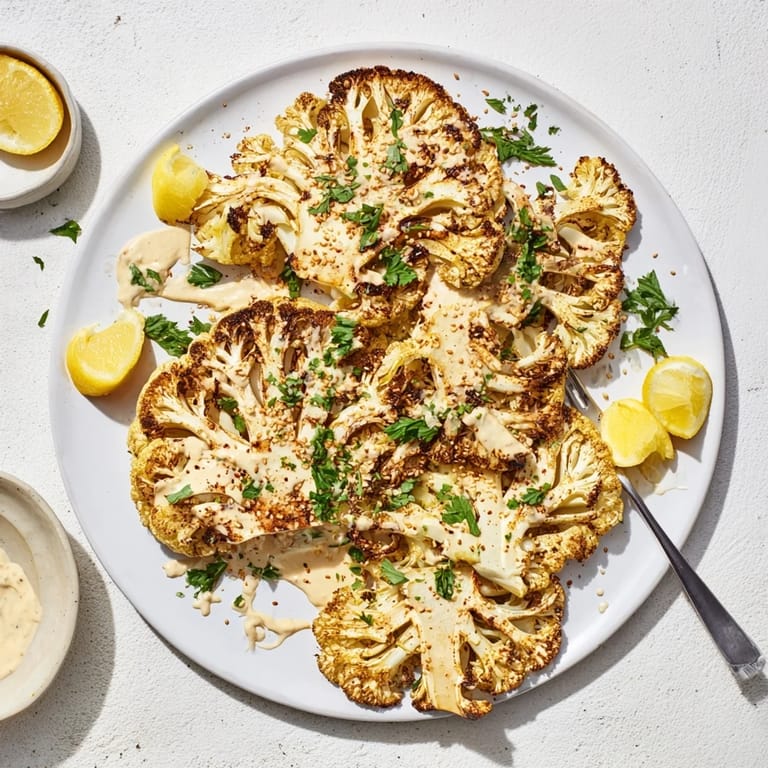
Save I made these for a friend who swore she hated cabbage, and she actually asked for the recipe before leaving. Thats the thing about this dish—it completely changes peoples minds about what vegetables can be.
Making It Your Own
Sometimes I'll add a pinch of chili flakes to the spice rub if I'm craving something with a little kick. The heat plays beautifully against the creamy tahini and sweet roasted cabbage.
Serving Suggestions
These steaks are substantial enough to stand alone as a main, especially when served over fluffy couscous or quinoa. They're equally wonderful alongside grilled fish or roasted chicken for a more traditional dinner setup.
Make Ahead Tips
The tahini sauce keeps beautifully in the fridge for up to a week, thickening slightly—just thin with a splash of water before serving. You can also slice and season the cabbage a few hours ahead, storing it covered in the fridge until you're ready to roast.
- Leftovers reheat surprisingly well in a 350°F oven for about 10 minutes
- The flavors actually deepen overnight, making this a great meal prep candidate
- Serve any leftover tahini sauce over grain bowls or roasted vegetables throughout the week
 Save
Save There's something deeply satisfying about taking the most unassuming vegetable and turning it into something that feels like a treat. That's the kind of cooking I could do forever.
Recipe Help & FAQs
- → How do I cut cabbage into steaks?
Trim off any tough outer leaves, then slice the entire head crosswise into 1-inch thick rounds. Each slice will hold together like a steak while roasting, with the core keeping the layers intact.
- → Can I make this ahead of time?
Roast the cabbage steaks up to a day in advance and store refrigerated. Reheat in a 350°F oven for 10 minutes. Make the tahini sauce fresh and drizzle just before serving for the best texture.
- → What can I serve with roasted cabbage?
Pair with fluffy couscous, quinoa, or warm pita bread. The tahini flavors complement Middle Eastern spreads like hummus or baba ganoush. Grilled chicken or lamb also work well alongside.
- → Why did my tahini sauce seize up?
Tahini naturally thickens when mixed with acidic ingredients like lemon. Keep whisking and gradually add cold water tablespoon by tablespoon until smooth and pourable. The texture will transform from stiff to creamy.
- → Can I use red cabbage instead?
Absolutely. Red cabbage works beautifully and adds vibrant purple color to the dish. The flavor is slightly sweeter and more peppery than green cabbage, making it equally delicious with the tahini.
- → How do I know when the cabbage is done?
Look for deeply browned, caramelized edges and a fork-tender center. The layers should offer slight resistance but yield easily. Flipping halfway through ensures even browning on both sides.