 Save
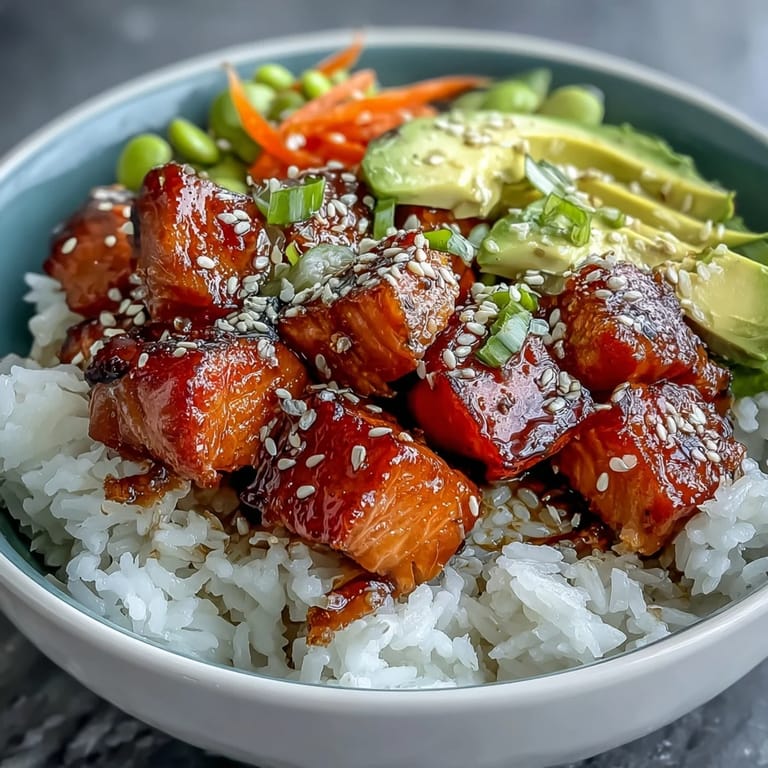
Save My cutting board was covered in bright orange cubes when my neighbor knocked, drawn by the smell of sesame and ginger drifting through my kitchen window. She peeked at the tray and asked what I was making, and I realized I didn't have a proper name for it yet—just salmon, rice, and whatever looked good at the market that morning. That bowl turned into four bowls, then into a weekly ritual we still keep. Sometimes the best recipes start without a plan.
I started making these bowls on nights when I was too tired to think but still wanted real food. The rhythm of slicing vegetables became meditative, and watching the salmon caramelize under the broiler felt like a small victory. My kids began requesting it by name, which never happens with anything green on the plate. Now its the meal I make when I want to feel like Ive got my life together, even when I definitely dont.
Ingredients
- Skinless salmon fillet: The cubes should be about two centimeters so they cook through without drying out, and skinless makes them easier to marinate evenly.
- Soy sauce: This is the salty backbone of the marinade, and using low-sodium gives you more control if youre watching salt intake.
- Sesame oil: A little goes a long way with its nutty aroma, and toasted sesame oil has more depth than plain.
- Honey or maple syrup: The sweetness balances the soy and helps the salmon edges caramelize beautifully under the broiler.
- Fresh ginger: Grated ginger adds a warm, bright kick that tastes completely different from the powdered kind.
- Garlic: One clove minced fine distributes flavor without overpowering the delicate salmon.
- Jasmine or sushi rice: Both steam up fluffy and slightly sticky, perfect for holding toppings and soaking up sauces.
- Cucumber: Thinly sliced cucumber adds cool crunch that contrasts with the warm salmon and rice.
- Shredded carrots: These bring color and a slight sweetness that plays well with the savory elements.
- Edamame: Cooked and shelled edamame adds protein and a pop of green that makes the bowl feel complete.
- Avocado: Sliced avocado brings creamy richness and healthy fats that round out the textures.
- Green onions: Thinly sliced green parts add a mild onion flavor and visual brightness.
- Toasted sesame seeds: These add a final nutty crunch and make the bowl look polished and intentional.
- Sriracha mayo: The creamy heat ties everything together, and you can adjust the spice level to your liking.
Tired of Takeout? 🥡
Get 10 meals you can make faster than delivery arrives. Seriously.
One email. No spam. Unsubscribe anytime.
Instructions
- Preheat and Prep:
- Turn your oven to 220 degrees Celsius and line a baking tray with parchment paper so the salmon wont stick. This high heat will give you those lightly browned edges that make the fish irresistible.
- Marinate the Salmon:
- Whisk together soy sauce, sesame oil, honey, grated ginger, minced garlic, and black pepper in a bowl until the honey dissolves. Toss in the salmon cubes and let them sit for ten minutes, turning them once so every piece gets coated.
- Cook the Rice:
- Rinse your rice under cold water until it runs clear to remove excess starch, then combine it with water and salt in a saucepan. Bring it to a boil, reduce the heat to low, cover, and let it simmer for twelve to fifteen minutes until the water is absorbed and the rice is tender.
- Broil the Salmon:
- Arrange the marinated salmon cubes in a single layer on your prepared tray, leaving a little space between each piece. Broil or bake for eight to ten minutes until the salmon is just cooked through and the edges are golden and slightly caramelized.
- Prep Fresh Toppings:
- While everything cooks, slice your cucumber, shred the carrots, shell the edamame if needed, and slice the avocado and green onions. Having everything ready makes assembly quick and satisfying.
- Assemble the Bowls:
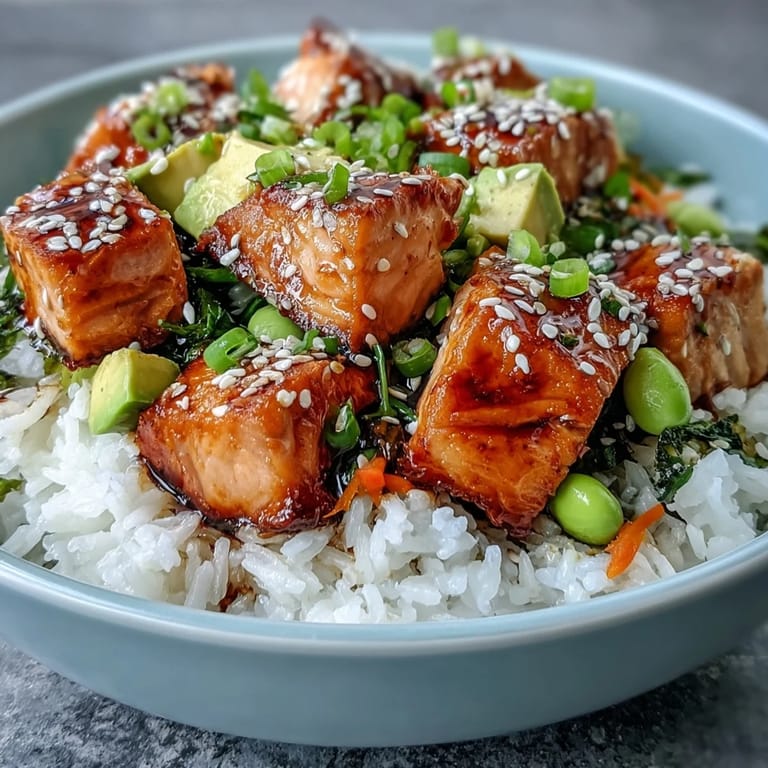
- Fluff the rice with a fork and divide it among four bowls, then top each with broiled salmon, cucumber, carrots, edamame, avocado, and green onions. Drizzle with your chosen sauces, sprinkle sesame seeds over everything, and add lime wedges on the side.
- Serve:
- Serve immediately while the salmon is still warm and the vegetables are crisp. Squeeze lime over the top just before eating for a bright citrus finish.
 Save
Save The first time I brought these bowls to a potluck, someone asked if Id picked them up from that new poke place downtown. When I said I made them at home, three people asked for the recipe on the spot. It felt good knowing something so simple could look and taste that impressive. Now I make extra on purpose, because leftovers in the fridge mean lunch is already handled.
Choosing Your Salmon
I buy the thickest part of the fillet I can find, usually from the center, because it cuts into neat cubes without falling apart. If the salmon has skin, I ask the fishmonger to remove it, which saves me time and a slippery cutting board. Fresh salmon should smell like the ocean, not fishy, and the flesh should bounce back when you press it lightly. Frozen salmon works fine too if you thaw it overnight in the fridge and pat it completely dry before marinating.
Making It Your Own
Some nights I swap the avocado for mango when its in season, and the sweetness plays beautifully with the salty soy and spicy mayo. Brown rice or quinoa can replace white rice if you want more fiber, though youll need to adjust the cooking time. Ive added pickled radish, roasted nori strips, and even crispy shallots depending on whats in the pantry. The base stays the same, but the toppings can shift with your mood or whatever needs to be used up.
Storage and Leftovers
I store the components separately in the fridge so everything stays fresh and the rice doesnt get soggy. The salmon keeps for up to two days, the rice for three, and the raw vegetables stay crisp for about four days if kept in airtight containers. When Im ready to eat, I reheat the rice and salmon gently in the microwave and build a fresh bowl with cold toppings.
- Reheat salmon on fifty percent power to keep it from drying out.
- Add a splash of water to the rice before reheating so it steams back to life.
- Keep sauces separate until serving so nothing gets watery or diluted.
 Save
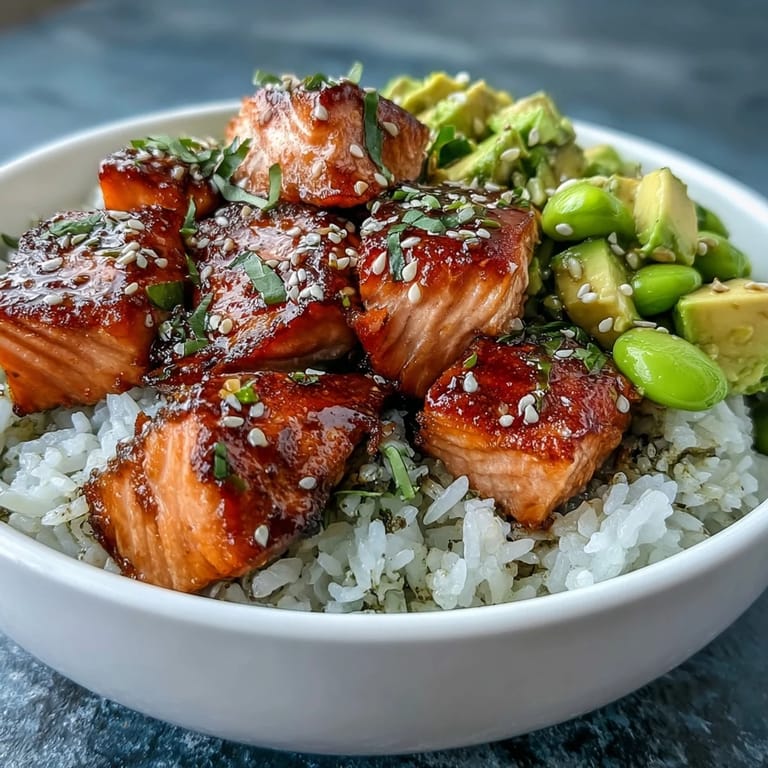
Save This bowl has become my answer to almost everything, quick dinners, meal prep, unexpected guests, and nights when I just need something that feels nourishing without a lot of fuss. I hope it becomes that kind of recipe for you too.
Recipe Help & FAQs
- → Can I use frozen salmon cubes?
Yes, frozen salmon works well for this bowl. Thaw completely before marinating to ensure even cooking and proper flavor absorption. Pat dry with paper towels after thawing to remove excess moisture.
- → What other grains can I use?
Brown rice, quinoa, or cauliflower rice make excellent substitutes. Adjust cooking times accordingly—brown rice takes about 45 minutes, quinoa cooks in 15 minutes, and cauliflower rice needs just 5-8 minutes.
- → Can I meal prep these bowls?
Absolutely. Store rice, salmon, and vegetables in separate airtight containers for up to 4 days. Reheat salmon and rice gently, then add fresh vegetables and sauces when ready to eat.
- → Is this bowl gluten-free?
Yes, if you use tamari instead of soy sauce and ensure all condiments are certified gluten-free. The sriracha mayo can be made with gluten-free sriracha and mayonnaise.
- → What vegetables work best?
Crisp vegetables like cucumber, carrots, and radishes provide great texture contrast. Shredded red cabbage, bell peppers, or steamed broccoli also work beautifully. Choose vegetables that hold their crunch.
- → Can I grill the salmon instead?
Grilling works perfectly. Thread marinated salmon cubes onto skewers and grill for 2-3 minutes per side over medium-high heat. The smoky char adds delicious depth to the bowl.