 Save
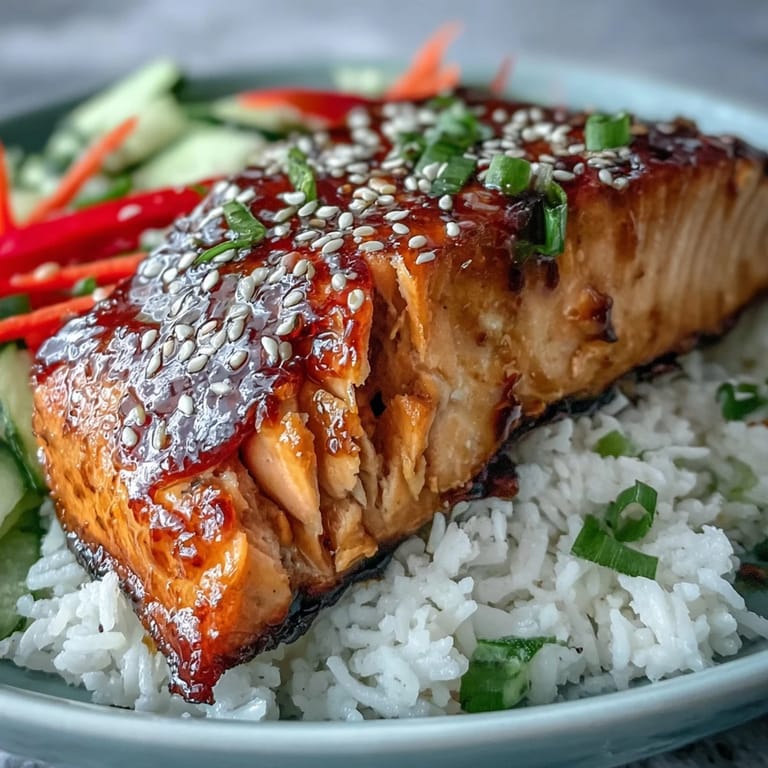
Save My neighbor knocked on my door one Tuesday evening holding a bowl of something colorful and steaming, insisting I try what she called her weeknight miracle. One bite of that soy-glazed salmon over rice with those bright vegetables changed how I thought about quick dinners. I asked for the recipe immediately, scribbling notes on the back of an envelope while she laughed at my enthusiasm. That bowl became my go-to whenever I needed something that felt special but didn't require hours in the kitchen. Now I make it at least twice a month, tweaking the glaze each time until it tastes just right.
I made this for my book club once, setting up a little assembly station so everyone could build their own bowls. Watching four different people arrange the same ingredients in completely different ways taught me that this recipe is really just a framework. Some piled on extra edamame, others went heavy on the cucumber, and one friend drowned hers in the glaze. We stood around my kitchen island, chopsticks clicking, talking about everything except the book we were supposed to discuss.
Ingredients
- Salmon fillets: Choose pieces with the skin on if you like it crispy, or ask for skinless if that is not your thing, and look for bright, firm flesh that smells like the ocean, not fishy.
- Soy sauce: This is the salty backbone of the glaze, and I learned the hard way that low-sodium works better because you can always add more salt but you cannot take it back.
- Honey: It balances the soy and helps the glaze cling to the salmon, turning golden and sticky in the oven instead of just sliding off.
- Fresh ginger: Grate it on the smallest holes of your grater so it melts into the glaze, and do not skip peeling it first or you will get weird stringy bits.
- Garlic: Minced fine so it does not burn, and I always use fresh because the jarred stuff tastes flat in this glaze.
- Rice vinegar: Adds a gentle tang that keeps the glaze from being too sweet, and it is milder than white vinegar so it does not overpower.
- Sesame oil: Just a tablespoon gives that toasted, nutty flavor that makes everything taste more complex than it actually is.
- Jasmine rice: Fluffy and slightly fragrant, it is the perfect base that soaks up the glaze without getting mushy.
- Carrots, cucumber, red bell pepper: Julienned thin so they stay crisp and add color, and I use a mandoline to save time and keep the cuts even.
- Edamame: I buy the frozen shelled kind, run hot water over them, and they are ready, adding protein and a pop of green.
- Sesame seeds: Toast them in a dry pan for two minutes and the nutty aroma will fill your kitchen and make everything taste more intentional.
- Scallions: Sliced thin on an angle because it looks prettier, and they add a sharp, fresh bite at the end.
Tired of Takeout? 🥡
Get 10 meals you can make faster than delivery arrives. Seriously.
One email. No spam. Unsubscribe anytime.
Instructions
- Rinse and cook the rice:
- Run cold water over the rice in a fine mesh strainer until the water is clear, not cloudy, then combine it with water in a saucepan. Bring it to a boil, cover tightly, lower the heat, and let it simmer undisturbed for 15 minutes before letting it rest off the heat for another 10.
- Make the glaze:
- Whisk together soy sauce, honey, grated ginger, minced garlic, rice vinegar, and sesame oil in a small bowl until everything is smooth. If you want it thicker, stir cornstarch into a tablespoon of water first, then whisk it into the glaze.
- Prep the salmon:
- Heat your oven to 200 degrees Celsius and line a baking sheet with parchment so cleanup is easy. Place the salmon fillets on the sheet and brush them generously with the glaze, saving some for later.
- Bake the salmon:
- Slide the baking sheet into the oven and bake for 12 to 14 minutes, until the salmon flakes easily with a fork and the glaze looks glossy. Do not overcook it or it will turn dry and sad.
- Thicken the extra glaze:
- Pour the leftover glaze into a small saucepan and bring it to a simmer over medium heat, stirring constantly until it thickens. This only takes a minute or two, and it becomes the perfect drizzle for the finished bowls.
- Julienne the vegetables:
- Cut the carrots, cucumber, and bell pepper into thin matchsticks while the salmon bakes, and arrange them on a plate so assembly is quick. I like keeping them separate so each bowl can be customized.
- Assemble the bowls:
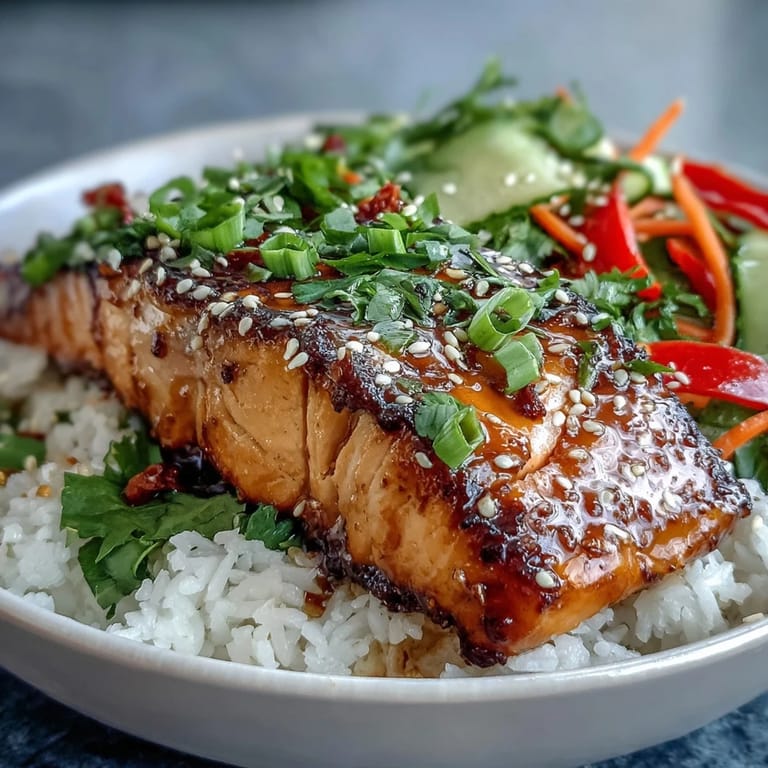
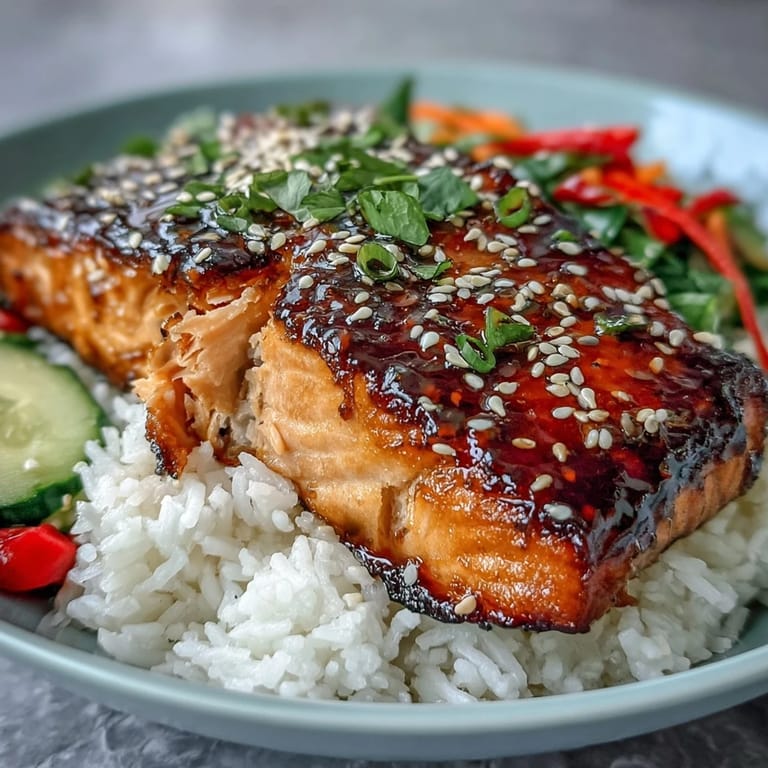
- Divide the cooked rice among four bowls, place a salmon fillet on top of each, and arrange the vegetables and edamame around the fish. Drizzle with the thickened glaze, sprinkle sesame seeds and scallions over everything, and add lime wedges on the side.
 Save
Save My sister texted me a photo of her version of this bowl at midnight once, admitting she had been craving it all week and finally gave in. She said she ate it standing at her counter, straight from the pan, because sometimes that is exactly what you need. I loved that this recipe had become her comfort food too, something she turned to when she wanted to feel good without much effort.
Choosing Your Salmon
I used to grab whatever salmon was on sale until I noticed the difference between wild and farmed, and now I pay attention to the color and texture. Wild salmon has a deeper red color and firmer flesh, while farmed is lighter and fattier, both work beautifully but wild cooks a minute or two faster. Ask the person at the fish counter what came in that day, and look for fillets that glisten and smell clean. If you can only find frozen, thaw it in the fridge overnight and pat it completely dry with paper towels before glazing or the sauce will slide right off.
Getting the Vegetables Right
The first time I made this, I chopped the vegetables into big chunks and the whole bowl felt clunky and hard to eat with chopsticks. Julienning them thin makes every bite balanced, and using a mandoline slicer changed my life because it takes seconds instead of minutes. If you do not have one, a sharp knife and a little patience work just fine, and keeping the cuts uniform means they look intentional instead of haphazard. I like to soak the julienned vegetables in ice water for ten minutes to make them extra crisp, then drain and pat them dry before assembling.
Making It Your Own
This bowl is incredibly forgiving and practically begs you to experiment once you have made it the first time. Swap jasmine rice for brown rice or quinoa if you want more fiber, or try cauliflower rice for a low-carb version that still soaks up the glaze. Add sliced avocado for creaminess, pickled ginger for tang, or a handful of shredded purple cabbage for crunch and color.
- Drizzle sriracha mayo over the top if you want heat and richness in every bite.
- Toss in some roasted broccoli or snap peas if you have extra vegetables that need using up.
- Finish with a sprinkle of furikake seasoning for an extra layer of umami and sesame flavor.
 Save
Save This bowl has become my answer to the question of what to make when I want something nourishing, colorful, and satisfying without spending my whole evening in the kitchen. I hope it becomes that for you too.
Recipe Help & FAQs
- → Can I use frozen salmon fillets?
Yes, frozen salmon works well. Thaw completely in the refrigerator overnight before cooking. Pat dry with paper towels to remove excess moisture for better glaze adhesion.
- → What vegetables can I substitute?
Shredded purple cabbage, snap peas, or thinly sliced radishes work beautifully. Add avocado for creaminess or pickled ginger for extra tang. Use whatever fresh produce you have on hand.
- → How do I store leftovers?
Keep components separate in airtight containers. Refrigerate for up to 3 days. Reheat salmon gently in the microwave or oven. Serve vegetables cold or at room temperature.
- → Can I make this gluten-free?
Absolutely. Replace regular soy sauce with tamari or coconut aminos. Verify all other ingredients are certified gluten-free. The flavor remains delicious with this simple substitution.
- → Can I grill the salmon instead?
Grilling adds wonderful smoky flavor. Brush salmon with glaze and grill over medium-high heat for 4-5 minutes per side. The caramelized exterior pairs perfectly with the fresh vegetables.
- → Is the glaze spicy?
The glaze is savory and slightly sweet with gentle warmth from fresh ginger. It's not spicy in the traditional sense, but you can add sriracha or red pepper flakes if you enjoy heat.