 Save
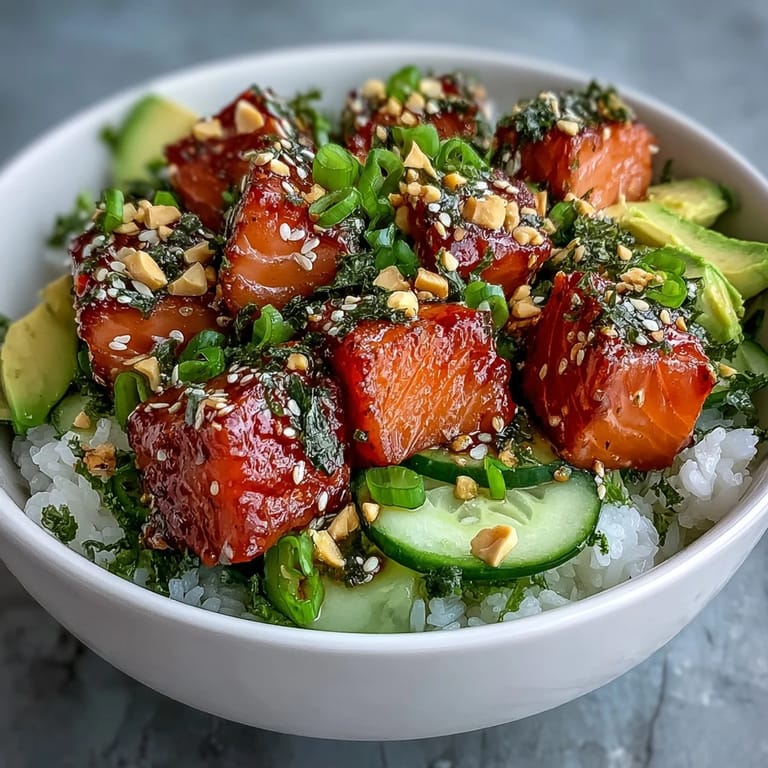
Save There was this craving one Tuesday evening, something bright and filling but not heavy. I had salmon in the fridge, leftover rice from the night before, and half an avocado threatening to turn brown. Instead of panicking, I started layering things into a bowl, drizzling whatever looked good, and ended up with something I've made at least a dozen times since. It wasn't planned, just hungry intuition.
I made this for a friend who said she didn't like salmon. She finished the entire bowl and asked for the recipe on her phone before leaving. Sometimes all it takes is good sauce and a little crunch to change someone's mind. Now she texts me photos every time she makes it herself.
Ingredients
- Fresh salmon fillet: Use sushi-grade if you can find it, the flavor is cleaner and it marinates beautifully without turning mushy.
- Tamari sauce: This is your umami backbone, tamari is less salty and richer than regular soy sauce, and it keeps the bowl gluten-free if that matters to you.
- Toasted sesame oil: A few drops go a long way, this is what makes the marinade smell like something special is happening.
- Rice vinegar: It brightens both the rice and the marinade, cutting through the richness without being sharp.
- Honey or agave syrup: Just enough sweetness to balance the salt and tang, agave works great if you want to keep it vegan-friendly for other versions.
- Sushi rice: Short-grain rice holds the seasonings and stays sticky enough to support all the toppings without falling apart.
- Ripe avocado: Look for one that gives just slightly when you press it, too firm and it won't be creamy, too soft and it turns to mush when you slice it.
- Roasted peanuts: These add crunch and a toasted flavor that plays off the chili oil, I like them roughly chopped so you get little bursts in each bite.
- Chili oil: This is where the heat lives, start with less and add more as you go, some brands are much spicier than others.
- Wasabi paste: A tiny dab is enough, it should tingle not punish, and it wakes up the whole bowl.
- Nori sheet: Optional but worth it, the strips add a hint of the ocean and a delicate crunch.
- Cucumber: Thinly sliced cucumber brings coolness and a snap that balances the richness of the salmon and avocado.
- Spring onions: They add a mild sharpness and a pop of green, I slice them thin on the bias because it looks nicer.
- Toasted sesame seeds: These are the final little touch, nutty and just pretty enough to make the bowl feel finished.
Tired of Takeout? 🥡
Get 10 meals you can make faster than delivery arrives. Seriously.
One email. No spam. Unsubscribe anytime.
Instructions
- Marinate the salmon:
- Whisk together tamari, sesame oil, rice vinegar, and honey until smooth, then toss in the salmon cubes and make sure every piece is coated. Cover the bowl and let it sit in the fridge for 10 to 15 minutes, just long enough for the flavors to soak in without curing the fish.
- Season the rice:
- Mix your cooked sushi rice with rice vinegar, sugar, and a pinch of salt while it's still warm so it absorbs everything. Keep it covered so it stays soft and sticky.
- Prep your toppings:
- Slice the avocado, chop the peanuts, cut the nori into thin strips, and slice the cucumber and spring onions. Having everything ready makes assembly feel like putting together a little edible sculpture.
- Build the bowls:
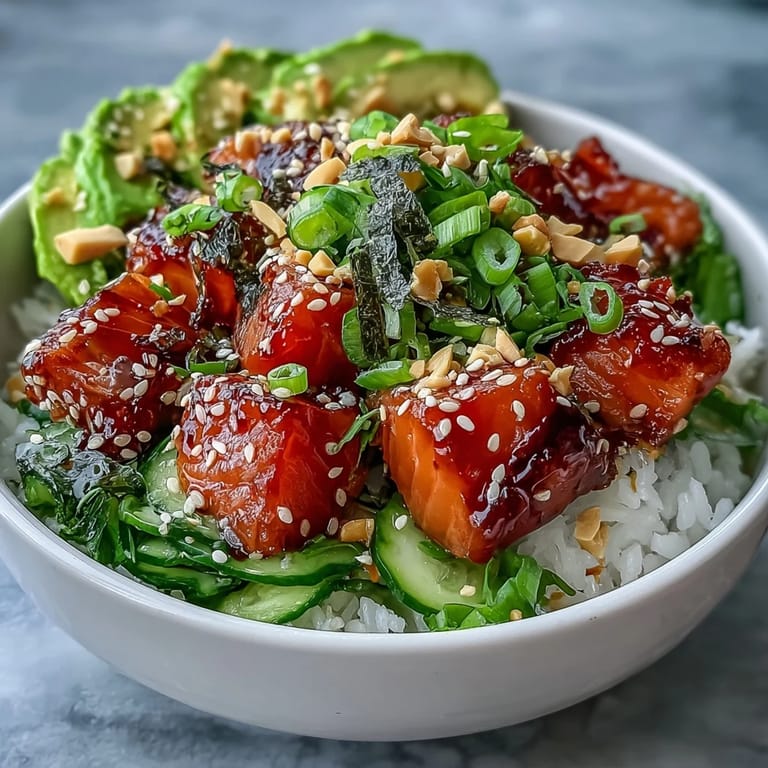
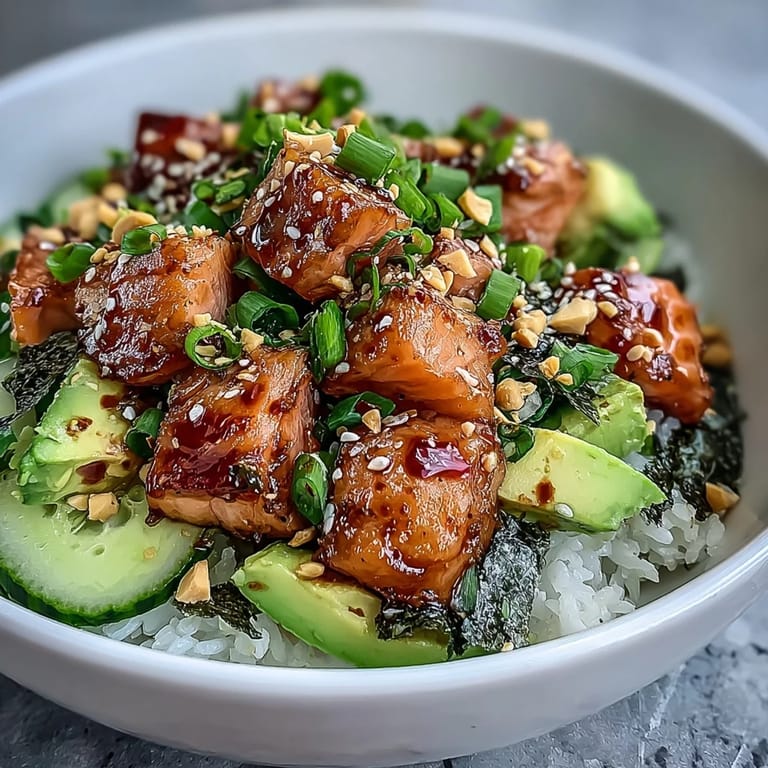
- Divide the seasoned rice between two bowls, pressing it down gently to create a base. Arrange the marinated salmon, avocado, cucumber, and spring onions on top in sections so each ingredient gets its moment.
- Add the flavor bombs:
- Drizzle chili oil over everything and add small dabs of wasabi paste where you want a kick. Go light at first, you can always add more but you can't take it back.
- Finish with crunch:
- Sprinkle roasted peanuts, sesame seeds, and nori strips over the top. Add cilantro or microgreens if you have them, and tuck a lime wedge on the side for squeezing.
 Save
Save One night I made this after a long day and realized halfway through that I was smiling while I assembled it. There's something calming about arranging colorful ingredients in a bowl, like edible therapy. It turned into the kind of meal I make when I need to reset, not just eat.
Choosing Your Salmon
Fresh salmon should smell like the ocean, not fishy, and the flesh should be firm and bright. I look for wild-caught when I can, it has more flavor and a firmer texture that holds up better in the marinade. If you're using frozen, let it thaw slowly in the fridge overnight so it doesn't get watery. Pat it dry before cutting it into cubes, moisture is the enemy of a good sear if you decide to cook it instead of serving it marinated.
Making It Your Own
This bowl is more of a template than a strict recipe. I've swapped salmon for seared tuna, added pickled ginger, thrown in edamame, or used quinoa instead of rice when I felt like it. One time I had no wasabi and used a dab of horseradish mixed with a little soy sauce, and it worked surprisingly well. The key is balancing something creamy, something crunchy, something spicy, and something fresh.
Storing and Meal Prep
You can prep most of this ahead, marinate the salmon in the morning, cook and season the rice, and chop all your toppings so assembly takes five minutes. Just keep the avocado unsliced until you're ready to serve or it will brown. If you have leftovers, store the components separately and rebuild the bowl fresh, nobody likes soggy rice or wilted greens.
- Marinated salmon keeps in the fridge for up to one day, don't push it longer.
- Seasoned rice stays good for two days covered tightly, reheat gently with a splash of water.
- Sliced toppings like cucumber and spring onion are best used within 24 hours for crunch.
 Save
Save This bowl has become my go-to when I want something that feels special without the fuss. It's proof that you don't need a long ingredient list or complicated techniques to make something you'll crave again and again.
Recipe Help & FAQs
- → Can I prepare the components ahead of time?
Yes, you can cook the rice and prepare the toppings up to a day in advance. Store them separately in airtight containers in the refrigerator. Marinate the salmon just before assembling for the best texture and flavor absorption.
- → What's the best way to achieve perfectly seasoned sushi rice?
Mix the rice vinegar, sugar, and salt while the rice is still warm—this helps the seasoning absorb evenly. Fold gently with a paddle to avoid mashing the grains. Let it cool slightly before assembling your bowls.
- → How do I adjust the spice level?
Start with less chili oil and wasabi paste, then add gradually to taste. The heat from both ingredients builds, so it's easier to add more than to correct an overly spicy bowl. Serve extra lime wedges to help balance intense heat.
- → Can I use other types of fish?
Ahi tuna works beautifully as a substitute—serve it seared or raw like poke. Cooked shrimp or teriyaki-glazed cod also complement the Asian flavors well. Adjust marinating time based on your fish choice.
- → What makes this bowl nutritionally balanced?
The salmon provides high-quality protein and omega-3 fatty acids, while avocado contributes healthy fats. Sushi rice offers sustained energy, and the variety of vegetables adds fiber, vitamins, and minerals for a complete meal.
- → How can I make this bowl gluten-free?
Use certified gluten-free tamari instead of soy sauce, and verify your rice vinegar and chili oil are gluten-free. Most sushi rice is naturally gluten-free, but always check packaged seasonings for hidden wheat ingredients.