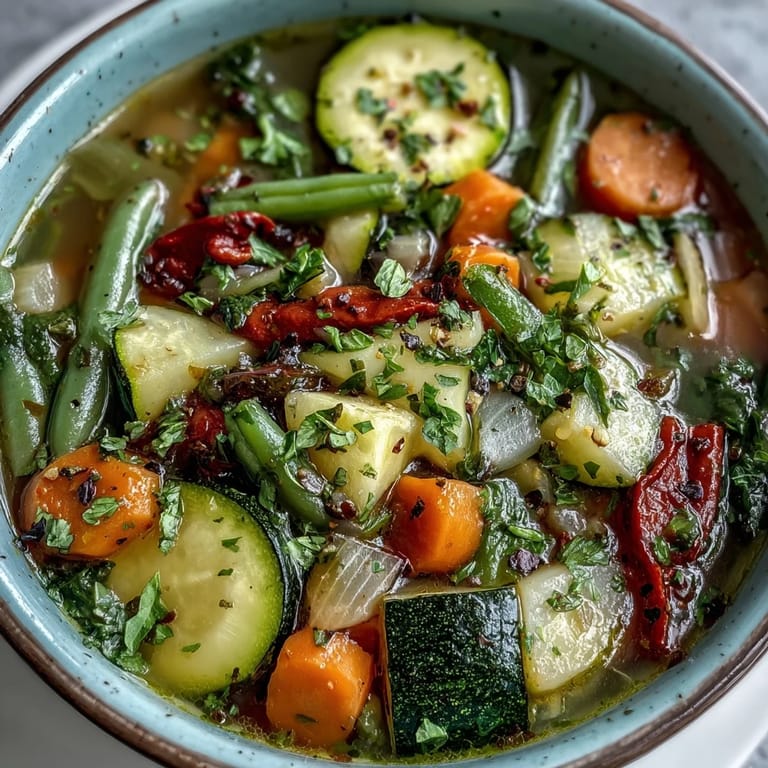
 Save
Save There's something magical about the moment when a pot of soup transforms from separate ingredients into something unified and warm. I learned this on a crisp autumn afternoon when I was rushing through the farmers market, grabbing whatever looked vibrant and fresh, with no real plan beyond making something that tasted like home. As I chopped those vegetables and the kitchen filled with the scent of garlic and herbs, I realized I wasn't just making soup—I was creating comfort in a bowl, the kind that tastes like it's been simmering in someone's kitchen for generations.
I made this soup for my neighbor when she wasn't feeling well, and she actually called me the next day asking for the recipe. That's when I knew it had crossed from being just my favorite thing to cook into something worth sharing and remembering. The simplicity of it felt almost humble, but it did exactly what food is supposed to do—it made someone feel seen and cared for.
Ingredients
- Olive oil: Use a good quality one if you can, because you'll taste it in those first moments when you're building flavor with the onion and garlic.
- Onion and garlic: These are your flavor foundation, so don't rush them—give them a full 2 to 3 minutes to become soft and fragrant.
- Carrots, celery, and zucchini: The holy trinity gets a Mediterranean twist here, bringing natural sweetness and structure to the broth.
- Red bell pepper: This adds brightness and a subtle sweetness that rounds out the earthier vegetables.
- Green beans: Keep them cut small so they cook evenly and add a little textural contrast to each spoonful.
- Diced tomatoes: Canned works beautifully here because the tomatoes have already given up their flavor to the liquid, and you get both at once.
- Vegetable broth: Don't skimp on this—it's the backbone of everything, so choose one you actually enjoy tasting on its own.
- Potato: Diced small, it becomes almost creamy as it breaks down, thickening the soup naturally without any cream.
- Baby spinach: Add it at the very end so it stays vibrant and tender, not faded and mushy.
- Dried oregano, basil, thyme, and rosemary: These herbs are what make this soup taste Italian—together they're more powerful than any single one alone.
- Bay leaf: It seems subtle until you forget it, then you realize how much warmth it brings to the whole pot.
- Cannellini beans (optional): If you add these, the soup becomes more substantial and filling, almost a complete meal on its own.
Tired of Takeout? 🥡
Get 10 meals you can make faster than delivery arrives. Seriously.
One email. No spam. Unsubscribe anytime.
Instructions
- Start with warmth and fragrance:
- Pour your olive oil into a large pot and let it heat gently over medium heat. Once it's shimmering, add your diced onion and minced garlic, and let them soften for 2 to 3 minutes, stirring occasionally—you're looking for that moment when the kitchen starts to smell undeniably Italian.
- Build your vegetable foundation:
- Add the carrots, celery, zucchini, red bell pepper, and green beans to the pot, stirring them through the aromatic oil. Let them cook for 5 to 6 minutes, tossing occasionally, until they start to look a little softer at the edges but still hold their shape.
- Introduce the broth and seasonings:
- Pour in your diced tomatoes with all their juices, then add the vegetable broth and diced potato. Sprinkle in the oregano, basil, thyme, rosemary, and bay leaf, season with salt and pepper, and give everything a good stir to combine.
- Let it simmer:
- Bring the soup up to a boil, then lower the heat and let it simmer uncovered for 20 to 25 minutes. The vegetables will become tender, the broth will deepen in color, and the whole pot will smell absolutely incredible—this is when you know it's working.
- Add beans if you're using them:
- If you've decided to include cannellini beans, stir them in now and let everything cook together for another 5 minutes so they heat through and meld into the soup.
- Finish with spinach:
- Remove the bay leaf and discard it, then stir in your baby spinach and let it cook for just 1 to 2 minutes until it's wilted and tender. Taste the soup now and adjust the salt and pepper to your preference—this is your last chance to make it exactly right.
- Serve and enjoy:
- Ladle the soup into bowls, and if you'd like, top with fresh chopped parsley and a shower of Parmesan cheese. Serve it hot while it's still steaming.
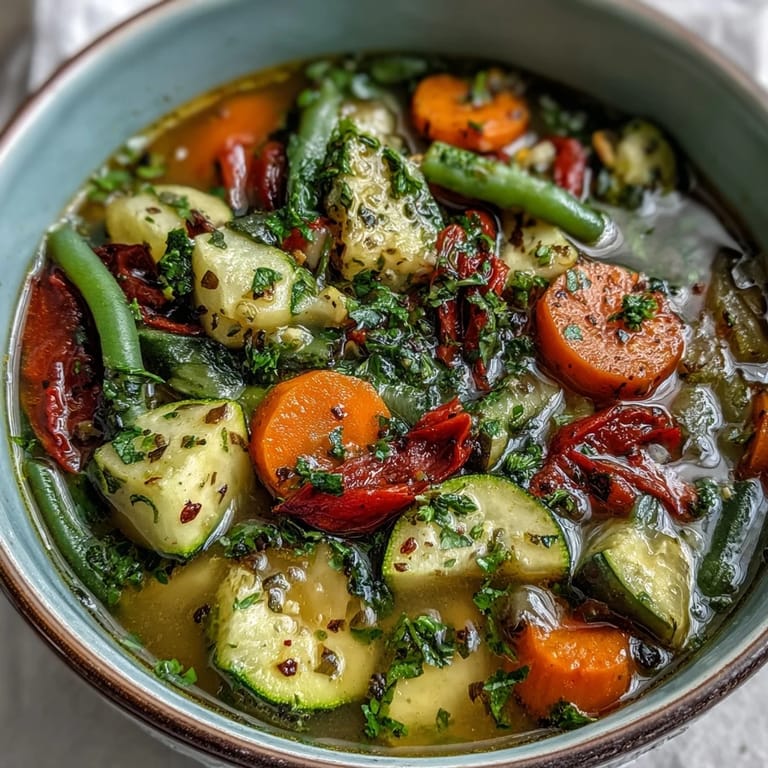 Save
Save One evening, I made this soup while someone I cared about sat on a stool in the kitchen, talking through a difficult day. By the time we poured it into bowls, the conversation had shifted and softened, and somehow the warmth of that meal made everything feel a little more manageable. That's when I understood that soup is never just about nourishment—it's about presence and care served in a spoon.
Why This Soup Tastes Like Home
What makes this soup feel so complete is the balance between the fresh vegetables and the dried herbs. The herbs give you the feeling that this has been simmering for hours, even though it hasn't, while the vegetables stay bright and recognizable in every spoonful. It's the kind of dish that feels traditional without being fussy, and homemade without requiring any special skills.
Making It Your Own
The beauty of this recipe is that it's a template as much as it is a formula. I've made it with different seasonal vegetables depending on what looked good at the market, and I've experimented with adding small pasta shapes like ditalini or orzo for extra heartiness. One time I added a splash of white wine, and another time I stirred in a can of white beans instead of cannellini, and both versions tasted absolutely right.
Storage and Freezing Tips
This soup becomes even more delicious the next day, when all the flavors have had time to marry and deepen. It also freezes beautifully, so on days when I know I'll be busy, I double the recipe and freeze half in portions. The best approach is to cool the soup completely before freezing, and it will keep well for up to three months in an airtight container.
- Cool the soup completely before transferring it to freezer-safe containers to prevent condensation.
- Leave a little space at the top of each container because the soup will expand slightly as it freezes.
- When you're ready to eat it, thaw it overnight in the refrigerator and reheat gently on the stovetop with a splash of extra broth if needed.
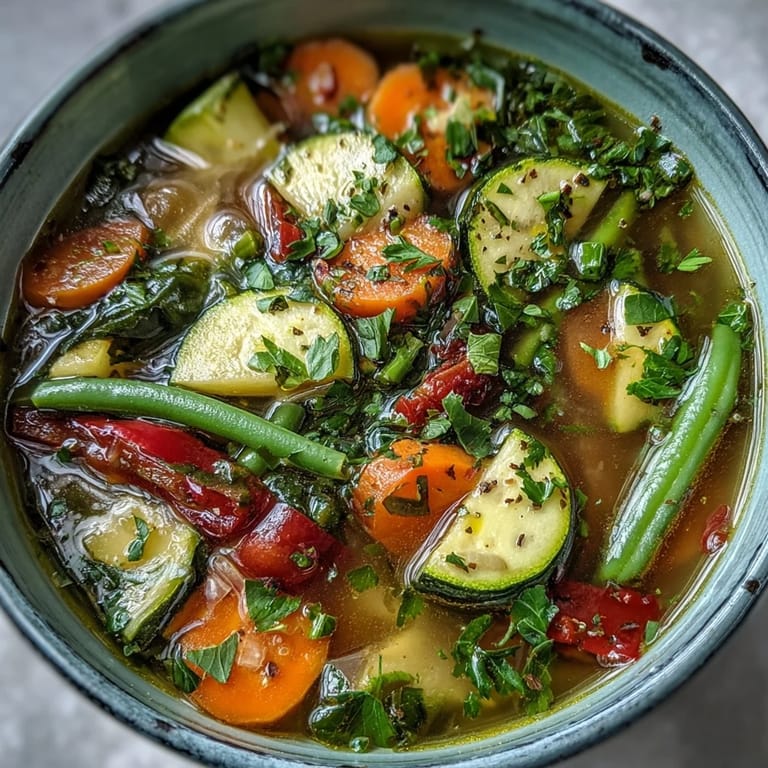 Save
Save This soup has become my answer to almost any occasion—when someone needs comfort, when I want something that tastes homemade, or when I'm looking for a meal that feels both light and satisfying. There's nothing fancy about it, and that's exactly why it works.
Recipe Help & FAQs
- → Can I make this soup ahead of time?
Yes, the flavors actually improve after sitting overnight. Cool completely and refrigerate for up to 4 days or freeze for 3 months.
- → What vegetables work best in this soup?
Carrots, celery, zucchini, bell peppers, and green beans provide excellent texture. You can also add chopped kale, Swiss chard, or butternut squash.
- → How do I make this more filling?
Add cannellini beans during the last 5 minutes of cooking or stir in small pasta like ditalini or orzo during the final 10 minutes.
- → Can I use fresh herbs instead of dried?
Absolutely. Use three times the amount of fresh herbs. Add delicate herbs like basil and parsley at the end to preserve their bright flavor.
- → Is this suitable for meal prep?
Perfect for batch cooking. The soup holds well in the refrigerator for several days and freezes beautifully in individual portions.
- → How do I adjust the seasoning?
Taste near the end of cooking. Add more salt, pepper, or herbs as needed. A splash of balsamic vinegar can brighten the flavors.