 Save
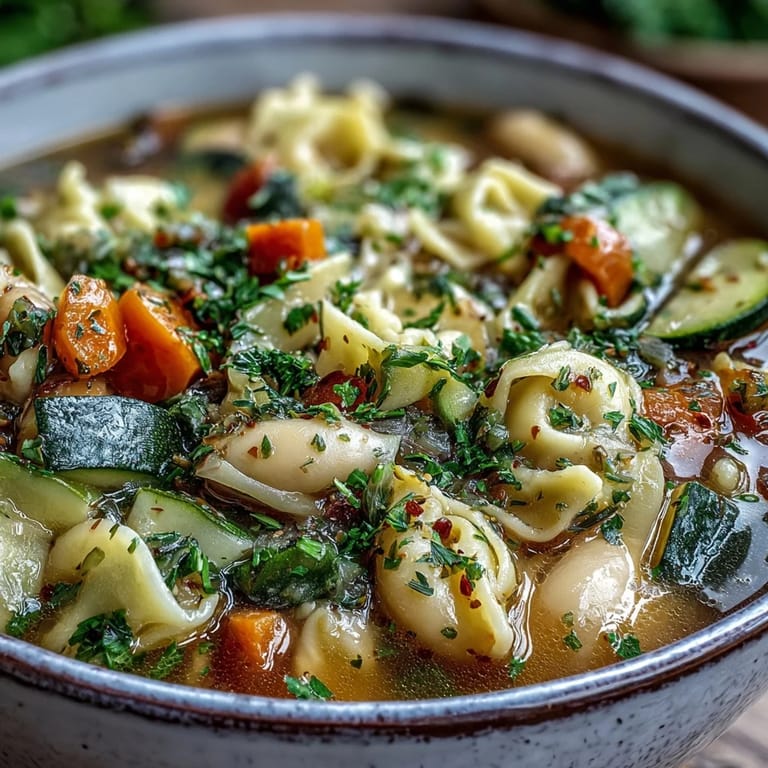
Save There's something about the smell of soffritto hitting hot oil that makes you pause mid-conversation and just breathe it in. I discovered minestrone not through an Italian grandmother but through a farmer's market haul gone slightly wild—too many carrots, an odd zucchini, some celery I wasn't sure about. Rather than let them wilt, I threw everything into a pot with beans I'd forgotten I had, and what emerged was this gloriously simple soup that somehow tasted like someone had been cooking it for hours. It's become my answer to almost any cooking dilemma: too many vegetables, not enough time, wanting something that feels nourishing without fuss.
I made this for my neighbor one winter when she'd had a rough week, and she came back three days later asking if I could make it again because her kids actually ate it without complaint. That's when minestrone stopped being just a soup I made for myself and became something I understood differently—it's the kind of food that feeds people beyond hunger.
Ingredients
- Olive oil: Two tablespoons is just enough to coat the bottom of a large pot and carry the flavor of what comes next without making things greasy.
- Onion, carrots, celery: This holy trio is called the soffritto, and it's the backbone of almost every Italian soup—dice them similarly so they cook at the same pace.
- Garlic: Three cloves minced fine so they dissolve into the broth rather than leaving distinct chunks.
- Zucchini or butternut squash: Summer or winter versions keep this soup tied to what's actually growing; zucchini is lighter and bright, squash is sweeter and more substantial.
- Green beans, kale, or spinach: Whichever fits your season—they add color, texture, and a quiet earthiness to every spoonful.
- Diced tomatoes: A single can gives acidity and body without you having to reduce anything for hours.
- Potato (optional): Adds subtle starch and makes the soup feel rounder if you want it slightly more filling.
- Vegetable broth: One and a half liters creates enough liquid to let everything cook through while still tasting concentrated and intentional.
- Cannellini or borlotti beans: Drain and rinse them to remove the thick liquid they're packed in, which can make the broth cloudy.
- Small pasta: Ditalini, elbow, or shells work because they're small enough to feel integrated rather than prominent.
- Bay leaf, oregano, basil: Bay leaf goes in early and comes out later; the dried herbs go in at the end so they stay vibrant.
- Fresh parsley: Stirred in at the very end so it remains bright green and fresh-tasting.
- Parmesan cheese: Optional, but a small pile on top changes the experience—salty, umami-forward, something to look forward to.
Tired of Takeout? 🥡
Get 10 meals you can make faster than delivery arrives. Seriously.
One email. No spam. Unsubscribe anytime.
Instructions
- Start the foundation:
- Heat your olive oil in a large pot over medium heat until it moves freely and feels warm under your hand. Add the diced onion, carrots, and celery all at once, and listen for the gentle sizzle that tells you they've hit the hot oil. Stir occasionally for about five minutes, until the vegetables soften and lose their raw edges.
- Build the aromatics:
- Push everything to the side slightly and add your minced garlic to the clearing, letting it cook for just a few seconds before stirring it in with the vegetables. This keeps it from burning while still releasing its flavor into the oil and softening vegetables.
- Add the seasonal vegetables:
- Stir in your zucchini or squash along with your green beans, kale, or spinach. Cook for three minutes until they begin to release their moisture and soften slightly at the edges.
- Introduce tomatoes and depth:
- Pour in the can of diced tomatoes along with the optional potato, add your bay leaf, and cook for a couple of minutes to let everything meld. Then pour in all your vegetable broth in one motion, which will create steam and fill your kitchen with warmth.
- Let it simmer:
- Bring everything to a boil first, then reduce the heat to a gentle simmer. Let it go undisturbed for about fifteen minutes, which gives the vegetables time to become tender and the broth time to absorb all their flavors.
- Finish with beans and pasta:
- Add your drained beans and small pasta directly to the simmering broth, stirring gently to distribute them evenly. Simmer uncovered for ten to twelve minutes, tasting a piece of pasta around the ten-minute mark to catch it at exactly the right tenderness.
- Season and finish:
- Remove the bay leaf first, then taste and add your oregano, basil, salt, and pepper gradually—you want to taste each one. Stir in the fresh parsley right before serving so it stays bright and aromatic.
 Save
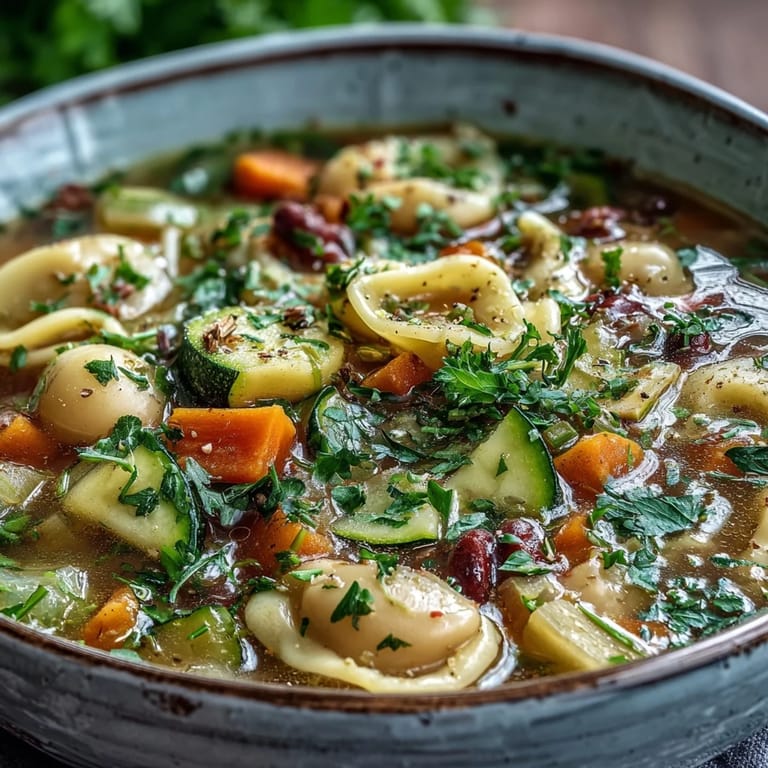
Save There's a moment about halfway through simmering where your kitchen smells so good you almost forget you're just making soup—it smells like someone's been cooking all day. That's when you know you're doing it right.
The Art of Seasonal Swapping
Minestrone is actually a philosophy disguised as a recipe: take what's in season, cut it into roughly equal pieces, and let it cook together. In spring, I reach for fresh peas, leeks split lengthwise and chopped, tender new potatoes, and baby spinach. Summer brings zucchini, green beans, fresh tomatoes if I can get them, and basil that grows almost aggressively in warm months. Fall is when I start thinking about heartier things—butternut squash, kale, perhaps a parsnip—shifting the whole feeling of the soup toward something more substantial. Winter is for cavolo nero, white beans instead of cannellini, and maybe a Parmesan rind simmered directly in the broth for extra depth.
Making It Your Own
The moment you stop following this recipe exactly is when it becomes truly yours. Some days I add a splash of red wine before the broth. Other times I'll stir in a spoon of pesto at the end, or roast the vegetables first to deepen their flavor. A friend adds a pinch of red pepper flakes and swears by it. The only real rule is that you're building layers: the soffritto base, the aromatic garlic and herbs, the acidity from tomatoes, the earthiness from beans, the starch from pasta. As long as those elements are present, you're making minestrone.
Serving and Storage
This soup is one of those rare dishes that tastes better the next day, after the flavors have settled into each other overnight. If you're making it ahead, I'd recommend storing the pasta and broth separately if you have the time—the pasta will stay a better texture and you can control how much you add when you reheat and serve. Ladle it into bowls, top with a small handful of Parmesan if you're not vegan, finish with a drizzle of really good olive oil, and serve with crusty bread for pushing those last bits of broth around the bowl.
- Reheat gently on the stovetop rather than the microwave, which can make the pasta mushy.
- If it's thickened too much in the fridge, thin it with a bit of broth or water when reheating.
- This freezes beautifully for up to three months, though the pasta can soften over time, so consider freezing it without pasta and adding fresh pasta when you thaw and reheat.
 Save
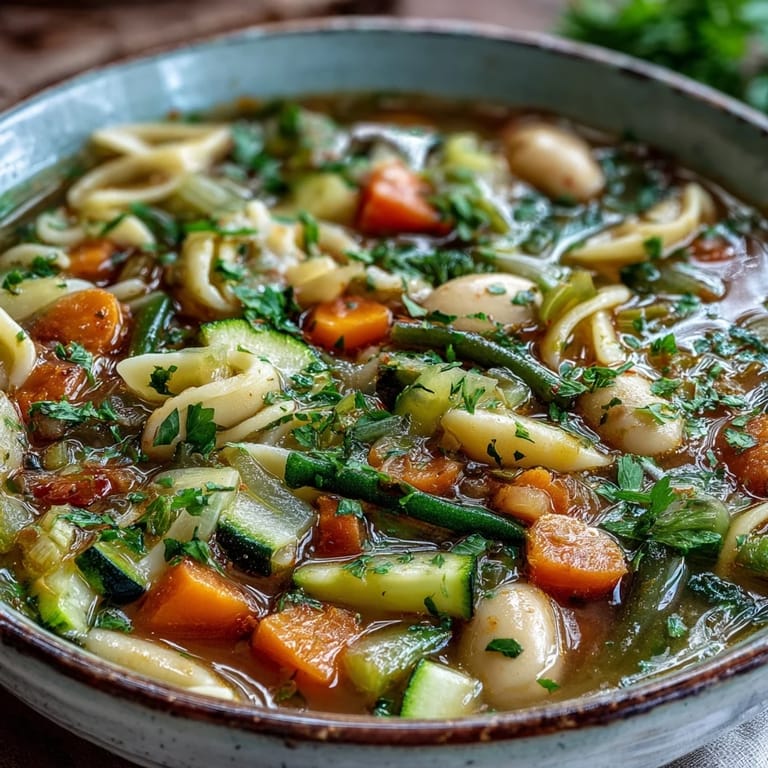
Save This is the soup I make when I want to feed people something that matters without overthinking it, when the kitchen needs to smell like comfort, and when I want to prove to myself that simple ingredients can create something deeply nourishing. It's rarely the same twice, and somehow that's exactly the point.
Recipe Help & FAQs
- → What vegetables work best in minestrone?
Classic Italian minestrone features onions, carrots, celery, zucchini, and green beans. For winter variations, butternut squash, kale, and spinach work beautifully. Spring welcomes peas, leeks, and fresh cabbage.
- → Can I make minestrone gluten-free?
Absolutely. Simply substitute regular pasta with gluten-free alternatives like rice-based ditalini, quinoa elbows, or chickpea shells. The cooking time remains the same.
- → How long does leftover minestrone keep?
Stored in an airtight container, refrigerated minestrone lasts 4-5 days. The pasta will absorb more liquid over time, so add extra broth when reheating. It also freezes well for up to 3 months.
- → What's the secret to deeper flavor?
Simmering a Parmesan rind in the broth adds rich umami notes. Also, sautéing your soffritto—onions, carrots, and celery—until properly softened creates a sweeter, more aromatic base.
- → Should I cook pasta separately?
Cooking pasta directly in the soup allows it to absorb flavors and release starch, creating a naturally thicker broth. Just monitor closely to prevent overcooking.
- → What's the best way to serve minestrone?
Serve piping hot in warmed bowls, topped with fresh parsley and grated Parmesan. A drizzle of extra virgin olive oil and crusty bread on the side complete the Italian experience.