 Save
Save There's something about the smell of fresh ginger hitting hot oil that instantly settles my mood, no matter what kind of day I've had. My neighbor handed me a knob of ginger one afternoon while we were chatting over the fence, and I found myself simmering a pot of this soup almost by accident, just tossing in whatever vegetables needed rescuing from my crisper drawer. What started as an improvisation became the thing I reach for whenever I need something warm, light, and honest on the table.
I made this for my sister when she was recovering from a cold, and she texted me days later saying she'd been making it for her kids ever since. There's real power in a soup that tastes fresh instead of heavy, that doesn't leave you feeling weighed down but somehow more grounded.
Ingredients
- Fresh ginger: Peel it just before grating so the oils are still bright; this is what makes the entire soup sing.
- Onion, carrots, and celery: This trio builds the foundation, so don't rush the sauté—they need those five minutes to release their sweetness.
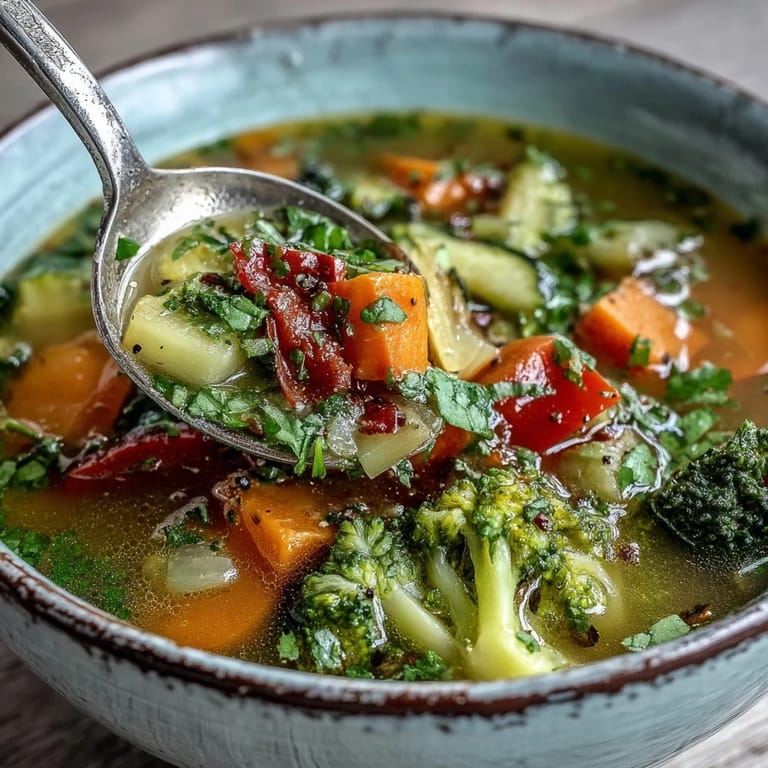
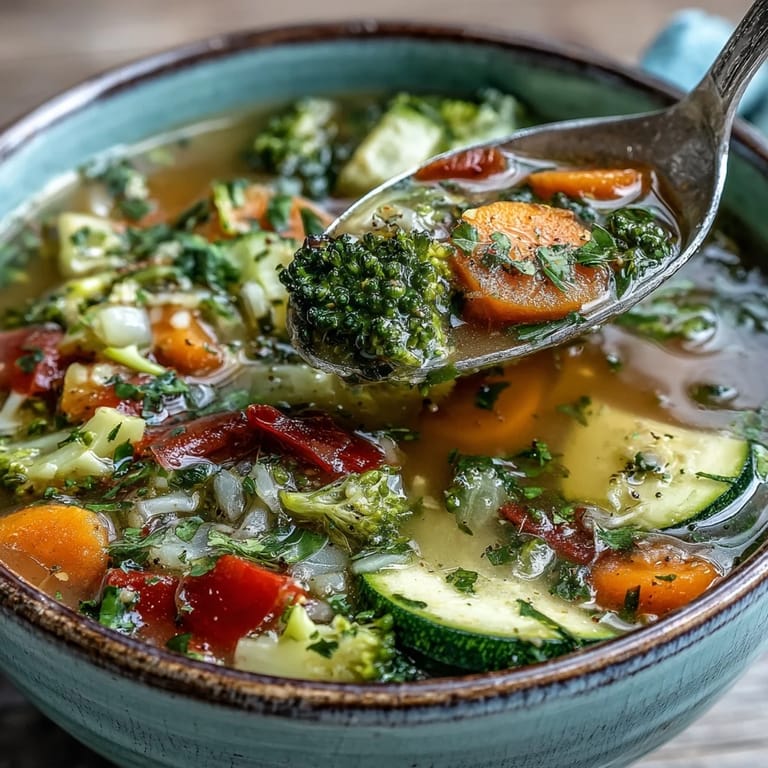
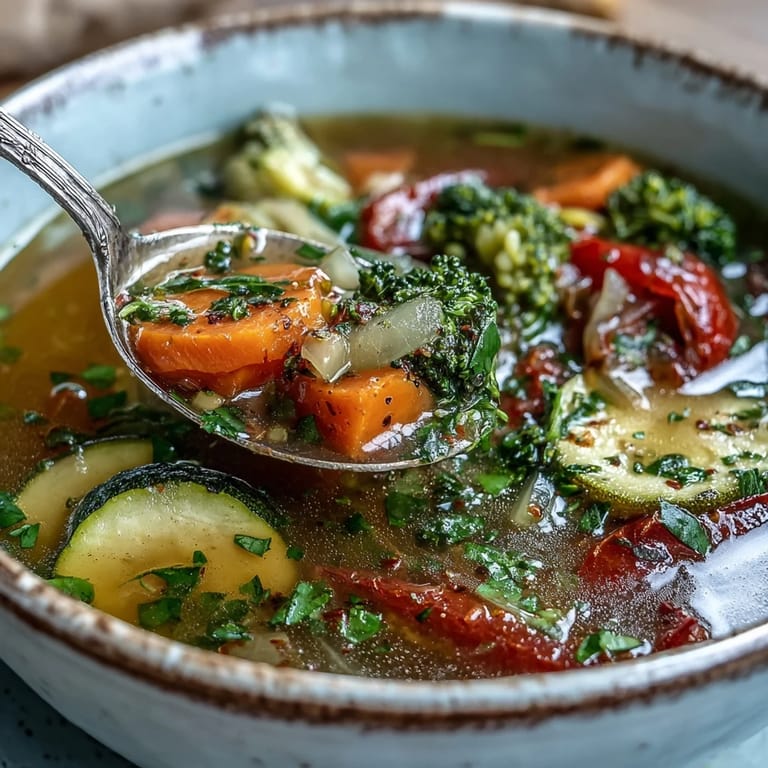
- Red bell pepper, zucchini, and broccoli: Choose vegetables that feel firm and alive; they'll hold their shape through the simmer.
- Vegetable broth: A good broth makes all the difference; if you have homemade, use it, but quality store-bought works beautifully too.
- Garlic cloves: Mince them fine so they dissolve into the background without overwhelming anything.
- Olive oil: Just enough to coat the pot and help release flavors without making the soup rich.
- Sea salt and black pepper: Taste as you go; you might need more than you think to make all those fresh vegetables shine.
- Soy sauce or tamari: Optional but worth it—a tablespoon adds a quiet depth that makes people ask what your secret is.
- Fresh cilantro or parsley: Chop it just before serving so it stays bright and doesn't get bruised.
- Toasted sesame oil: A drizzle at the end transforms it into something slightly more sophisticated without changing what it fundamentally is.
Tired of Takeout? 🥡
Get 10 meals you can make faster than delivery arrives. Seriously.
One email. No spam. Unsubscribe anytime.
Instructions
- Warm your pot and build the base:
- Heat the olive oil over medium heat and add your onion, carrots, and celery. Let them soften for five full minutes—this is where the magic starts, even though it doesn't look dramatic yet. You'll notice the kitchen starting to smell like something worth eating.
- Wake up the aromatics:
- Stir in the garlic and ginger and let them cook for exactly two minutes. You want to hear the sizzle and smell that ginger fully bloom, but not so long that the garlic starts to brown.
- Add the rest of the vegetables:
- Toss in your bell pepper, zucchini, and broccoli and cook for three more minutes, stirring occasionally. This quick cook keeps them from getting waterlogged before the broth even arrives.
- Pour and simmer:
- Add your vegetable broth and bring everything to a boil, then immediately lower the heat to a gentle simmer. This is when you add your salt, pepper, and soy sauce if you're using it—be conservative at first because you can always adjust.
- Let time do the work:
- Simmer uncovered for fifteen to twenty minutes, just until the vegetables are tender but still have some personality. Taste a carrot piece and you'll know when it's ready.
- Taste and trust yourself:
- Before serving, take a spoon and really taste it. Does it need more salt, more ginger, a touch more pepper? Adjust until it feels right.
- Finish with intention:
- Ladle the soup into bowls and finish each one with a light drizzle of sesame oil and a scatter of fresh herbs. This is the part that makes it look like you spent all afternoon cooking.
 Save
Save What surprised me most was how this soup became a quiet ritual rather than just dinner. On cold mornings, I'd make it partly because it was healthy, but mostly because standing over a simmering pot while the house filled with ginger-scented steam felt like giving myself permission to slow down.
When to Make This
This soup works year-round but shines when seasons are shifting and your body wants something that nourishes without heaviness. I make it most often when someone's feeling under the weather, when I'm tired of heavier meals, or on those restless afternoons when I need my hands to do something productive and my kitchen to smell like comfort.
Playing with What You Have
The beauty of this recipe is that it doesn't demand perfection or specific vegetables. I've made it with whatever was on sale, whatever my garden produced, whatever friends left on my doorstep. Snap peas work, spinach works, mushrooms work, even kale if you cut it fine. The ginger and the broth hold the whole thing together, so the vegetables are really just collaborators.
Making It Your Own
Some nights I add cooked lentils to make it heartier, or a handful of noodles to make it more of a complete meal. I've drizzled in chili flakes for heat, added a splash of coconut milk when I wanted it slightly creamier, stirred in miso for extra umami. The recipe is flexible enough to bend toward whatever you're craving that day.
- If you want more protein without meat, lentils or tofu cubes turn this into a full dinner.
- Crusty bread or rice noodles on the side make it feel more substantial without changing the soup itself.
- This keeps beautifully for three days in the refrigerator and actually tastes better the next day when the flavors have had time to get acquainted.
 Save
Save This soup reminds me that the best kitchen moments don't require complicated techniques or exotic ingredients—just the willingness to pay attention to what's in front of you. Make this when you need it, change it however you want, and let it become whatever it needs to be in your kitchen.
Recipe Help & FAQs
- → Can I make this soup ahead of time?
Absolutely. This soup actually tastes better the next day as flavors meld together. Store in an airtight container in the refrigerator for up to 4 days. Reheat gently on the stovetet, adding a splash of broth if needed.
- → How can I add more protein to this soup?
Stir in cooked lentils, chickpeas, or cubed tofu during the last 5 minutes of simmering. You can also add shredded chicken if not keeping it vegan. For a grain boost, serve over cooked rice or add quinoa directly to the pot.
- → What vegetables work best in this soup?
Root vegetables like carrots, parsnips, and sweet potatoes hold up well during cooking. Cruciferous options including broccoli, cauliflower, and bok choy add texture. Leafy greens like spinach or kale should be added in the last 2 minutes to prevent wilting.
- → Is this soup freezer-friendly?
Yes, it freezes beautifully for up to 3 months. Cool completely before transferring to freezer-safe containers. Leave some space at the top as liquids expand when frozen. Thaw overnight in the refrigerator before reheating.
- → How spicy is this soup?
The ginger provides a gentle warmth rather than intense heat. For more spice, add red pepper flakes, fresh chili, or curry powder. Adjust the amount of ginger to your preference—start with less if sensitive to heat.
- → Can I use store-bought ginger paste instead of fresh?
Fresh ginger root offers superior flavor and aroma. In a pinch, ginger paste works, but use half the amount as it's more concentrated. Bottled minced ginger is not recommended as it lacks the vibrant zing needed for this broth.