 Save
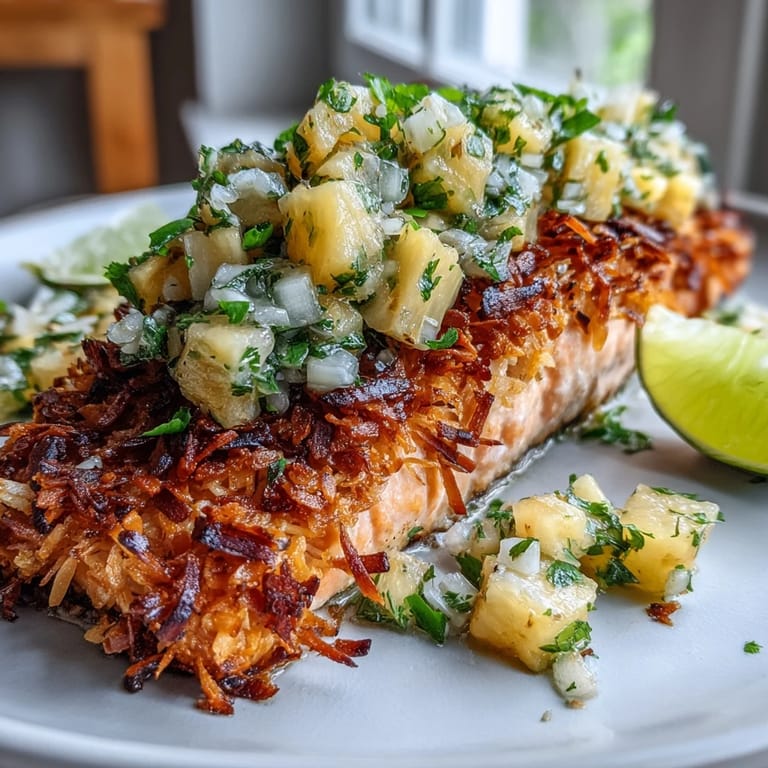
Save The first time I made this coconut crusted salmon was during a rainy February evening when I was desperately craving something that tasted like sunshine. I had half a pineapple sitting on my counter from the weekend and a bag of shredded coconut that I had bought for some baking experiment that never happened. Something about the combination just clicked in my head. That night, standing over my stove while the coconut toasted and the pineapple's sweet aroma filled my kitchen, I knew I had stumbled onto something that would become a regular rotation.
I served this to my friend Sarah who claims she doesn't like fish and she went back for seconds. Watching someone who usually avoids salmon take that first bite and pause to really taste the layers has become one of my favorite cooking memories. Now whenever I make it I think of that evening and how food can completely change someone's mind about ingredients they thought they hated.
Ingredients
- 4 salmon fillets: I always remove the skin because it lets the crust adhere better and makes for easier eating
- Unsweetened shredded coconut: Sweetened coconut will burn and make the dish cloyingly sweet so resist the temptation
- Panko breadcrumbs: These create that irresistible light crunch that regular breadcrumbs just cannot achieve
- Eggs: Room temperature eggs work best for coating the salmon evenly without clumping
- Fresh pineapple: Canned pineapple is too mushy and lacks the bright acidity that balances the rich fish
- Red bell pepper: This adds crunch and a subtle sweetness that bridges the pineapple and savory elements
- Red onion: Mince it finely so you get little bursts of sharp flavor throughout each bite
- Fresh cilantro: If you are one of those people who think cilantro tastes like soap parsley will work too
- Lime juice: Fresh squeezed makes a difference here and you will want extra for serving
Tired of Takeout? 🥡
Get 10 meals you can make faster than delivery arrives. Seriously.
One email. No spam. Unsubscribe anytime.
Instructions
- Season and rest the salmon:
- Pat those fillets completely dry with paper towels then give them a thorough seasoning with salt pepper and smoked paprika. Letting them sit at room temperature for 10 minutes helps them cook evenly and prevents the cold shock that makes fish curl up in the pan.
- Set up your coating station:
- Mix the coconut and panko in one shallow dish and beat your eggs in another. Having everything organized before you start dipping makes the process so much smoother and keeps your hands from becoming a sticky mess.
- Coat each fillet:
- Dip the salmon into the egg letting any excess drip off then press it firmly into the coconut mixture. You want a generous even coating on all sides so do not be shy about pressing it in there.
- Mix the salsa:
- Combine the pineapple red pepper red onion and cilantro in a bowl. Add the lime juice honey if you are using it and a pinch of salt then toss it gently. This is one of those recipes that benefits from sitting for a bit while the salmon cooks.
- Sear to golden perfection:
- Heat your oven safe skillet over medium high heat until the oil shimmers. Place the salmon in carefully and let it develop a beautiful golden crust for about 4 minutes before flipping.
- Finish in the oven:
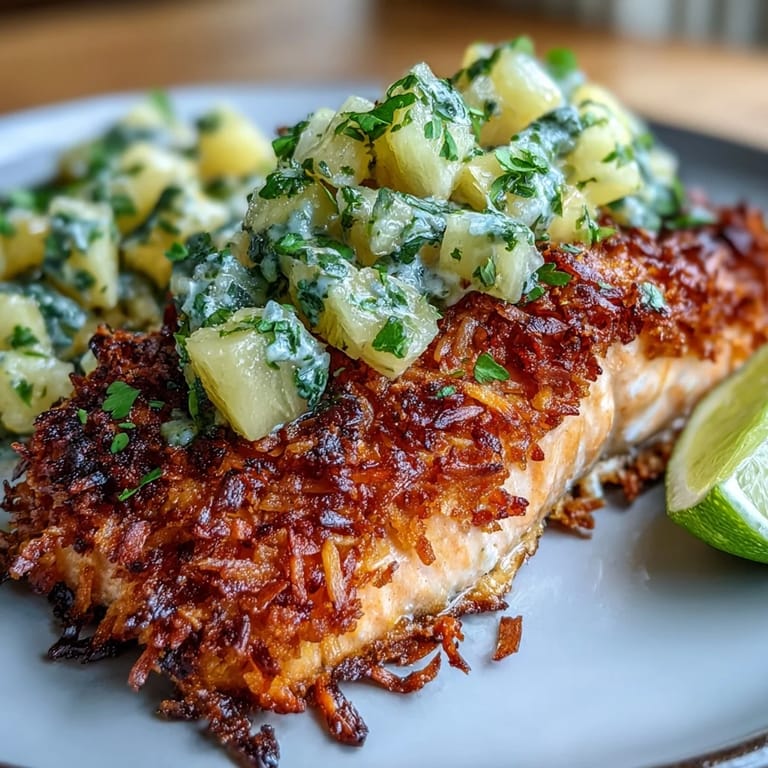
- After searing both sides slide the whole pan into a 375 degree oven. The coconut will continue to toast while the salmon cooks through creating this incredible aroma that will have everyone gathering in the kitchen.
 Save
Save This recipe has become my go to for dinner parties because it looks so elegant served with that colorful spoonful of salsa on top. Something about the vibrant colors and tropical flavors just makes people happy.
Making It Gluten Free
I have made this for gluten free friends using crushed rice crackers instead of panko and honestly I cannot tell the difference. The texture is still light and crunchy and the coating adheres just as well.
Perfect Side Dishes
Coconut rice is the obvious pairing here and it really does tie everything together beautifully. On busy weeknights I will sometimes just roast some broccoli with garlic and call it dinner. The key is keeping the sides simple so they do not compete with the salmon.
Make Ahead Strategy
The salsa actually tastes better after sitting for an hour or two so I often make it first and let it hang out while I prep everything else. You can coat the salmon ahead of time too but I have found the crust stays crunchier when you do it right before cooking.
- If you need to prep everything in advance coat the salmon and store it on a parchment lined tray in the refrigerator
- Bring the fish to room temperature for about 15 minutes before cooking for the best crust
- The salsa can be made up to 4 hours ahead and kept covered in the refrigerator
 Save
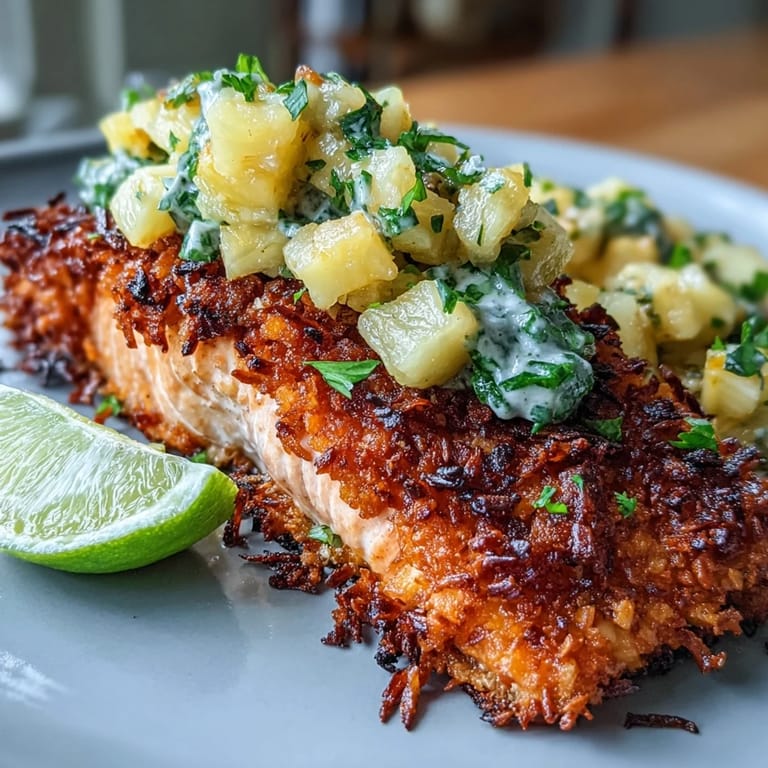
Save Every time I make this recipe it takes me back to that rainy Tuesday when I decided to bring a little tropical warmth into my kitchen. Some dishes are just good and others are the ones you keep coming back to year after year.
Recipe Help & FAQs
- → Can I use frozen salmon fillets?
Yes, frozen salmon works well for this dish. Thaw completely in the refrigerator overnight, then pat very dry with paper towels before seasoning and coating. Excess moisture prevents the coconut crust from adhering properly.
- → How do I know when the salmon is done?
The salmon is finished when it reaches an internal temperature of 145°F (63°C) measured with a food thermometer. Visual cues include the flesh turning opaque and flaking easily with gentle pressure. The crust should be golden brown.
- → Can I make the pineapple salsa ahead of time?
Absolutely. Prepare the salsa up to 4 hours in advance and refrigerate. The flavors actually improve as they meld together. Give it a quick toss before serving to redistribute the juices that may have accumulated.
- → What can I substitute for panko breadcrumbs?
For gluten-free options, use certified gluten-free panko or crushed rice crackers. Almond flour works for a grain-free version, though the texture will be denser. Regular breadcrumbs can substitute in a pinch, though panko creates the lightest, crispiest coating.
- → How do I prevent the coconut crust from burning?
Watch the heat carefully during the initial stovetop sear. Medium-high heat should suffice—avoid high heat which scorch the coconut before the fish cooks through. Finishing in the oven allows gentle, even cooking without further browning the crust.
- → Can I grill this instead of using the oven?
Yes, grilling works beautifully. Prepare the salmon as directed, then grill over medium heat skin-side down first. Close the lid to create oven-like heat, cooking for about 4-5 minutes per side until the crust is golden and fish reaches 145°F internally.