 Save
Save My neighbor Maria appeared at my kitchen door one July afternoon with a small basket of black currants from her garden, their deep purple skin nearly black in the summer light. She mentioned offhandedly that her Italian grandmother used to make panna cotta with them, something silky and elegant that tasted like refined summer. I'd never attempted panna cotta before, but watching her describe how the cream transforms into something cloud-like convinced me to try. That evening, the kitchen filled with the sharp, almost mysterious aroma of simmering black currants, and I understood why she'd brought them.
I made this for the first time when my brother's partner mentioned she'd never had panna cotta, and I wanted to prove it wasn't some untouchable French thing. Watching her take that first spoonful, how her expression shifted when the creamy texture met the bright currant tang, felt like I'd pulled off something small but meaningful. She asked for the recipe that night, and now it's become the dessert she makes when she wants to impress people.
Ingredients
- Heavy cream: This is where the magic happens, creating that signature silky texture that makes panna cotta feel luxurious, so don't skimp on quality here.
- Whole milk: Cuts the richness slightly and keeps the final texture delicate rather than heavy.
- Granulated sugar: Dissolves cleanly into the warm cream, sweetening without grittiness.
- Powdered gelatin: The invisible hero that transforms liquid into something that holds its shape; blooming it first prevents lumps from forming.
- Cold water: Essential for blooming the gelatin properly so you avoid any grainy texture in the final dessert.
- Vanilla extract: A subtle backbone that lets the black currant flavor shine without competing.
- Fresh or frozen black currants: Their tartness is what elevates this dessert, offering complexity that pure sweetness can't match, and honestly, frozen works just as well as fresh.
- Black currant jam: The optional glaze adds visual drama and an extra hit of flavor, though the panna cotta stands beautifully on its own.
Tired of Takeout? 🥡
Get 10 meals you can make faster than delivery arrives. Seriously.
One email. No spam. Unsubscribe anytime.
Instructions
- Bloom the gelatin:
- Sprinkle gelatin over cold water in a small bowl and let it sit for 5 minutes until it looks spongy and fully hydrated. This step prevents lumps from forming later when you whisk it into the warm cream.
- Warm the cream base:
- Combine heavy cream, milk, and sugar in a medium saucepan, stirring gently over medium heat until the sugar dissolves completely. You'll notice the mixture becoming slightly glossy as the sugar fully incorporates, and you want to stop just before it starts steaming at the edges, definitely before any bubbles form.
- Meld the gelatin:
- Remove the cream from heat and immediately whisk in the bloomed gelatin and vanilla, whisking steadily until you can't see any gelatin particles at all. The warmth of the cream dissolves the gelatin almost instantly if you work quickly.
- Cook the black currants:
- In a separate saucepan, combine black currants with sugar and water, then simmer over medium heat for 5 to 7 minutes, stirring occasionally, until the berries burst open and the mixture takes on a glossy, syrupy appearance. You'll know it's ready when the mixture coats the back of a spoon lightly.
- Strain the puree:
- Pour the cooked currant mixture through a fine-mesh sieve placed over a bowl, pressing gently with the back of a spoon to extract every drop of juice while leaving the seeds and skins behind. This step creates that jewel-toned, smooth puree that makes the final dessert look so refined.
- Combine into silk:
- Whisk the strained black currant puree into the warm cream mixture slowly, watching as the pale cream transforms into a beautiful muted purple. Make sure it's fully combined before moving forward.
- Set in ramekins:
- Pour the mixture evenly into 4 lightly greased ramekins or dessert glasses, then let them cool to room temperature on the counter for about 20 minutes before transferring to the refrigerator. This slow cooling helps the texture set evenly without creating any weird layers.
- Chill until set:
- Refrigerate for at least 4 hours, though overnight is even better if you have the time. The panna cotta will transform from liquid to that perfect wobbling custard that holds its shape when you spoon into it.
- Add the glaze (optional):
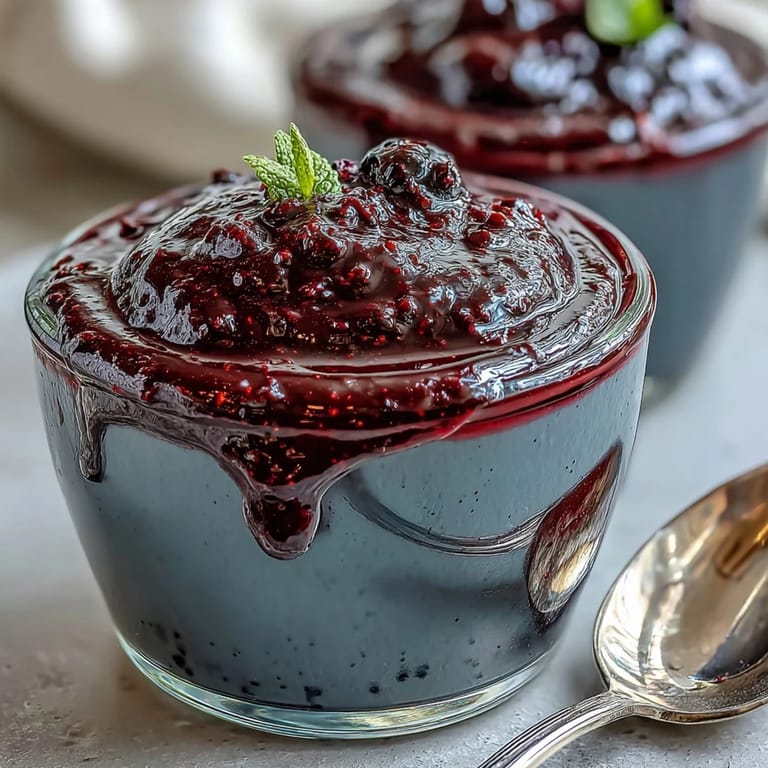
- If you're using the jam glaze, warm the jam with a tablespoon of water in a small saucepan until it's smooth and pourable, then let it cool slightly before spooning a thin layer across the top of each panna cotta just before serving. This adds visual shine and an extra burst of black currant flavor.
 Save
Save A few months after making this for my brother's partner, she texted me a photo of it from her own dinner party, saying everyone asked for the recipe and it had become her signature dessert. That moment, knowing something I created in my kitchen had become part of someone else's cooking repertoire, felt like the best kind of kitchen magic.
Why Black Currants Matter Here
Black currants have this incredible tart undertone that prevents panna cotta from tasting one-dimensional or overly sweet, the way some fruit desserts can feel. Their flavor is naturally complex and slightly earthy, which elevates the whole dish into something that feels sophisticated without requiring a culinary degree to understand. The first time I tasted this combination, I realized why Maria's grandmother chose black currants specifically and not just any berry.
Texture and Temperature
Panna cotta should have a delicate wobble when you spoon into it, not be completely rigid or jiggly like Jello, and that balance comes from getting the gelatin ratio exactly right. The texture actually tastes better when it's chilled thoroughly, so resist the urge to serve it too soon after making it. Cold cream and that slight wobble create the perfect sensation on your tongue, which is honestly half the reason people fall in love with this dessert.
Serving and Pairing
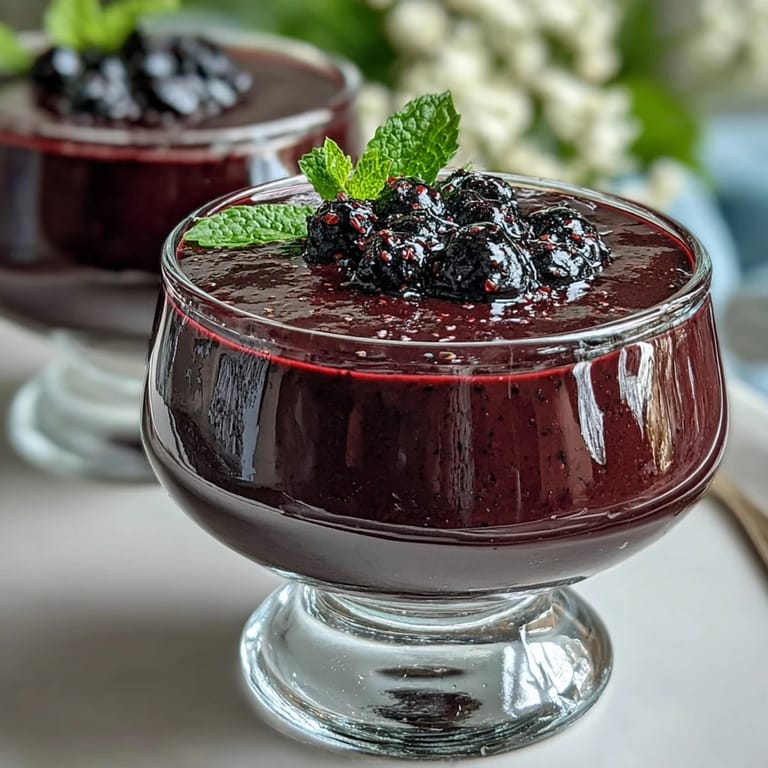
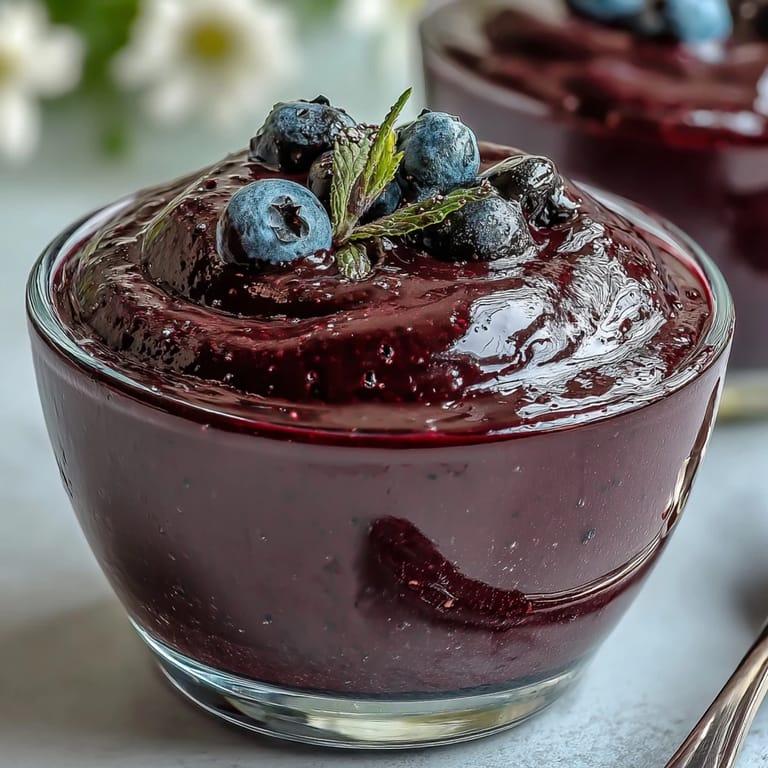
I've learned that serving panna cotta in glasses rather than ramekins shows off that beautiful purple color better, and it feels more elegant somehow, like you've really thought about presentation. The tartness of black currant pairs beautifully with crisp, slightly sweet wines like Moscato d'Asti or Prosecco, making this dessert perfect for summer evening gatherings when you want something that feels special but not heavy.
- A dollop of freshly whipped cream on top adds richness and keeps the dessert from feeling austere if your black currants are particularly tart.
- Fresh black currants scattered on top right before serving look stunning and give people that optional burst of real fruit texture.
- Make this up to two days in advance if you're planning ahead, it holds beautifully in the refrigerator and actually tastes even better the next day.
 Save
Save This dessert taught me that sometimes the most impressive-looking dishes are actually the simplest to make, and that sharing recipes is really about sharing those moments when food becomes memory. Every time someone makes this and tells me about it, I picture them in their own kitchen, hearing those black currants burst and transform into something beautiful.
Recipe Help & FAQs
- → How long does panna cotta need to set?
Panna cotta requires at least 4 hours in the refrigerator to fully set. For best results, refrigerate overnight to ensure a firm, smooth texture that holds its shape when unmolded.
- → Can I make black currant panna cotta in advance?
Yes, this dessert is perfect for making ahead. Prepare up to 2 days in advance and keep refrigerated. Add the glossy glaze shortly before serving to maintain its shine and texture.
- → What can I substitute for black currants?
If black currants are unavailable, try blackberries, blueberries, or raspberries. These alternatives provide similar tartness and deep color, though the flavor profile will vary slightly.
- → Why did my panna cotta not set properly?
Common causes include not blooming gelatin long enough, overheating the cream mixture which can weaken gelatin, or using insufficient gelatin. Ensure proper blooming time and avoid boiling the cream base.
- → How do I unmold panna cotta cleanly?
Dip the ramekin briefly in warm water for 5-10 seconds, then run a thin knife around the edge. Place a serving plate on top and invert quickly. The gentle warmth helps release the custard intact.
- → Is this dessert suitable for gluten-free diets?
Yes, this panna cotta is naturally gluten-free as it uses gelatin rather than flour or cornstarch. Always verify that any store-bought jam used for the glaze is certified gluten-free.