 Save
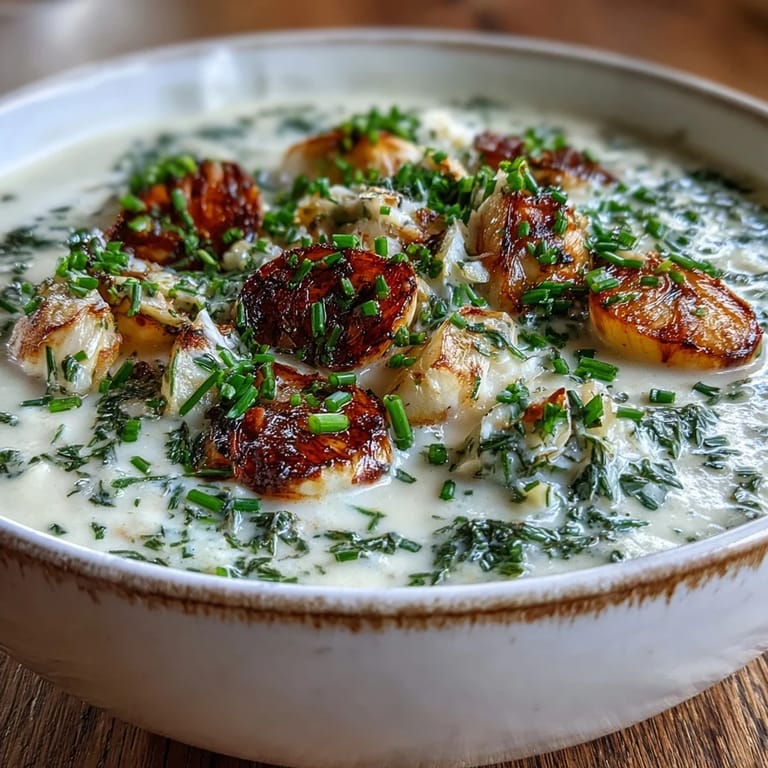
Save There's something almost magical about roasting garlic until it transforms into these soft, caramelized cloves that taste nothing like raw garlic's bite. I stumbled onto this soup on a chilly October evening when I had three heads of garlic sitting on my counter and absolutely no plan for them. The roasting happened by accident—I'd meant to use them raw, but then thought, why not try something different? Forty minutes later, my kitchen smelled like pure comfort, and I knew I had to build a soup around those golden cloves.
My neighbor stopped by while I was ladling this into bowls, and she asked what smelled so incredible—she ended up staying for a bowl, and we sat at my kitchen table talking until the soup went cold. That's when I realized this wasn't just a weeknight dinner; it was the kind of dish that naturally brings people together. Every time I make it now, someone asks for the recipe, and I love watching their face when they taste how velvety it is.
Ingredients
- 3 whole heads garlic: These are the star—roasting mellows their intensity into something almost sweet and creamy, which is why whole heads work better than individual cloves.
- 1 large yellow onion, chopped: Yellow onions add natural sweetness and body to the broth as they break down.
- 2 medium Yukon Gold potatoes, peeled and diced: They thicken the soup naturally without cream and add a subtle earthiness that balances the roasted garlic.
- 2 stalks celery, chopped: Celery builds the aromatic base and adds depth without overpowering.
- 1 medium carrot, chopped: Carrots round out the vegetable foundation with a gentle sweetness.
- 2 tbsp fresh thyme leaves (or 2 tsp dried): Fresh thyme is worth seeking out here—its woodsy notes complement roasted garlic beautifully, though dried works if that's what you have.
- 2 tbsp fresh parsley, chopped: Parsley brightens the broth and keeps it from feeling too heavy.
- 1 bay leaf: Bay leaf adds complexity and must be removed before blending—I learned this the hard way once.
- 1 tsp dried oregano: A small amount rounds out the herb profile without making it taste Italian.
- 1/2 tsp freshly ground black pepper: Fresh pepper matters here; it tastes sharper and more alive than pre-ground.
- 1 tsp salt (adjust to taste): Start with less and taste as you go—the vegetables release their own salts as they cook.
- 1.5 liters (6 cups) vegetable broth: Good quality broth makes a real difference; if you only have bouillon, use less and taste carefully.
- 2 tbsp olive oil: One tablespoon goes on the garlic for roasting, the rest for sautéing the vegetables.
- 2 tbsp unsalted butter (optional, for richness): Butter adds silkiness, but the soup is wonderful without it if you're keeping it plant-based.
- 2 tbsp fresh chives or parsley, finely chopped: The garnish adds a fresh note right before serving and makes it feel intentional.
- Crusty bread, for serving (optional): I always serve this with bread—it's perfect for dipping and soaking up the velvety broth.
Tired of Takeout? 🥡
Get 10 meals you can make faster than delivery arrives. Seriously.
One email. No spam. Unsubscribe anytime.
Instructions
- Roast the garlic until it's caramelized and soft:
- Preheat your oven to 400°F and slice the very tops off your three garlic heads so you can see the cloves inside. Drizzle each head with a bit of olive oil, wrap them loosely in foil, and let them roast for 35 to 40 minutes until the cloves look golden and feel soft when you press them gently. Your kitchen will smell incredible during this time, and that's your signal everything is working perfectly.
- Build your vegetable base:
- While the garlic roasts, heat olive oil and butter in a large pot over medium heat and add your chopped onion, celery, and carrot. Let them soften gently for about 5 to 7 minutes, stirring occasionally—you're not looking for color, just softness and fragrance. This is the moment when your pot starts smelling like home cooking.
- Add the roasted garlic and herbs:
- Once the garlic is cool enough to handle, squeeze the soft cloves right out of their skins into the pot—they should come out almost like butter. Add the potatoes, thyme, parsley, bay leaf, oregano, salt, and pepper, then stir everything together until the herbs are distributed evenly. Take a moment to smell the pot; that aroma is what you're about to taste.
- Simmer until potatoes are completely tender:
- Pour in your vegetable broth, bring the whole thing to a gentle boil, then reduce the heat and let it simmer for about 20 minutes until the potatoes break apart easily with a spoon. This is a good time to taste the broth and see if you want to adjust seasoning before blending.
- Blend until silky smooth:
- Remove the bay leaf first—honestly, I once forgot this step and it's startling to find floating in a blended soup. Use an immersion blender right in the pot, or work in batches with a regular blender, pureeing until the soup is completely smooth and creamy. Taste it one more time and add salt or pepper if needed.
- Serve with warmth and intention:
- Ladle the soup into bowls, top each one with a small handful of fresh chives or parsley, and serve immediately with crusty bread on the side. The contrast of the cold garnish against the hot soup and the texture of bread is what makes this feel special.
 Save
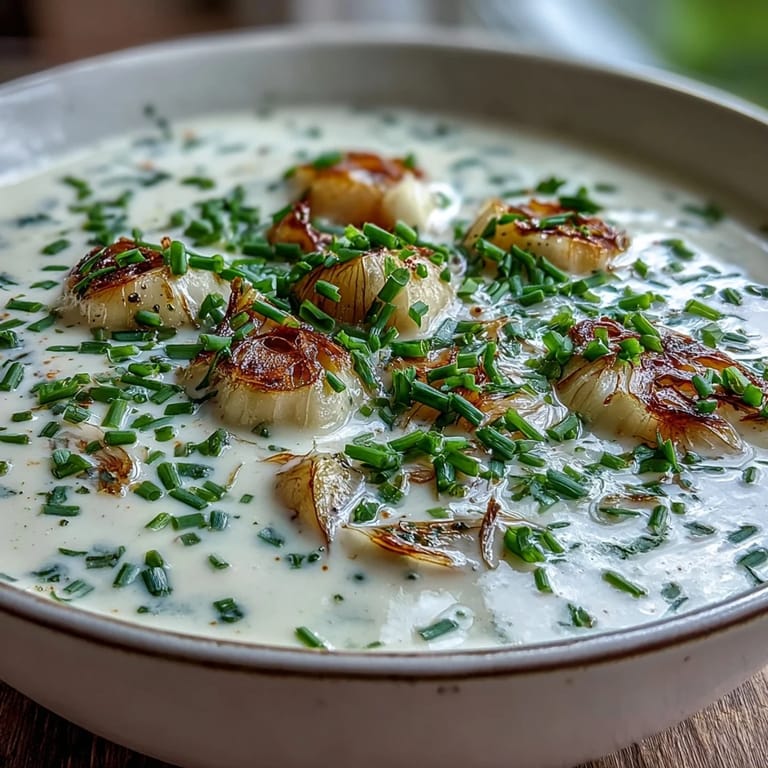
Save I made this soup on the night my roommate got the job they'd been hoping for, and we celebrated with bowls of this and cheap wine straight from coffee mugs because we couldn't find the wine glasses. That's when I understood—this soup doesn't need fancy presentations or expensive ingredients to feel luxurious. It just needs the kind of care that comes from roasting whole garlic heads and taking time to blend something until it's perfectly smooth.
The Magic of Roasted Garlic
Raw garlic has teeth; it bites back and demands respect. But roasted garlic is an entirely different ingredient—it becomes sweet, almost caramel-like, with none of the sharpness that makes your breath linger for hours. When you roast whole heads, the cloves cook in their own moisture and oil, becoming so soft you can literally squeeze them out of their papery skins like toothpaste. This transformation is what makes the entire soup work; without roasted garlic, you'd just have an okay vegetable soup, but with it, you have something that tastes like you've been tending a stockpot all afternoon.
Texture and Body Without Cream
Potatoes do something beautiful in this soup—they break down and thicken everything naturally, creating that silky texture you'd normally associate with cream. The starch from the potatoes and the natural sweetness from roasted garlic and caramelized vegetables combine to make something that feels rich even though it's completely plant-based if you want it to be. I've made this soup both with and without butter, and honestly, the butter is more of a luxury than a necessity, though if you have it, it does add an extra layer of indulgence.
Variations and Adaptations
This soup is a canvas, and I've learned that small changes can take it in different directions without losing what makes it special. You can add a splash of heavy cream right before serving for richness, or a squeeze of fresh lemon juice if it needs brightness. For a vegan version, just skip the butter, and it's equally creamy. Here are a few tweaks I've discovered:
- A handful of spinach or kale stirred in at the very end adds color and nutrition without changing the flavor profile.
- A pinch of red pepper flakes or a touch of smoked paprika transforms it into something with more personality.
- Swap half the vegetable broth for white wine if you want it to feel a little more sophisticated and complex.
 Save
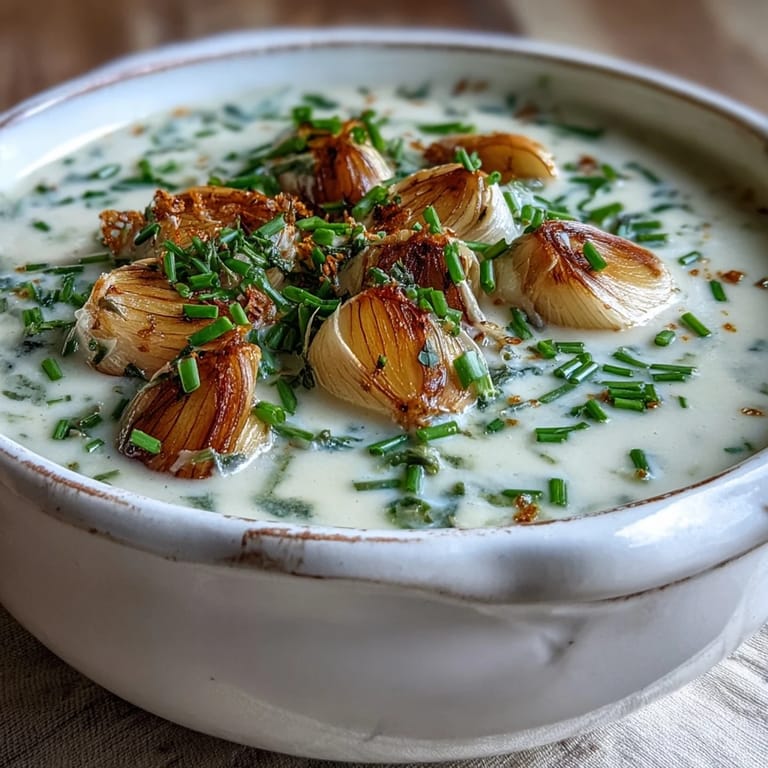
Save This soup taught me that sometimes the most elegant dishes come from simple ingredients treated with intention. Every time I make it, I think about that October evening when I decided to roast three heads of garlic and see what happened.
Recipe Help & FAQs
- → How long does it take to roast garlic for soup?
Garlic heads roast at 400°F (200°C) for 35–40 minutes wrapped in foil. The cloves are ready when they're soft, golden, and easily squeeze from their skins.
- → Can I make this soup vegan?
Yes, simply omit the butter or replace it with a plant-based alternative. The soup remains creamy and satisfying without dairy.
- → What gives this soup its creamy texture?
Yukon Gold potatoes break down during simmering and create natural thickness when blended. Their starch content produces a velvety consistency without adding cream.
- → Can I freeze roasted garlic soup?
This soup freezes well for up to 3 months. Cool completely, transfer to airtight containers, leaving space for expansion. Thaw overnight in the refrigerator before reheating.
- → What herbs work best in this soup?
Fresh thyme and parsley provide the primary flavor profile, complemented by dried oregano and a bay leaf. Chives make an excellent finishing garnish for mild onion flavor.
- → How do I adjust the consistency?
For a thicker soup, simmer longer to reduce liquid or add an extra potato. To thin, add more broth or water a quarter-cup at a time until desired consistency is reached.