 Save
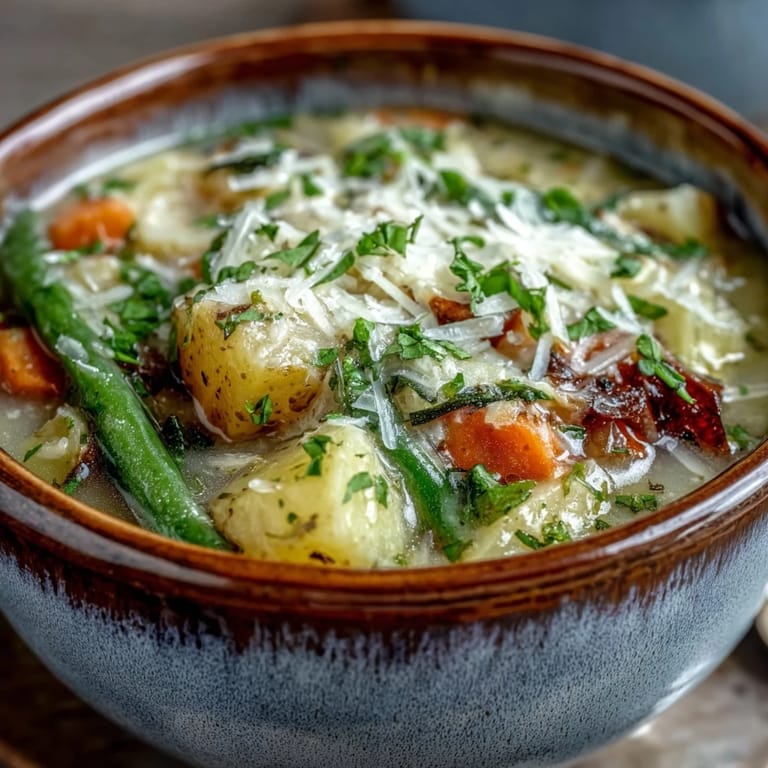
Save There's something about the smell of garlic and onions hitting hot oil that signals comfort is on the way. My neighbor Maria stopped by one chilly afternoon with a container of this soup, and I remember thinking how something so simple—just vegetables and broth—could taste so deeply satisfying. The Parmesan didn't just sit on top; it melted into the broth like silk, making everything taste richer without being heavy. I asked for her recipe that same evening, and she laughed, saying it was just vegetables done right, with one secret ingredient nobody expects: patience and a Parmesan rind if you have it.
I made this for my mom during one of those weeks where everything felt overwhelming, and she sat at the kitchen table while I chopped vegetables, just talking about nothing in particular. By the time it was ready, the whole house smelled like an Italian grandmother's kitchen. She had three bowls and told me to stop fussing and just write down what I did because she wanted to make it herself. That's when I knew it had crossed from being just a recipe to being something that mattered.
Ingredients
- Olive oil: Start with a tablespoon to build your flavor foundation—it's the first voice in this symphony, so don't skip it or use the cheap stuff.
- Onion and garlic: These two are non-negotiable; they're the reason the whole pot smells welcoming before anything else even goes in.
- Carrots, celery, and potato: The backbone vegetables that give you substance and sweetness as they soften into the broth.
- Zucchini and green beans: These add brightness and texture, turning what could be heavy into something that feels alive on your tongue.
- Diced tomatoes: Canned is perfectly fine here; they bring acidity that keeps the soup from tasting flat or one-dimensional.
- Vegetable broth: Use good broth if you can; it's the liquid foundation that carries every flavor, so it matters more than you'd think.
- Freshly grated Parmesan cheese: The star—grate it fresh right before you need it, not the pre-shredded kind that tastes like disappointment in a green can.
- Parmesan rind: This is optional but honestly magical if you've saved one; it dissolves into the broth and adds a savory depth that grated cheese alone can't quite reach.
- Dried Italian herbs: A simple blend of basil, oregano, and thyme that whispers rather than shouts.
- Salt, pepper, and fresh parsley: Seasoning that brings everything into focus at the end, with parsley as your final bright note.
Tired of Takeout? 🥡
Get 10 meals you can make faster than delivery arrives. Seriously.
One email. No spam. Unsubscribe anytime.
Instructions
- Start with your aromatics:
- Warm the olive oil in a large pot over medium heat and add your chopped onion and minced garlic. You'll know it's ready when it smells almost too good to wait—usually 2 to 3 minutes when the onion turns translucent and the garlic stops being sharp.
- Build your vegetable layer:
- Add the carrots, celery, zucchini, potato, and green beans, stirring occasionally as they soften slightly for about 5 minutes. This step matters because it lets them start releasing their flavors into the hot oil instead of just steaming later.
- Bring it all together:
- Pour in the diced tomatoes with their juice, the vegetable broth, dried herbs, salt, and pepper. If you have a Parmesan rind, toss it in now—it will dissolve into the background and make everything taste more itself.
- Let it simmer gently:
- Bring the pot to a gentle boil, then lower the heat and cover it. Let it bubble softly for 25 to 30 minutes until the vegetables are tender enough to break apart with a spoon but not mushy.
- Make it creamy with Parmesan:
- Remove the Parmesan rind if you used one, then stir in the freshly grated Parmesan cheese. Watch it melt and transform the broth into something silky and rich.
- Taste and adjust:
- This is your moment to be honest—does it need more salt, more pepper, more herbs? Taste it as though you're tasting it for the first time, because you almost are.
- Serve with intention:
- Ladle it into bowls while it's hot, garnish with fresh parsley and a small shower of extra Parmesan, and serve it to people you care about.
 Save
Save One rainy Sunday I made a double batch and brought containers to my two closest friends, not because anyone asked but because I wanted them to have something warm waiting when they got home. It felt like the most honest gift I could give without any fuss. That's when I realized this soup isn't just food—it's how you say I'm thinking of you without needing the words.
Why This Soup Stays Simple
There's a temptation to overcomplicate it, to add cream or pancetta or a dozen other things, but the beauty is in the restraint. The vegetables do the heavy lifting, the Parmesan brings richness without weight, and the broth ties everything together like a conversation that flows naturally without awkward pauses. Every time I've been tempted to fiddle with it, the original version wins.
Making It Your Own
This soup is forgiving in the way the best recipes are—it actually improves when you work with what you have instead of against what you don't. I've made it with fennel instead of celery on nights when celery seemed boring, swapped in kale for green beans when that's what was in the drawer, and even added a handful of small pasta shapes in the last few minutes because someone was extra hungry. The structure holds, the flavors bloom, and the Parmesan makes everything taste intentional.
Small Moments That Matter
I've noticed that the way you cut your vegetables actually changes how the soup tastes—uniform pieces cook evenly and make the eating experience feel considered rather than rushed. The moment when you stir in the Parmesan and watch it catch the light as it melts is pure alchemy. This is a soup that rewards your attention without demanding it, which might be the kindest thing a recipe can do.
- If you're adding pasta or beans, wait until the last 10 minutes so they don't turn to mush.
- Leftover soup tastes even better the next day after flavors have settled and deepened.
- A crusty piece of bread is not optional—it's how you finish the conversation at the bottom of the bowl.
 Save
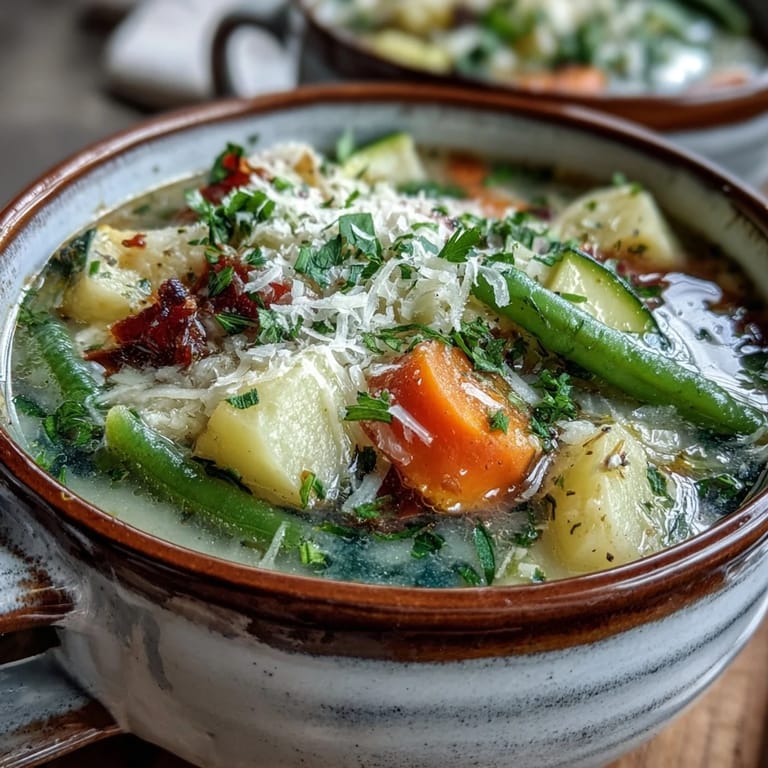
Save This soup is proof that the most nourishing things in life are often the simplest ones, made with care and served with intention. Make it for someone, or make it for yourself on a day when you need to remember that good food and a warm bowl can fix more than just hunger.
Recipe Help & FAQs
- → Can I make this soup ahead of time?
Absolutely. This soup actually tastes better the next day as flavors have time to meld. Store in an airtight container in the refrigerator for up to 4 days. Reheat gently on the stovetop, adding a splash of broth if needed.
- → What vegetables work best in this soup?
The recipe calls for carrots, celery, zucchini, potato, and green beans, but you can customize based on what's in season. Try butternut squash, spinach, kale, or bell peppers. Just keep vegetable pieces similar in size for even cooking.
- → Is the Parmesan rind really necessary?
Not essential, but highly recommended. The rind slowly releases incredible savory flavor while simmering. Save rinds from wedges of Parmesan in your freezer—they'll keep for months and add restaurant-quality depth to soups and stews.
- → Can I freeze this soup?
Yes, though the texture of potatoes may soften slightly. Cool completely before freezing in airtight containers for up to 3 months. Thaw overnight in the refrigerator and reheat on the stovetop, stirring in fresh Parmesan before serving.
- → How can I make this more filling?
Add cooked small pasta like shells or ditalini during the last 10 minutes of simmering. Cannellini beans or chickpeas also work beautifully. For extra protein, stir in shredded chicken or serve with a crusty bread for dipping.
- → What can I substitute for Parmesan?
Pecorino Romano offers a similar salty kick. For a dairy-free version, use nutritional yeast for umami flavor or try vegan Parmesan alternatives made from cashews and nutritional yeast.