 Save
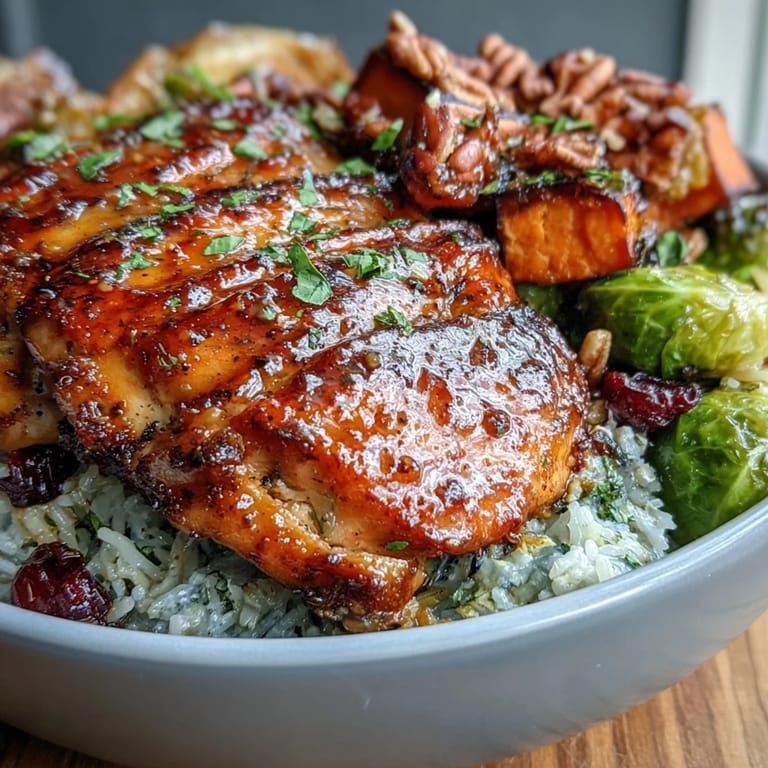
Save There's something magical about the moment when maple meets mustard in a hot skillet, and you realize you've stumbled onto a flavor combination that just works. I discovered this bowl on a chilly October evening when I had chicken, sweet potatoes, and a half-empty jar of Dijon mustard staring at me from the pantry. What started as improvisation became the kind of dish I find myself craving when the weather turns cooler and I want something that feels both nourishing and indulgent.
I made this for my sister's surprise dinner party once, nervous about feeding six people something I'd only tried a handful of times. Watching everyone's faces as they took that first bite—how the cinnamon-touched sweet potato balanced the sharp Dijon, how the pecans added this unexpected crunch—made me understand why comfort food matters. That night, someone asked for the recipe three times before dessert was even served.
Ingredients
- Boneless, skinless chicken breasts: Pound them to even thickness so they cook uniformly without the edges drying out while the center finishes.
- Pure maple syrup: The real stuff makes all the difference—it caramelizes properly and gives you that deep, authentic sweetness that imitation syrup can't touch.
- Dijon mustard: This is your umami anchor, cutting through the maple with enough tang to keep the glaze from becoming one-dimensional.
- Sweet potatoes: Cut them all to similar sizes so they roast evenly, and don't skip the cinnamon—it's the secret whisper that ties everything together.
- Brussels sprouts: Halving or quartering them exposes more surface area for caramelization, which means crispy edges and tender centers.
- Brown or wild rice: Use broth instead of water if you have it; the extra flavor seeps into every grain and makes the bowl feel more finished.
- Fresh rosemary: Chop it finely so it distributes evenly through the glaze instead of getting stuck in your teeth.
- Pecans and cranberries: Toast the pecans yourself if you can—they go from subtle to genuinely nutty in just a few minutes in a dry pan.
Tired of Takeout? 🥡
Get 10 meals you can make faster than delivery arrives. Seriously.
One email. No spam. Unsubscribe anytime.
Instructions
- Start your rice first:
- Get your rice cooking according to package directions with broth or water and salt; this timing anchor lets everything else fall into place without stress. Most brown rice needs about 40 minutes, so start it before you do anything else.
- Prep your vegetables while rice cooks:
- Toss sweet potatoes and Brussels sprouts with olive oil, salt, pepper, and that optional cinnamon, then spread them single-layer on a baking sheet. Pop them into a 400°F oven for 25–30 minutes, stirring halfway through, until they're caramelized and tender with crispy edges.
- Pound and season your chicken:
- Use a meat mallet to even out thickness—this small step prevents dry edges and undercooked centers. Season generously on both sides with salt and black pepper.
- Make your glaze while chicken rests:
- Whisk maple syrup, Dijon mustard, olive oil, and finely chopped fresh rosemary in a small bowl, tasting as you go. You want that tang and sweetness to feel balanced, not one drowning out the other.
- Sear your chicken with confidence:
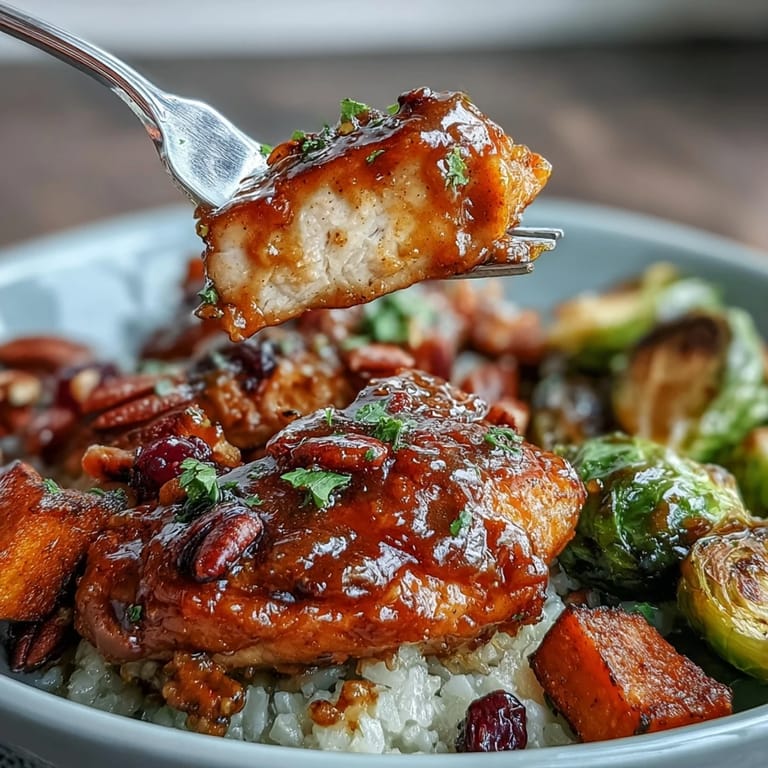
- Heat oil in a large skillet over medium-high heat until it shimmers, then add chicken and cook 5–6 minutes per side until golden and cooked through to 165°F internally. During the last two minutes, brush both sides generously with glaze, letting it caramelize into a sticky, glossy coat—reserve extra glaze for drizzling.
- Rest and slice:
- Let chicken rest on a plate for five minutes; this lets the juices redistribute so every bite stays tender. Slice into strips at a slight angle for an elegant presentation.
- Assemble with intention:
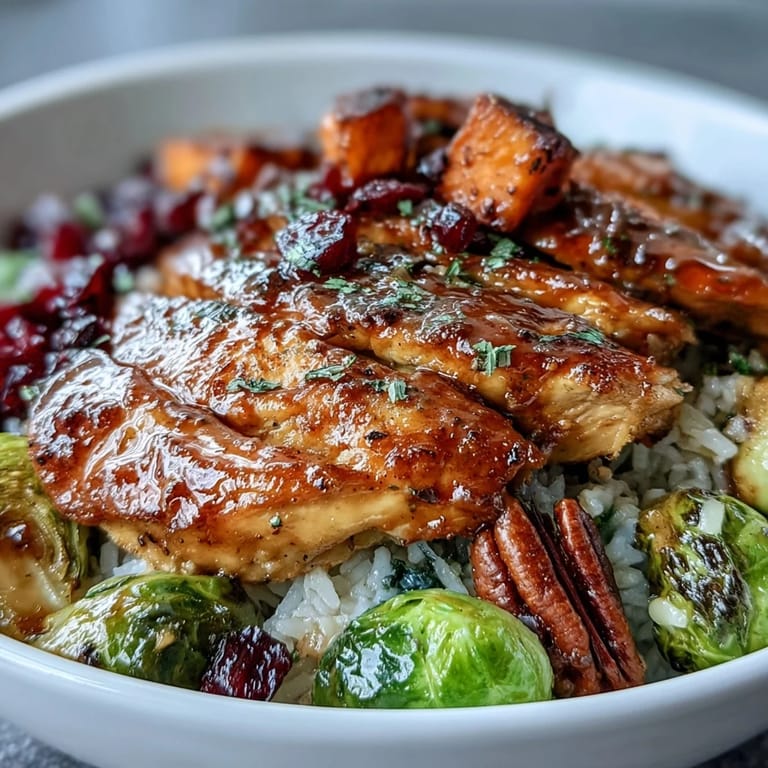
- Divide rice among bowls as your base, then nestle roasted vegetables on top, followed by sliced chicken arranged in a way that looks intentional. Drizzle with remaining glaze and scatter pecans, cranberries, and fresh parsley over everything, finishing with a sprinkle of sea salt if you're feeling fancy.
 Save
Save These bowls became my go-to when I needed to feel like I was taking care of myself without spending two hours in the kitchen. There's something about a dish this colorful and intentional that reminds you that feeding yourself well is worth the small effort.
Building the Perfect Bowl
The architecture of the bowl matters more than you might think. I learned this by making the mistake of layering everything haphazardly the first few times, ending up with pockets of rice that had no vegetables and a chicken slice that dried out from the steam of the other components. Now I think of it like building a foundation—rice first, then vegetables nestled into the warmth of the grain, chicken on top so it stays in that sweet spot between warm and slightly cooler from the air.
The Glaze is Everything
This isn't just a sauce you make because the recipe says to; it's genuinely the reason people ask for seconds. The moment maple and Dijon hit hot oil together, something almost chemical happens—the maple caramelizes and the mustard deepens into something savory and complex. I've found that the glaze tastes better if you don't make it too early; the rosemary stays fresher and more pronounced if it hasn't been sitting around oxidizing.
Customizing to Your Mood
This bowl is genuinely flexible without losing its identity, which is probably why it's become such a staple. Swap the rice for quinoa or even roasted cauliflower rice if you're going in a different nutritional direction, trade the pecans for walnuts or almonds if that's what you have on hand, or add a crumble of goat cheese if you want something creamy against all that caramelized texture. The core magic—that salty, sweet, tangy glaze and the way the roasted vegetables get crispy—stays intact no matter what you customize.
- Vegetarians, roast chickpeas or crispy tofu instead of chicken and you'll barely miss a thing.
- If you're meal prepping, store the components separately and assemble just before eating so the rice doesn't soak up all the glaze.
- Toast your own pecans in a dry skillet for two to three minutes; you'll taste the difference immediately.
 Save
Save This bowl has become my proof that simple doesn't have to mean boring, and that taking 55 minutes to cook something that tastes this composed is never wasted time. Make this once and it'll be back on your table when the nights get cooler and you're hungry for something that feels like both comfort and care.
Recipe Help & FAQs
- → How do I make the maple Dijon glaze?
Whisk together pure maple syrup, Dijon mustard, olive oil, and finely chopped rosemary until smooth and well combined.
- → What rice works best for this bowl?
Brown or wild rice provides a nutty, chewy base that complements the roasted vegetables and glazed chicken perfectly.
- → Can I prepare this dish ahead of time?
Yes, cook and store rice, roasted vegetables, and glazed chicken separately; assemble bowls just before serving to maintain freshness.
- → What can I substitute for chicken in this bowl?
Roasted chickpeas or tofu make excellent plant-based alternatives that pair well with the maple Dijon glaze.
- → Are the pecans necessary?
Pecans add a crunchy texture and rich flavor, but can be omitted or replaced with other nuts or seeds to suit preferences.