 Save
Save My kitchen smelled like a New Orleans bakery the first time I decided to marry babka with King Cake tradition. It happened almost by accident—I had cream cheese filling left over from one project, a craving for cinnamon swirls from another, and this wild idea that the two could exist in the same beautiful, twisted loaf. The result was so stunning that my neighbor heard the oven timer and just appeared at my door with coffee, no invitation needed.
I'll never forget the moment someone who claimed they didn't like sweet bread took three slices and then asked if I was selling them. That's when I realized this loaf had something special—it wasn't overwhelming despite the layers of filling, and the cream cheese gave it this subtle richness that made people pause and actually taste what they were eating.
Ingredients
- All-purpose flour (3 1/4 cups): This is your foundation, and using the weight measurement keeps your dough consistent every time—I learned that lesson after a few dense loaves.
- Instant yeast (2 1/4 tsp): Don't confuse this with active dry; instant dissolves faster and gives you a more reliable rise in less time.
- Whole milk, lukewarm (2/3 cup): The temperature matters more than you'd think—too hot kills the yeast, too cold stalls the rise, so use a thermometer if you're unsure.
- Unsalted butter for dough (1/3 cup): Room temperature is non-negotiable here; cold butter won't incorporate smoothly and you'll end up with lumpy dough.
- Packed light brown sugar and ground cinnamon: The brown sugar adds moisture and depth to the filling, while cinnamon becomes almost floral when baked—don't skimp on quality.
- Cream cheese filling (4 oz): This unexpected layer prevents the loaf from drying out and adds a subtle tang that cuts through the sweetness beautifully.
- Powdered sugar glaze: Make it thick enough to cling but loose enough to drip slightly; that's the sweet spot.
- Colored sanding sugars for decoration: These are the crown jewels that make people gasp when you pull it from the oven—worth seeking out in specialty stores or ordering online.
Tired of Takeout? 🥡
Get 10 meals you can make faster than delivery arrives. Seriously.
One email. No spam. Unsubscribe anytime.
Instructions
- Build your dough foundation:
- Combine your dry ingredients first—flour, sugar, yeast, and salt—in a large bowl or stand mixer. This prevents yeast from touching salt directly, which can inhibit rising. When you add the lukewarm milk mixture, you're waking up the yeast and bringing everything together into a shaggy mass.
- Develop the dough:
- This is where a stand mixer shines, but your hands work too—beat or knead for 8–10 minutes until the dough becomes smooth, elastic, and barely tacky. You'll feel the transformation under your hands as the gluten develops and the dough goes from rough to silky.
- First rise:
- Place your dough in a greased bowl, cover it loosely with plastic wrap or a damp towel, and find a warm spot—an oven with the light on, a sunny windowsill, or even a turned-off oven. You're looking for it to roughly double in size, which usually takes 1–1.5 hours depending on your kitchen temperature.
- Prepare both fillings while you wait:
- Mix brown sugar, cinnamon, and softened butter into a paste for the cinnamon filling, then blend cream cheese with sugar and vanilla until smooth for the cream cheese layer. Having both ready before you roll out dough saves you from rushing through the assembly.
- Roll and fill with intention:
- Turn out your risen dough onto a floured surface and gently roll it into a 16x12-inch rectangle—this takes patience, not force. Spread cream cheese filling first, leaving a half-inch border, then layer the cinnamon filling on top, making sure every inch gets coverage.
- Create the twist:
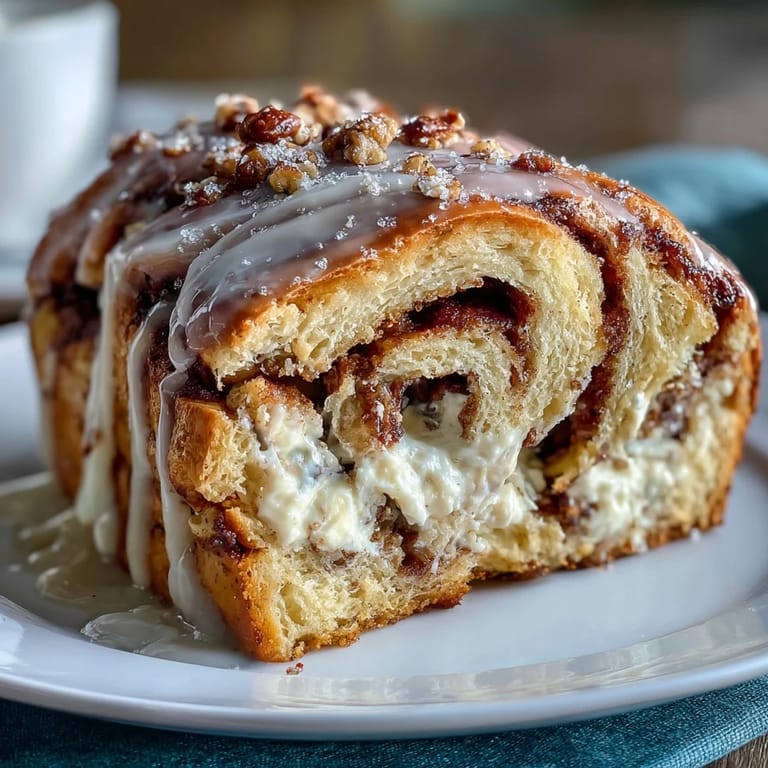
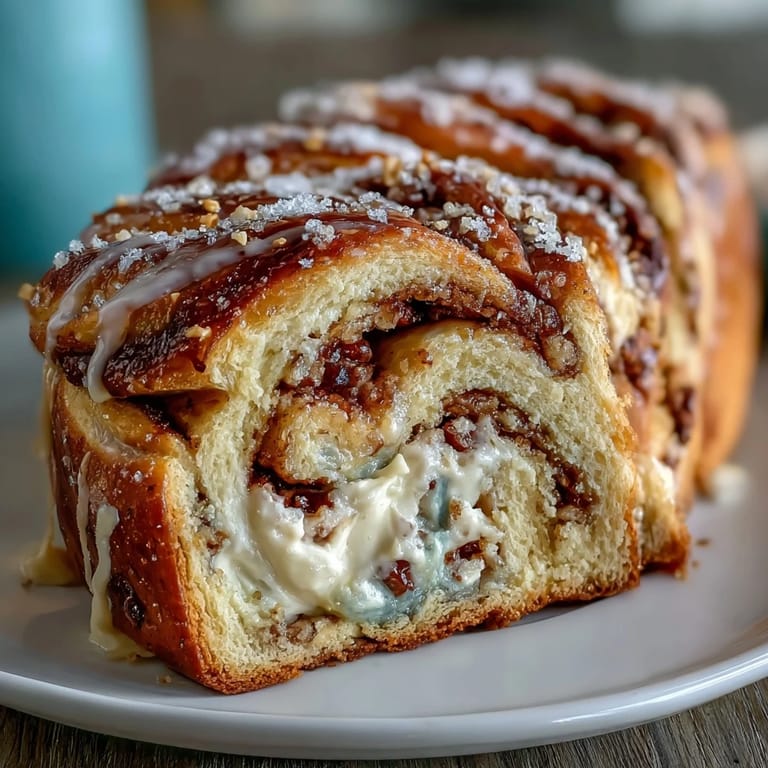
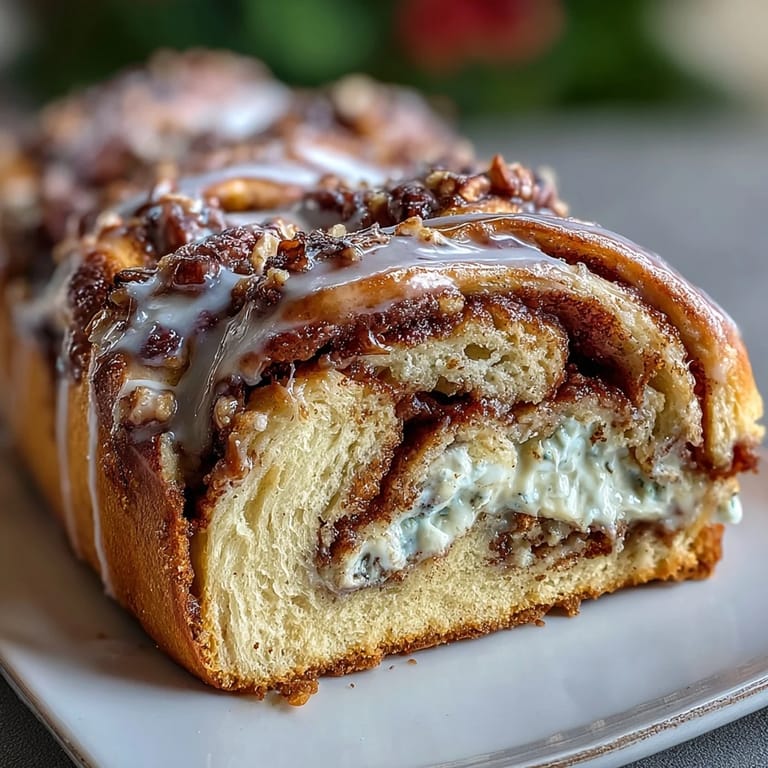
- Roll the dough tightly from the long side like you're making a sleeping bag, then slice lengthwise in half to reveal those gorgeous swirls. Twist the two strands together, keeping the cut sides up so you can see all that beautiful filling, and coil into a loaf shape.
- Second rise:
- Place your twisted loaf in a greased 9x5-inch pan, cover, and let it rise until puffy and springy to the touch, about 45 minutes. This is when your kitchen starts smelling absolutely intoxicating.
- Bake to golden perfection:
- At 350°F for 35–40 minutes, your loaf will turn a gorgeous deep brown—if it's browning too quickly on top, tent it loosely with foil. The loaf is done when the internal temperature reaches 190°F and a skewer inserted into the thickest part comes out clean.
- Cool strategically:
- Let it rest in the pan for 15 minutes so it firms up, then turn it out onto a cooling rack. Patience here prevents it from breaking apart, but don't wait too long to glaze or the glaze won't stick as beautifully.
- Glaze and celebrate:
- Whisk powdered sugar with milk to create a glaze that's thick but pourable, then drizzle it generously over your cooled loaf. Immediately sprinkle the purple, green, and gold sanding sugars so they stick to the wet glaze, creating that showstopping crown.
 Save
Save There's something magical about pulling a bread this beautiful from your own oven and knowing every layer, every swirl, is exactly where you put it. When someone asks if you bought it from a bakery, that's the moment this recipe proves its worth.
Why This Fusion Works
Babka's tender, yeasted crumb and King Cake's festive spirit were basically meant to meet. The Eastern European structure with the American celebration creates something that feels both familiar and surprising, like discovering that two of your favorite people actually know each other. The cream cheese filling bridges them perfectly, adding a whisper of sophistication that makes the whole thing feel less like just dessert and more like an experience.
The Science of the Swirl
Those visible spirals aren't just for show—they serve a purpose. By slicing the log lengthwise and twisting it, you're creating air pockets that keep the crumb tender while also exposing maximum surface area to the filling flavors. Every slice reveals the architecture, which is why people can't stop at just one bite. The cream cheese in particular creates little pockets as it bakes, giving you those surprising moments of creaminess alongside the warm cinnamon sweetness.
Making It Your Own
Once you understand the basic technique, this loaf becomes your canvas. I've experimented with orange zest in the dough, swapped mascarpone for cream cheese when I had it on hand, and even added a thin layer of dark chocolate between the fillings when I was feeling particularly inspired. The structure stays strong enough to handle variations, which is the mark of a truly good recipe. Think of the foundation as solid and the details as flexible.
- Try cardamom instead of cinnamon for a more European spin, or add a pinch of cayenne for subtle heat.
- Use the same technique with different fillings—Nutella and mascarpone, or apple cinnamon butter if you're leaning sweet and seasonal.
- Make mini loaves in a muffin tin if you want individual portions that look even more impressive.
 Save
Save This loaf has a way of becoming a tradition once you've made it once. Serve it warm with good coffee, and watch how it brings people together in a way plain desserts never quite manage.
Recipe Help & FAQs
- → How long should the dough rise?
The dough should rise until doubled in size, typically about 1 to 1.5 hours in a warm spot.
- → Can mascarpone be used instead of cream cheese?
Yes, mascarpone can be substituted for cream cheese to provide a slightly richer and creamier filling.
- → What is the best way to achieve a moist loaf?
Ensuring proper kneading and allowing the dough to fully rise before baking helps maintain a tender, moist texture.
- → How should the loaf be decorated for vibrant colors?
After glazing, sprinkle purple, green, and gold sanding sugars evenly over the loaf for a festive finish.
- → Is it possible to add extra flavor to the dough?
Yes, incorporating orange zest into the dough adds a fresh citrus note enhancing the overall flavor.
- → Can leftovers be stored?
Store leftovers in an airtight container at room temperature for up to three days to preserve freshness.