 Save
Save My neighbor texted me a photo of her empty apartment last Thursday, and I knew exactly what she needed—not furniture advice, but a reason to gather people in that bare living room. I'd thrown together a charcuterie board for my sister's birthday the month before, arranging everything on a cutting board at the last minute, and watching how guests naturally gravitated toward it, picking and talking and lingering. That's when it clicked: the best housewarming gifts aren't things you wrap, they're moments you create. So I decided to build her a board that would do the work for us—colorful, generous, impossible to ignore.
Standing in my neighbor's kitchen that Saturday afternoon, I realized the board had become the conversation itself. People weren't just eating—they were discovering combinations they'd never considered, pointing at the blue cheese and asking if it went with the fig, debating whether the prosciutto or salami tasted better. A friend I hadn't seen in months spent twenty minutes at that board, and we finally got to actually talk instead of shouting over appetizer stress. It transformed an awkward first gathering into something warm and unhurried.
Ingredients
- Prosciutto (120 g): Buy it sliced at the deli counter, not pre-packaged if you can help it—the texture stays delicate longer, and it tastes noticeably cleaner.
- Salami (120 g): Choose a variety with good marbling; it signals quality without being pretentious and pairs beautifully with the aged cheddar.
- Smoked ham (120 g): This adds savory depth and rounds out the meat selection with something familiar that keeps people coming back.
- Chorizo slices (100 g): The paprika-forward heat makes it a flavor anchor; it's the first thing most people notice.
- Brie (150 g), sliced: Slice it just before serving so it doesn't dry out, and the creamy center stays soft enough to actually enjoy.
- Aged cheddar (150 g), cubed: The crystalline texture and sharp bite become the board's backbone—pair it with the dried fruit for unexpected harmony.
- Gouda (120 g), sliced: Its buttery sweetness bridges the gap between the sharp cheddar and milder cheeses, creating balance.
- Blue cheese (100 g), crumbled: Crumble it fresh rather than buying pre-crumbled; it holds its pungency better and invites confident tasting.
- Hummus (100 g): This is your vegetarian anchor—the creamy texture stops the board from feeling all about meat and cheese.
- Tzatziki (100 g): The cool cucumber and dill calm the salty elements and give lighter eaters an actual destination.
- Roasted red pepper dip (100 g): This is the surprise winner—sweeter, slightly smoky, it makes even skeptical guests say yes to just one more cracker.
- Assorted crackers (150 g): Multigrain holds up to the heavier pairings, water crackers let delicate flavors shine; have at least three types.
- Baguette, sliced (100 g): Toast the slices lightly an hour before if you want them to hold up without getting soggy—fresh bread wilts under dip weight.
- Breadsticks (100 g): They're the visual height of the board and keep guests' hands from dripping dip onto their clothes.
- Red grapes (1 cup): Leave them in small clusters when possible; it looks intentional and guests take smaller handfuls, making them last.
- Green grapes (1 cup): The color contrast matters—your eye should find brightness in every direction you look.
- Cherry tomatoes (1 cup): Choose firm ones and halve them if they're very large; the cut sides show off their color.
- Cucumber slices (1 cup): Slice them at an angle about 10 minutes before serving so they stay crisp but don't pool water.
- Red bell pepper, sliced (1 whole): It's the loudest color on the board—position it where your eye naturally lands first.
- Baby carrots (1 cup): They're sweeter than full-size and feel less vegetable-y to people picking with wine in hand.
- Mixed nuts (1/2 cup): Toast them lightly in a dry pan first to wake up their oils; the aroma alone starts conversations.
- Olives, pitted (1/2 cup): Mix green and black for visual interest; the salt in olives makes people thirstier, which means they stay longer and keep talking.
- Dried apricots (1/4 cup): Their gentle sweetness becomes essential between bites of sharp cheese and salty meat.
- Dried figs (1/4 cup): Tear larger ones in half to show their interior and signal that dried fruit belongs here with the same respect as everything else.
- Fresh herbs—rosemary and thyme (small sprigs): Scatter them at the very end for fragrance and color; they remind people this came from a real kitchen, not a factory.
Tired of Takeout? 🥡
Get 10 meals you can make faster than delivery arrives. Seriously.
One email. No spam. Unsubscribe anytime.
Instructions
- Start with the foundation:
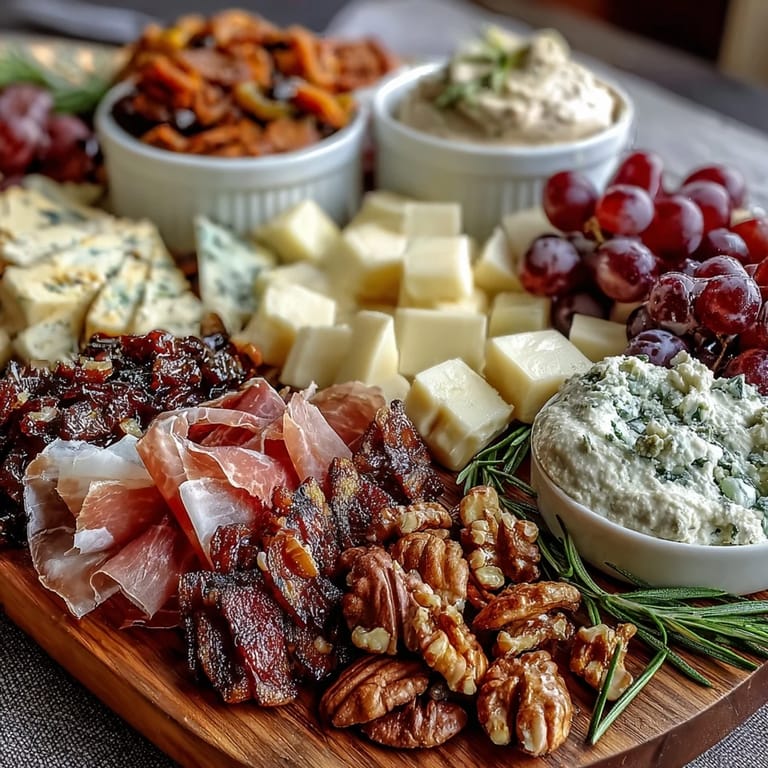
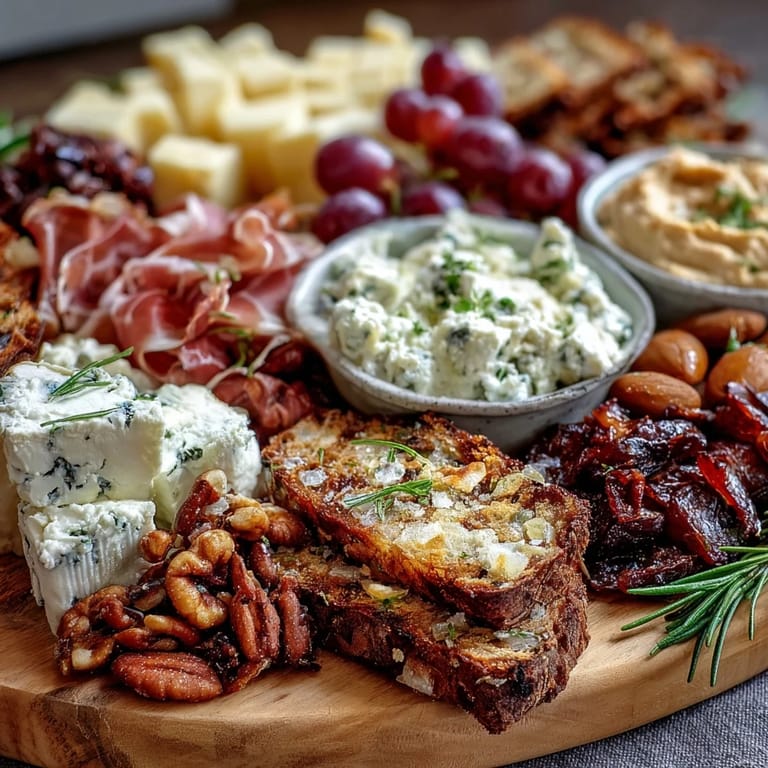
- Lay your cured meats in loose, flowing folds across the board—don't flatten them down or they lose their delicate texture and visual appeal. Let them fold naturally, creating little valleys that catch light and draw eyes.
- Position your cheese strategically:
- Place cheeses in clusters of three: the brie, aged cheddar, and blue cheese in one corner, the gouda in another. Spacing them means guests can make actual choices rather than grabbing whatever's closest.
- Nestle the dips:
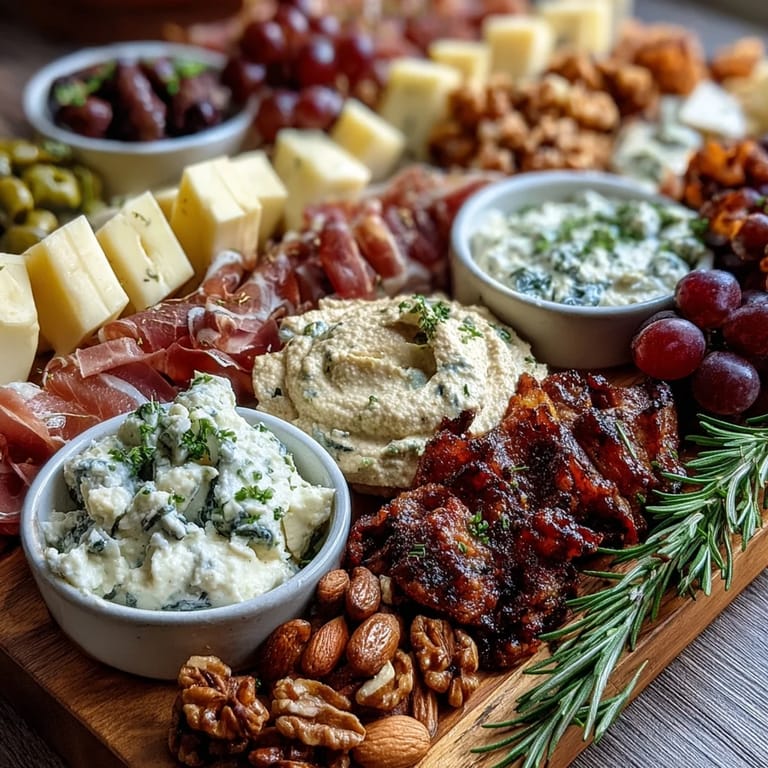
- Spoon each dip into its own small bowl before setting them on the board—this keeps them from spreading and muddying each other, and it signals they're intentional offerings, not afterthoughts. Arrange them so there's walking distance between them; a guest can move to hummus without tripping over tzatziki.
- Create pathways with crackers and bread:
- Fan crackers out in overlapping rows like you're dealing cards, with baguette slices forming another section and breadsticks standing upright in a small cluster. The different orientations make the board feel alive rather than gridded.
- Fill the gaps with produce:
- Now tuck grapes, tomatoes, cucumber, and peppers into the empty spaces—they're your color and freshness insurance, so don't crowd them. Each piece should have a little breathing room so you can actually see its color.
- Scatter nuts, olives, and dried fruit:
- In small clusters rather than spread throughout—this creates visual resting points and makes people aware these are special additions worth trying. A handful of olives here, a small mound of nuts there.
- Finish with herbs and fresh air:
- Tuck tiny sprigs of rosemary and thyme around the board in the final moments—they wilt slightly if you do this too early, and their fragrance is part of the welcome. Step back and look for any dark corners that need brightness, any bare spots that need color.
- Serve and refresh:
- Put this out on a table where people naturally gather, not tucked in a corner. As items disappear, fill the gaps with what you have left—the board should always feel abundant, never desperate.
 Save
Save My neighbor texted me a photo of that board an hour into the party—everything half-empty, people standing around it laughing, someone's hand frozen mid-reach for the last piece of brie. She wrote: 'This is genius.' But it wasn't genius, it was just giving people permission to linger over small decisions instead of sitting on a couch feeling awkward in a new place. That board became the reason her housewarming wasn't just an event—it was the moment she felt at home.
The Art of Strategic Placement
After making a few of these, I stopped thinking of arrangement as decoration and started thinking of it as choreography. You're guiding people's hands and eyes, creating natural flow so they don't feel stuck in one corner. The meats should stretch across one side invitingly, cheeses should feel like destinations, and dips should be obvious without being pushy. I learned this the hard way when I clustered everything densely and people kept bumping into each other trying to reach the blue cheese. Spread works better than crowd.
Timing and Temperature Tricks
The board is best served cool but not cold—brie melts into absolute luxury at room temperature, hard cheeses become actually cuttable, and even the bread doesn't shatter when someone tries to pick it up. I used to assemble everything and refrigerate it, then watch people struggle with cold, dense cheese that tasted like almost nothing. Now I build it 30 to 45 minutes before guests arrive, keeping just the dips chilled separately until the last moment. The difference in how much people actually taste and enjoy is noticeable.
Flexibility and Personal Permission
The numbers I gave you are starting points, not laws—adjust based on what your crowd actually eats, what the season offers, and what you can source without stress. Someone once told me they made this board with entirely different meats and cheeses because that's what their market had that day, and their guests loved it just as much. The structure is the genius, not the specific ingredients.
- Swap dried fruit for fresh when it's summer, or add candied nuts when you want something sweeter and more luxurious.
- Include a small wedge of something sharp and unusual—manchego, aged goat, smoked cheddar—to give people one thing they'll remember and talk about later.
- Leave space for one ingredient that represents your neighborhood or what you're celebrating, even if it's just local honey drizzled into a small bowl next to the cheese.
 Save
Save A good charcuterie board is less about food and more about giving people a reason to slow down in a room full of other people and actually connect. The rest follows naturally.
Recipe Help & FAQs
- → What meats work best on a charcuterie board?
Choose a variety of cured meats such as prosciutto, salami, smoked ham, and chorizo to offer different flavors and textures that complement each other.
- → How should cheeses be arranged for best presentation?
Slice or cube cheeses in varying shapes and sizes, spacing them evenly across the board to allow easy picking and visual appeal.
- → What dips pair well with cured meats and cheeses?
Hummus, tzatziki, and roasted red pepper dip provide complementary creamy and tangy flavors that balance the saltiness of meats and richness of cheeses.
- → How can I include dietary preferences on the board?
Offer vegetarian options like additional vegetables, nuts, and gluten-free crackers to accommodate different dietary needs while maintaining variety.
- → What role do fresh fruits and nuts play on the board?
Fruits add natural sweetness and freshness, cutting through richness, while nuts contribute crunch and an earthy dimension to the mix.
- → Any tips for serving and replenishing the board?
Arrange items in small piles for easy access and keep extra portions nearby to refill the board steadily throughout the gathering.