 Save
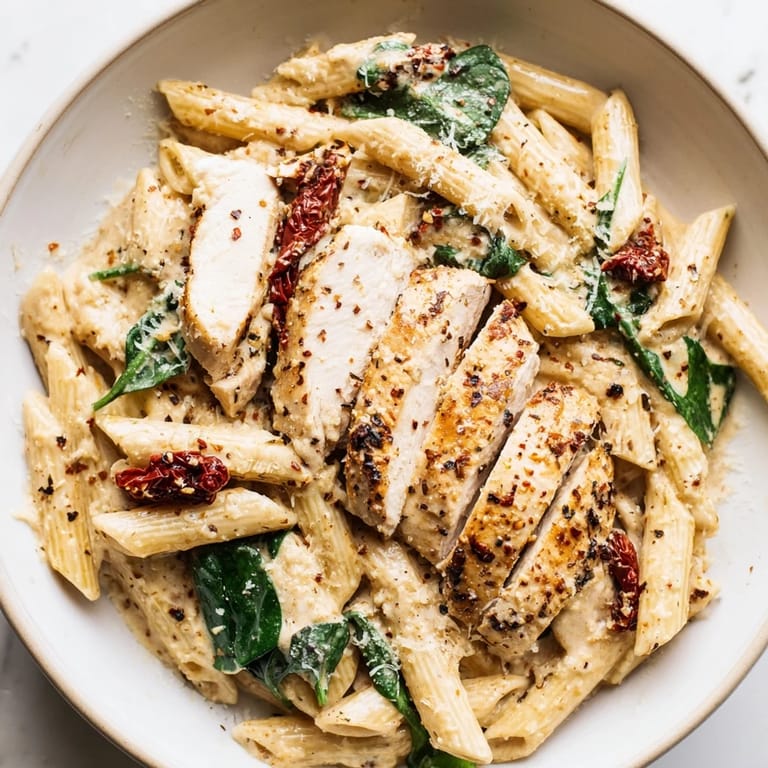
Save There's something about the smell of garlic hitting hot butter that makes you pause mid-conversation, isn't there? I discovered this Creamy Tuscan Chicken Pasta on a random Tuesday when my roommate left half a container of sun-dried tomatoes in our fridge and challenged me to use them before they went bad. What started as a reluctant cooking challenge turned into the dish I now make whenever I need to remind myself why I love cooking—it's elegant enough to impress, but simple enough that you won't stress.
I made this for my sister the first time she visited after moving across the country, and I watched her face change the moment she took that first bite—the kind of quiet satisfaction that comes from tasting something creamy and rich and exactly what you needed. She's not easily impressed in the kitchen, but she asked for the recipe that night, and I remember feeling genuinely proud over something as simple as pasta.
Ingredients
- Penne or fettuccine (350 g / 12 oz): Penne cups the sauce beautifully, but fettuccine works if you prefer the sauce clinging to ribbon-like strands—either way, cook it one minute under the package time so it stays slightly firm.
- Chicken breasts (2 large, boneless and skinless): They cook fast and stay tender if you don't overcook them, which is why I always slice them right after resting—that's when they're still warm enough to absorb flavors.
- Sun-dried tomatoes in oil (120 g / 3/4 cup, drained and sliced): These aren't just a garnish; they're flavor bombs that taste like concentrated sunshine and add a subtle sweetness that balances the cream.
- Garlic (3 cloves, minced): Fresh garlic only—it makes the difference between a good sauce and one that tastes alive.
- Heavy cream (240 ml / 1 cup): This is the luxurious backbone; using real cream instead of half-and-half makes the sauce silkier and more forgiving.
- Parmesan cheese (60 g / 2 oz, grated): Grate it fresh if you can, because pre-grated cheese has additives that prevent it from melting as smoothly.
- Fresh baby spinach (80 g / 3 cups): It wilts down to almost nothing, which is why we use what looks like too much—the volume is an illusion.
- Butter (2 tbsp unsalted): Unsalted lets you control the salt level, which matters more than you'd think in a cream sauce.
- Chicken broth (120 ml / 1/2 cup): This deglazes the pan and adds savory depth, plus it helps you control the sauce consistency later.
- Red pepper flakes (1/4 tsp, optional): A whisper of heat wakes up the richness, but leave it out if you prefer purely comfort food.
- Olive oil (2 tbsp): Use something you don't mind spending a little on—it's the cooking medium for the chicken and affects the overall flavor.
Tired of Takeout? 🥡
Get 10 meals you can make faster than delivery arrives. Seriously.
One email. No spam. Unsubscribe anytime.
Instructions
- Set water boiling and get organized:
- Fill a large pot with water, salt it generously (it should taste like the sea), and get it to a rolling boil while you prep everything else. This is your anchor point—once the pasta goes in, the timing matters.
- Season and sear the chicken:
- Pat the chicken breasts dry—this helps them brown instead of steam. Season both sides with salt, pepper, and Italian herbs, then heat olive oil in a large skillet over medium-high until it shimmers and smells almost toasted. Add the chicken and let it sit for 5-6 minutes without moving it so a golden crust forms, then flip and cook the other side. You'll know it's done when the thickest part reaches 165°F or when juices run clear.
- Build your pasta foundation:
- Drop pasta into the boiling water and stir it immediately so it doesn't stick to itself. Cook until just al dente—that slight firmness matters because it continues cooking when you toss it with the hot sauce.
- Create the garlic-butter base:
- While pasta cooks, transfer the rested chicken to a plate and slice it thinly (this is when it releases the most moisture, so do it while warm). In the same unwashed skillet, melt butter over medium heat and add minced garlic, letting it soften and perfume the oil for about a minute—don't let it brown or it turns bitter.
- Toast the sun-dried tomatoes:
- Stir in the sliced sun-dried tomatoes and cook for another minute so they release their flavor and soften slightly. The skillet should smell intensely savory and Mediterranean at this point.
- Deglaze and build the sauce:
- Pour in chicken broth, scraping the bottom of the skillet with your spoon or spatula to lift up all those caramelized bits—that's where the flavor lives. Lower the heat to medium-low and stir in the heavy cream, letting it warm through but not boil, then add grated Parmesan and red pepper flakes if using.
- Wilt the spinach and finish:
- When the sauce is smooth and slightly thickened (this takes 2-3 minutes), dump in the spinach and stir constantly—it'll look like too much, but it shrinks dramatically. Drain your pasta, reserving about half a cup of that starchy water, then add both pasta and sliced chicken to the skillet, tossing gently so everything gets coated.
- Adjust and serve:
- If the sauce feels too thick, splash in reserved pasta water a little at a time while tossing—the starch helps it cling to the pasta. Taste and season with more salt and pepper if needed, then plate it hot with fresh basil or parsley and extra Parmesan scattered over the top.
 Save
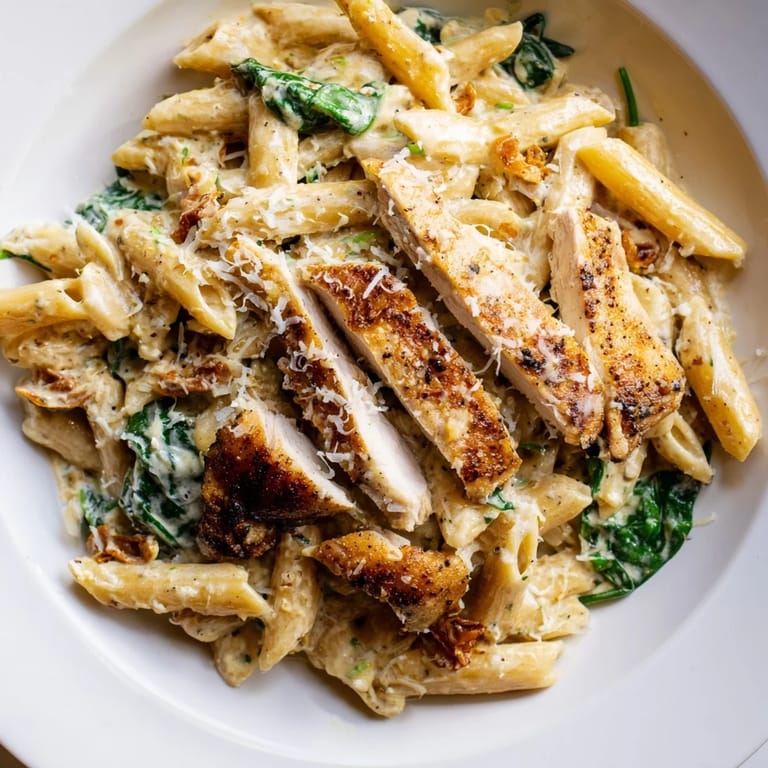
Save What I love most about this dish is that moment when everything comes together in the skillet—the way the cream darkens slightly from the sun-dried tomatoes, how the fresh spinach turns emerald green, and how the kitchen fills with a smell that makes your stomach speak before your brain catches up. That's when you know you've made something worth making.
Timing Your Components
The hardest part isn't the cooking; it's keeping everything warm and ready at the same time. I learned early on that if your pasta finishes before the sauce is ready, it gets cold and clumpy, and if your sauce finishes first, the cream can break from overheating. The solution is rhythm: start your water, then prep your chicken while it heats, get the chicken in the pan as the water boils, add pasta right when the chicken goes in, and build the sauce while pasta cooks. Everything should finish within a minute of each other, which is oddly satisfying when it works.
Customizing Without Losing the Soul
You can swap ingredients without breaking the recipe, but certain changes matter more than others. Shrimp works beautifully instead of chicken—use large shrimp and cook it only 2-3 minutes per side so it doesn't toughen. Half-and-half lightens the sauce but makes it thinner, so reduce it slightly longer to compensate. Fresh basil is better than dried Italian herbs if you have it, and adding a pinch of nutmeg to the cream is a small secret that feels fancy.
The Small Things That Matter
I've made this dish dozens of times now, and the small choices are what separate a good version from one that makes people ask for the recipe. The quality of your Parmesan, whether you taste as you go, and how gently you stir at the end so the spinach doesn't tear—these details don't sound important until you taste the difference. One more thing: don't skip the resting period for the chicken, and never, ever cover the pan while the sauce simmers or the cream can separate.
- A wooden spoon or silicone spatula is gentler on ingredients than metal, especially when folding in spinach.
- Keep that reserved pasta water within arm's reach so you can adjust the sauce consistency without hunting for it mid-toss.
- If you're making this for guests, have everything ready to go because once you start cooking the chicken, you're committed to the next twenty minutes of attention.
 Save
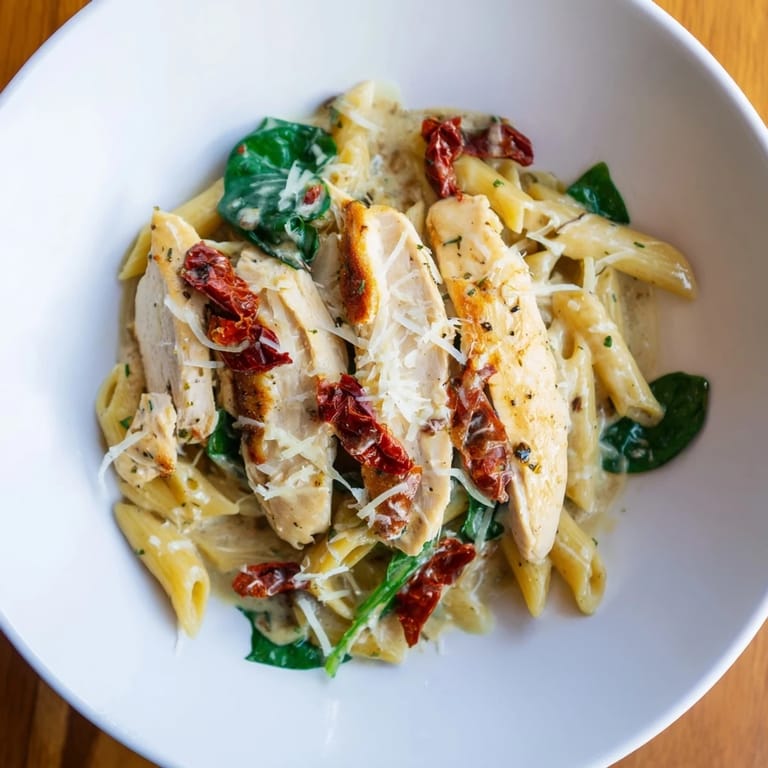
Save This is the kind of dish that tastes like someone cared about you, even if you're cooking it for yourself on a random weeknight. That's why I keep making it.
Recipe Help & FAQs
- → What pasta types work best here?
Penne or fettuccine are ideal since their shapes hold the creamy sauce well, balancing each bite with tender chicken and spinach.
- → Can I substitute the chicken with seafood?
Yes, grilled shrimp makes a delightful alternative, adding a light seafood flavor that pairs nicely with the creamy sauce.
- → How do sun-dried tomatoes affect the dish?
They provide a tangy, slightly sweet depth that complements the richness of the cream and Parmesan, enhancing overall flavor complexity.
- → Is it possible to lighten the sauce?
Using half-and-half instead of heavy cream will reduce richness, creating a lighter yet still creamy texture.
- → How should leftovers be stored?
Store in an airtight container in the refrigerator for up to 3 days. Reheat gently to maintain sauce creaminess and avoid drying out the chicken.
- → What herbs pair well with this dish?
Dried Italian herbs in the seasoning and fresh basil or parsley as garnish add aromatic freshness that lifts the creamy profile.