 Save
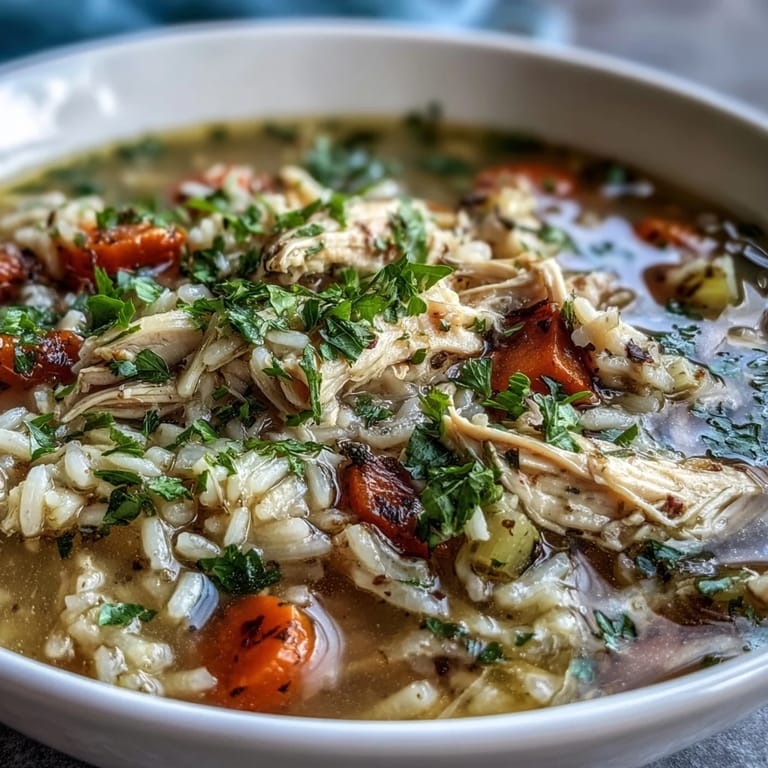
Save My neighbor knocked on my door one gray November afternoon with a pot of chicken and rice soup still steaming, and I watched her ladle it into bowls like she was sharing something sacred. The broth was golden, the rice had soaked up just enough flavor to taste like comfort itself, and I realized that evening why this soup had become her answer to everything—a sick friend, a rough day, a celebration. Now whenever the temperature drops, I make my own version, and it tastes like borrowed wisdom and kitchen warmth all at once.
I made this for my roommate when she was stressed about exams, and she came home to find the kitchen smelled like a warm hug—thyme and garlic and simmering broth doing all the heavy lifting. She sat at the table with her bowl, and we barely talked for the first few minutes, just ate. That's when I knew this recipe was doing something right.
Ingredients
- Chicken breasts: Two large boneless, skinless breasts give you tender meat that shreds easily once cooked through, about 1 pound total.
- Olive oil: Two tablespoons is enough to get everything sizzling without making the soup greasy.
- Yellow onion: One large onion, diced, becomes sweet and almost translucent as it softens—the backbone of flavor here.
- Carrots: Three peeled and sliced carrots add natural sweetness and body to the broth without needing anything fancy.
- Celery stalks: Three sliced stalks round out that classic aromatic trio and give the soup an herbaceous note.
- Garlic cloves: Three minced cloves wake everything up after just a minute in the hot oil—don't skip this step or you'll miss the magic.
- Long-grain white rice: Three-quarters cup, rinsed before going in, keeps the broth clear and lets the rice stay fluffy instead of starchy.
- Low-sodium chicken broth: Eight cups is the foundation—I learned the hard way that quality broth makes all the difference, so taste yours first.
- Dried thyme: One teaspoon brings an earthy warmth that makes people ask what your secret is.
- Dried rosemary: Half a teaspoon adds a subtle pine-like note that deepens the whole experience.
- Bay leaves: Two of them infuse the broth as it simmers, then get fished out before serving.
- Salt and black pepper: One teaspoon salt and half a teaspoon pepper to start, though you'll taste and adjust at the end because every broth is different.
- Fresh parsley: Two tablespoons chopped adds brightness and color right at the finish—this isn't optional if you want it to taste alive.
- Lemon juice: Half a lemon's worth is optional but absolutely worth squeezing in; it wakes up all the flavors you've been building.
Tired of Takeout? 🥡
Get 10 meals you can make faster than delivery arrives. Seriously.
One email. No spam. Unsubscribe anytime.
Instructions
- Sauté your base vegetables:
- Heat the olive oil in a large pot over medium heat until it shimmers slightly, then add the diced onion, carrots, and celery together. Let them cook for about 5 to 6 minutes, stirring occasionally, until the onion turns translucent and everything smells incredible.
- Wake up the aromatics:
- Stir in the minced garlic along with the thyme and rosemary, and cook for just 1 minute—you'll see the garlic turn golden and smell it transform from sharp to mellow.
- Build the broth:
- Add the chicken breasts, chicken broth, bay leaves, salt, and pepper all at once, then bring everything to a boil over medium-high heat. You'll see the broth start moving and steam rising, and that's your cue that things are happening.
- Simmer and cook the rice:
- Stir in the rinsed rice, reduce the heat to a gentle simmer, and cover the pot with a lid. Let it cook for 20 to 25 minutes without peeking too much—the rice will gradually absorb the broth and the chicken will cook through completely.
- Shred the chicken:
- Remove the chicken breasts carefully with tongs and place them on a cutting board, then use two forks to pull the meat apart into tender shreds. It should fall apart easily if it's cooked through, then return all that shredded chicken back into the pot where it belongs.
- Finish with brightness:
- Fish out those bay leaves with a spoon, then stir in the fresh chopped parsley and a squeeze of lemon juice if you're using it. Taste everything and adjust the salt and pepper to your liking because this is your moment to make it perfect.
- Serve with intention:
- Ladle the soup into bowls while it's still steaming, letting everyone get a good amount of rice, chicken, and vegetables in each spoonful. Serve it hot and watch people's faces light up.
 Save
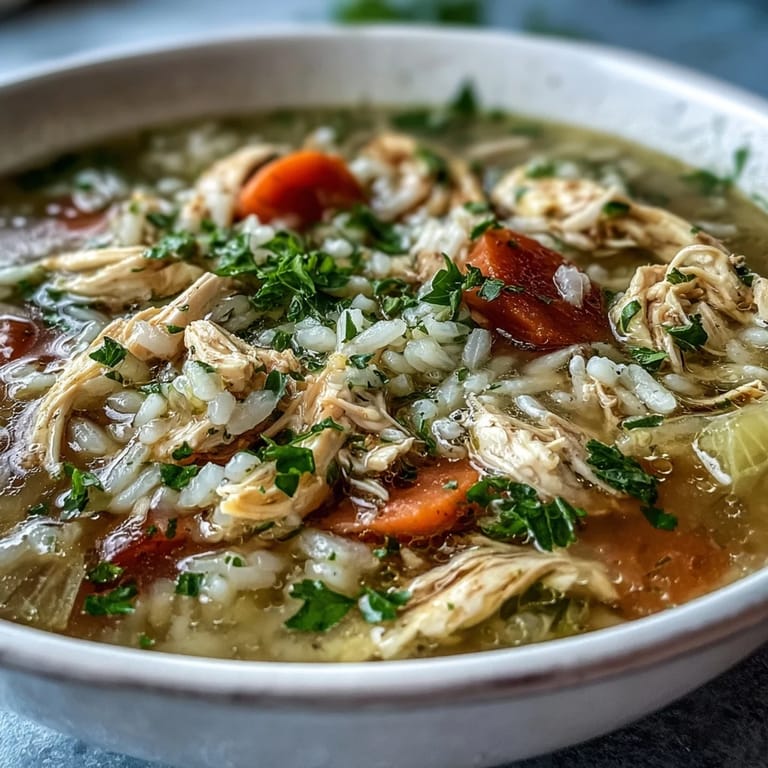
Save There was a snowy evening when I made this soup and three people showed up at my door unexpectedly, and instead of panicking, I just added more broth and rice because that's the beautiful thing about this recipe—it stretches without complaining. We ended up talking until midnight, and the soup never stopped tasting like enough.
Why This Soup Became My Winter Anchor
Somewhere between the first sip and the last, I realized this soup isn't fancy or complicated—it's just honest. Every ingredient serves a purpose, nothing is there to impress anyone, and the result is something that tastes like you've been simmering it for hours when it really only took forty-five minutes. That's the magic of restraint and good ingredients doing what they're meant to do.
Variations That Keep It Fresh
Once you've made this soup exactly as written, you'll start seeing opportunities to make it yours. I've swapped the chicken breasts for thighs on nights when I wanted deeper, richer flavors, and the soup thanked me by tasting more developed. Brown rice works too if you want extra fiber and a nuttier taste, though you'll need to add about 10 minutes to the cooking time and maybe an extra splash of broth. Some nights I add a glug of cream at the very end, turning it into something almost luxurious without losing its simple soul.
Serving and Storage Wisdom
This soup tastes even better the next day after the flavors have had time to deepen and mingle, so making it ahead for the week is not just practical—it's smart. I store it in glass containers in the fridge where it keeps for about four days, and it reheats gently on the stovetop without any fussing. Crusty bread is non-negotiable on the side, and a light white wine makes the whole experience feel less like dinner and more like a small celebration.
- Freeze the soup without the rice if you want to keep it longer, then cook fresh rice when you reheat it for better texture.
- A squeeze of fresh lemon juice right before serving makes people lean forward and ask what makes it taste so bright.
- Make it your own by tasting, adjusting, and remembering that seasoning is a conversation between you and the pot, not a rulebook.
 Save
Save This soup reminds me that the simplest things often taste the best, and that showing up in someone's kitchen with a warm bowl is one of the most honest ways to say you care. Make it often, taste it as you go, and let it become your answer to the question of what to cook on a chilly night.
Recipe Help & FAQs
- → Can I make this soup ahead of time?
Yes, this soup stores beautifully. The flavors actually improve after sitting overnight. Keep in mind the rice will continue absorbing liquid, so you may need to add extra broth when reheating leftovers.
- → Can I use brown rice instead of white?
Absolutely. Brown rice adds extra fiber and nutrients but requires about 15-20 minutes longer cooking time. Add it earlier in the process or adjust liquid amounts accordingly.
- → What's the best way to shred the chicken?
Let the chicken breasts cool slightly for about 5 minutes after removing from the pot. Use two forks to pull the meat apart into shreds, or use a stand mixer with the paddle attachment for quick, even shredding.
- → Can I freeze this soup?
Freezing works well, though the rice texture may change slightly. For best results, freeze without the rice and cook fresh rice when reheating. Otherwise, portion into airtight containers and freeze up to 3 months.
- → How can I add more richness to the soup?
Stir in a splash of heavy cream or coconut milk during the last few minutes of cooking. You can also finish with a pat of butter or use chicken thighs instead of breasts for deeper flavor.