 Save
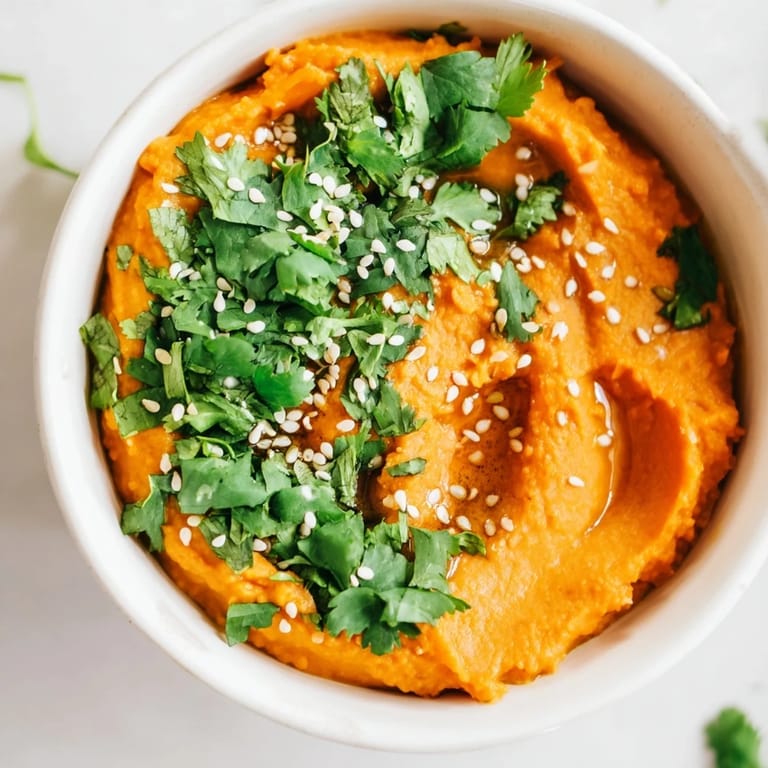
Save I was standing in my kitchen on a cold Tuesday night, staring at a pile of carrots I'd bought with good intentions but no real plan. The ginger root on the counter caught my eye, and I remembered a dip I'd tasted at a potluck months earlier. I tossed everything onto a baking sheet, let the oven work its magic, and twenty minutes later, my entire apartment smelled like a warm spice market. That dip became my go-to whenever I needed something quick, impressive, and secretly healthy.
I brought this to a family gathering once, nervously setting it down next to the usual cheese platters and spinach dip. My cousin, who claims to hate carrots, scraped the bowl clean with pita chips and asked for the recipe. Watching people go back for seconds made me realize that sometimes the simplest combinations are the ones that surprise you most. It's been my secret weapon at every gathering since, and I always leave with an empty bowl.
Ingredients
- Carrots (500 g, peeled and cut into chunks): The star of the show, roasting them brings out their natural sugars and creates a caramelized depth that raw carrots just can't match.
- Garlic clove (1 small, peeled): Roasting mellows its bite into something sweet and mellow, adding background warmth without overpowering the carrots.
- Fresh ginger (1 tablespoon, peeled and chopped): This is what makes the dip sing, adding a bright, zingy heat that cuts through the creaminess.
- Extra-virgin olive oil (2 tablespoons, divided): One tablespoon helps the vegetables roast beautifully, the other gets blended in for silky richness.
- Tahini (2 tablespoons): It brings a nutty creaminess and helps bind everything together into a dip that clings perfectly to whatever you're dipping.
- Lemon juice (1 tablespoon): A squeeze of brightness that balances the sweetness and keeps the flavors lively.
- Honey or maple syrup (1 teaspoon): Just a touch amplifies the natural sweetness of the roasted carrots without making it taste like dessert.
- Ground cumin (½ teaspoon): Adds an earthy, warming note that makes the dip feel more complex than the ingredient list suggests.
- Salt (½ teaspoon, or to taste): Essential for bringing all the flavors forward, start with less and adjust after blending.
- Ground black pepper (¼ teaspoon): A subtle background heat that doesn't compete with the ginger.
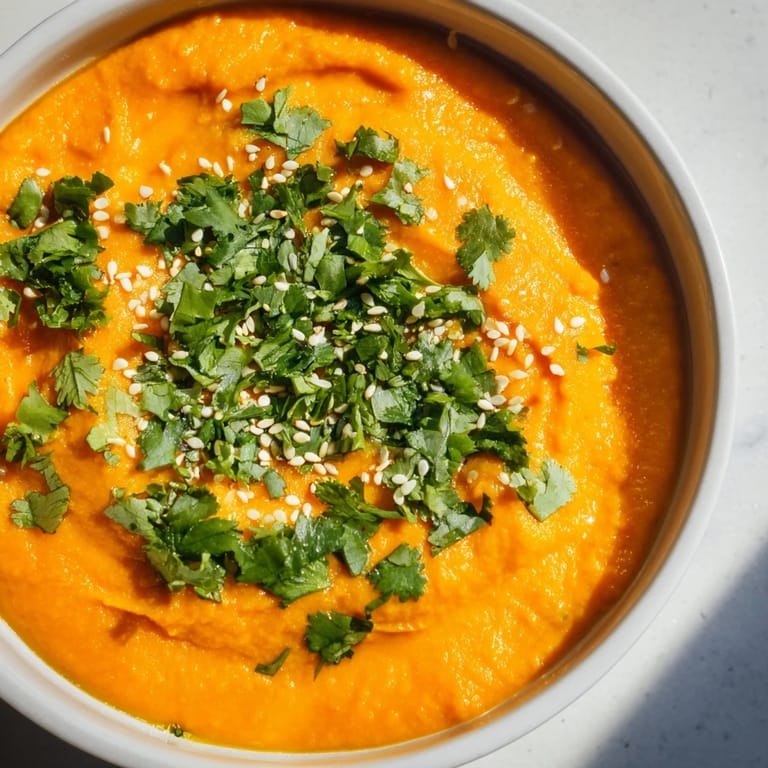
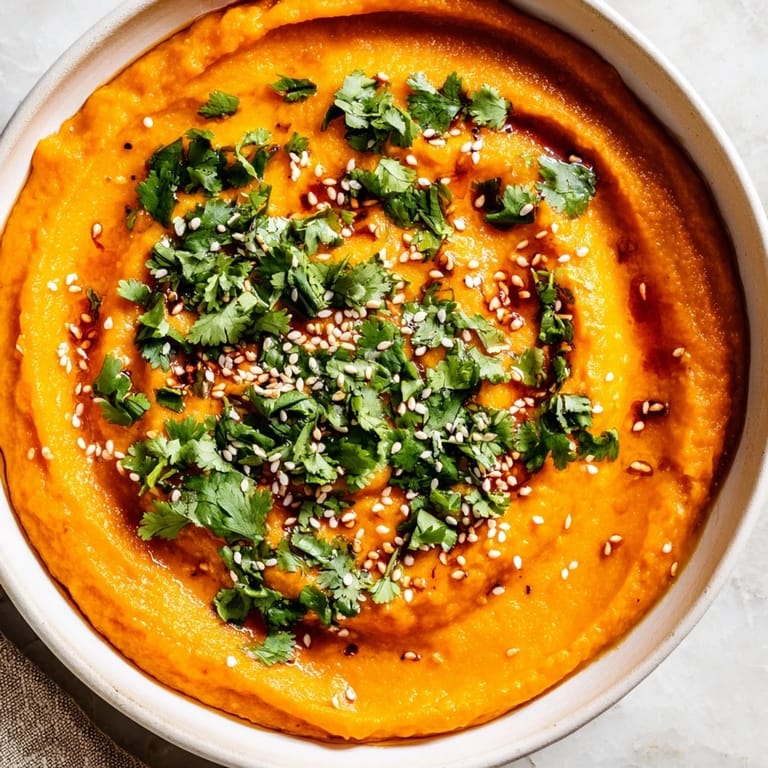
- Fresh cilantro and sesame seeds (optional, for garnish): A handful of cilantro and a sprinkle of seeds make it look restaurant-worthy with almost no effort.
Tired of Takeout? 🥡
Get 10 meals you can make faster than delivery arrives. Seriously.
One email. No spam. Unsubscribe anytime.
Instructions
- Get the oven ready:
- Preheat your oven to 200°C (400°F) so it's nice and hot when the carrots go in. This high heat is key to getting those caramelized edges.
- Prep the vegetables:
- Toss the carrot chunks and garlic clove with 1 tablespoon of olive oil and a pinch of salt, then spread them out on a baking sheet in a single layer. Give them space so they roast instead of steam.
- Roast until golden:
- Slide the sheet into the oven and roast for 25 to 30 minutes, until the carrots are fork-tender and have golden, slightly charred edges. Let them cool for a few minutes before blending.
- Blend it all together:
- Drop the roasted carrots, garlic, ginger, tahini, lemon juice, honey, cumin, salt, and pepper into a food processor. Blend until completely smooth, drizzling in the remaining olive oil as it spins, and add a splash of water if it seems too thick.
- Taste and tweak:
- Give it a taste and adjust the salt, lemon, or honey until it feels balanced to you. Every carrot batch is a little different, so trust your palate.
- Serve it up:
- Scoop the dip into a bowl, scatter cilantro and sesame seeds on top if you're feeling fancy, and set it out with fresh veggies, pita chips, or crackers. Watch it disappear.
 Save
Save One evening, I made this dip while my friend was going through a rough week, and we sat on the floor with a pile of cucumber slices and talked until midnight. She told me later that she'd made it three times that month whenever she needed something comforting and easy. It reminded me that food doesn't have to be fancy to mean something, it just has to show up when it matters.
Making It Your Own
If you like a little heat, stir in a pinch of cayenne or a few flakes of red pepper before blending. I've also swapped the tahini for Greek yogurt when I wanted something lighter and tangier, though that does make it no longer dairy-free. On nights when I'm feeling adventurous, I've added a handful of roasted red pepper or a few sun-dried tomatoes to the processor, and it becomes an entirely different dip with the same cozy base.
Serving Suggestions
This dip shines alongside crunchy raw vegetables like bell peppers, snap peas, and radishes, but it's equally good smeared on warm flatbread or used as a sandwich spread with grilled vegetables. I've stirred leftovers into warm quinoa or couscous for a quick lunch, and I've even dolloped it over roasted chicken thighs as a sauce. It's one of those recipes that fits into almost any meal without feeling out of place.
Storage and Prep Ahead
This dip keeps beautifully in the fridge for up to five days in an airtight container, and the flavors deepen as it sits. I often make it on Sunday and pull it out throughout the week for snacks or quick lunches. If it thickens too much in the fridge, just stir in a teaspoon or two of water to loosen it back up.
- Let it come to room temperature before serving for the best flavor and texture.
- Freeze it in small portions if you want to stash some away for later, it thaws perfectly.
- Roast extra carrots and keep them in the fridge so you can whip up a fresh batch in minutes.
 Save
Save This dip has become one of those recipes I make without thinking, the kind that feels like a small gift to myself and anyone I share it with. I hope it finds a spot in your regular rotation too.
Recipe Help & FAQs
- → Can I make this dip ahead of time?
Yes, this dip stores well in an airtight container in the refrigerator for up to 5 days. The flavors actually develop and improve after a day. Bring to room temperature before serving for the best texture.
- → What can I substitute for tahini?
Greek yogurt makes a lighter alternative, though it won't be dairy-free. You can also use cashew butter or sunflower seed butter for a nut-free option that maintains the creamy texture.
- → How can I adjust the consistency?
Add water or olive oil one tablespoon at a time while blending until you reach your desired thickness. For a thicker dip, use less liquid; for a thinner spread, add more.
- → Can I make this without roasting the carrots?
Roasting is recommended as it caramelizes the carrots and adds depth of flavor. However, you can steam or boil the carrots instead, though the dip will have a milder, less complex taste.
- → What are the best accompaniments for serving?
Serve with fresh cut vegetables like celery, cucumbers, and bell peppers, pita chips, crackers, or use as a sandwich spread. It also pairs wonderfully with grilled chicken or lamb.
- → How do I make this dip spicier?
Add cayenne pepper, red pepper flakes, or fresh jalapeño to taste. Start with a small amount and adjust after blending to control the heat level.