 Save
Save My neighbor Marcus taught me to make dirty rice one humid afternoon when the air conditioning broke and we decided cooking together beat sitting in silence. He stood at the stove with the kind of ease that comes from making something a hundred times, letting me handle the chopping while he talked about growing up in New Orleans, about how his grandmother made this dish for Sunday dinners with whatever protein she had on hand. The smell that filled his tiny kitchen—garlic, thyme, and that almost mysterious depth of Cajun seasoning—made me understand instantly why this wasn't just a weeknight meal to him, it was home.
I made this for my partner on a rainy Tuesday when they'd had one of those days where everything felt heavy, and watching their face shift as they took the first forkful reminded me that food isn't really about perfection—it's about showing up with something warm and honest. The rice had soaked up all those spices perfectly, each grain tasting like it had absorbed a little bit of comfort.
Ingredients
- Ground pork (225 g / 1/2 lb): The fatty richness of pork renders down beautifully and seasons the rice from the inside out, though you can easily swap in beef, chicken, or even use chicken livers for something more authentic to the dish's roots.
- Ground beef or chicken livers (225 g / 1/2 lb): If you go the traditional route with livers, they add an almost savory earthiness that pure pork alone can't quite reach—rinse them quickly if they seem too dark.
- Onion, green bell pepper, celery (the holy trinity): This combination is the backbone of Cajun cooking, and chopping them fine means they practically dissolve into the rice, building flavor in layers.
- Garlic (3 cloves, minced): Wait until the vegetables have softened before adding it, or it'll taste harsh and sharp instead of mellow and sweet.
- Long-grain white rice (200 g / 1 cup): Rinsing the rice removes the starch coating, which keeps the grains from sticking together and lets each one stay distinct in the finished dish.
- Chicken broth (480 ml / 2 cups): Use actual broth, not water—it's what transforms this from rice with meat to something with real soul.
- Cajun seasoning (1 1/2 tsp): A good Cajun blend carries paprika, cayenne, garlic, and dried peppers, but if you can't find it, you can build your own with what you have on hand.
- Dried thyme, smoked paprika, salt, black pepper, cayenne (to taste): The smoked paprika gives you that subtle campfire note, while cayenne is your heat dial—leave it out entirely if you're cooking for people who don't like spice, or double it if you want everyone flushed and reaching for water.
- Vegetable oil (2 tbsp): Enough to brown the meat without the pan feeling slick, and neutral enough that it won't compete with the Cajun flavors.
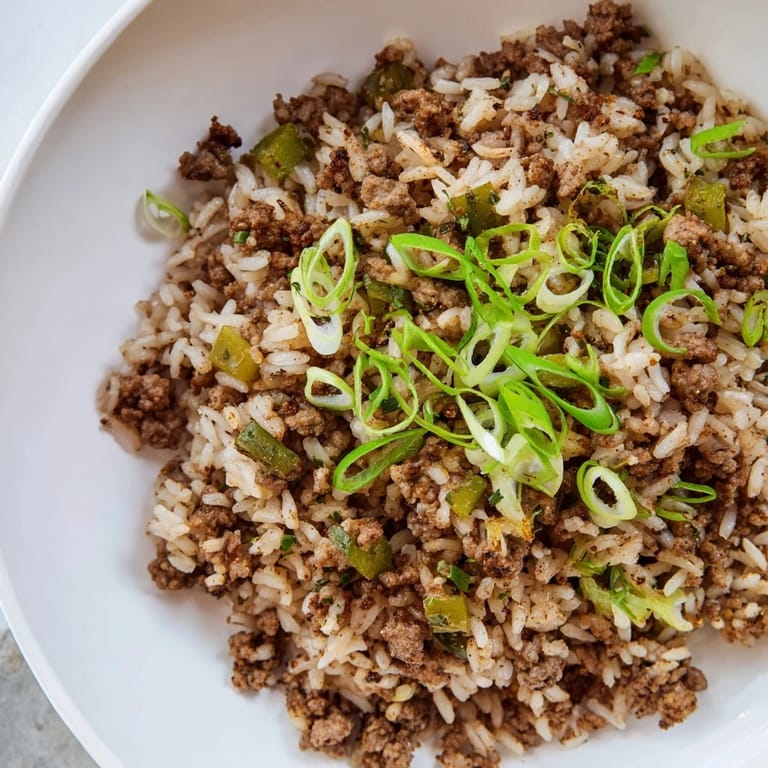
- Spring onions (2, sliced for garnish): A scattered handful at the end brings brightness and a little textural pop to every spoonful.
Tired of Takeout? 🥡
Get 10 meals you can make faster than delivery arrives. Seriously.
One email. No spam. Unsubscribe anytime.
Instructions
- Brown your meat with intention:
- Heat the oil over medium-high heat until it shimmers, then add the pork and beef or livers, breaking the meat into small pieces as it cooks. You want it browned and cooked through in about 6 to 7 minutes—don't rush this or crowd the pan, because the browning is where the flavor happens.
- Build the aromatics:
- Once the meat is done, add the onion, bell pepper, celery, and let them soften for about 5 minutes, stirring occasionally. They'll start to stick slightly to the bottom of the pan, which is exactly what you want—that's flavor developing.
- Toast your spices into the mix:
- Stir in the Cajun seasoning, thyme, smoked paprika, salt, pepper, and cayenne, coating everything evenly. The spices should smell fragrant and warm almost immediately, and the whole mixture will look darker and richer.
- Let the rice toast briefly:
- Add the rinsed rice and stir constantly for 1 to 2 minutes, letting each grain get coated in the spiced oil and meat. This toasting step adds a subtle nutty note that makes a real difference.
- Simmer low and cover tight:
- Pour in the broth, bring it to a boil, then immediately lower the heat, cover the pan, and let it bubble gently for 20 to 22 minutes until the rice is tender and the liquid has been absorbed. Don't peek—each time you lift the lid, steam escapes and the timing shifts.
- Rest and fluff:
- Once the time is up, remove the pan from heat and let it sit, still covered, for 5 minutes. Then use a fork to gently fluff the rice, breaking up any clumps and letting air back into the grains.
- Finish with green onions:
- Scatter the sliced spring onions over the top just before serving, so they stay bright and crisp.
 Save
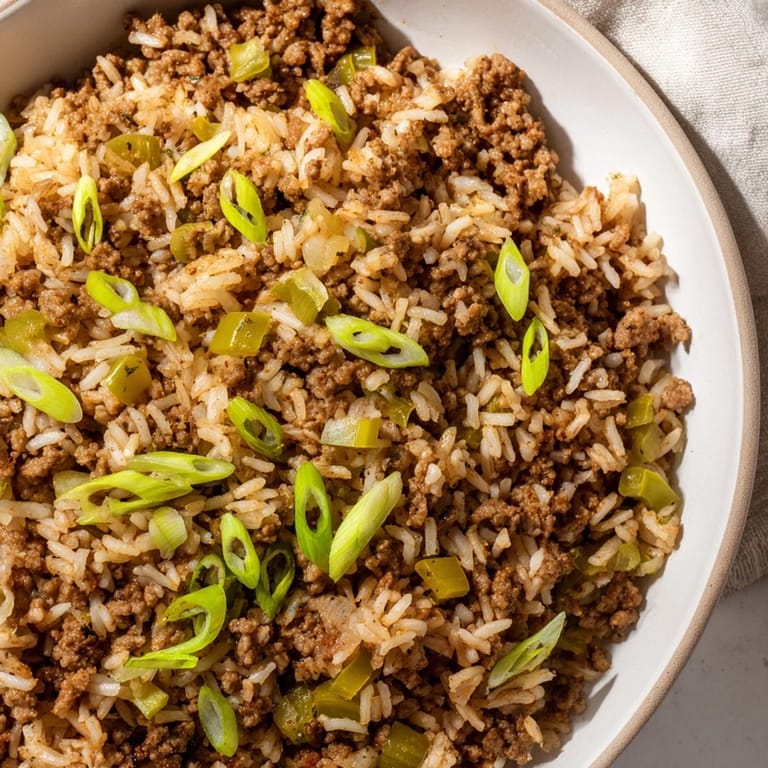
Save There's a moment, right after you fluff the rice and before you serve it, when the steam rises and the whole kitchen smells like every Cajun meal you've ever wanted to eat. That's when you know you've got it right—not because it's fancy, but because it's honest.
Customizing Your Dirty Rice
This dish thrives on flexibility—I've made it with ground turkey and fresh herbs, with sausage instead of ground pork, and once with nothing but what was in my freezer at the time. Add chopped parsley or cilantro if you want freshness, a handful of diced carrots if you want sweetness, even a few slices of andouille sausage if you want it smokier. The base stays the same, but every version tastes like your kitchen, your preferences, your moment.
Serving and Pairing
Dirty rice is best served straight from the pan while it's warm and steaming, with a cold drink nearby—Marcus always said a crisp lager or chilled white wine cuts through the richness and lets you taste each layer of spice. It needs nothing else really, though hot sauce on the side is never wrong, and a simple green salad keeps things balanced if you're feeding people who want vegetables alongside.
Storing and Reheating
Dirty rice keeps well in the refrigerator for up to three days, and it actually tastes better the next day after the flavors have had time to meld and deepen. Reheat it gently on the stove with a splash of water or broth, stirring occasionally until it's warmed through, or scatter it across a hot skillet to warm it while developing a light crust on the bottom—that's when it's at its absolute best.
- Store leftovers in an airtight container and always reheat gently to avoid drying out the rice.
- You can freeze it for up to two months, though the texture will be slightly softer when thawed.
- If it seems dry when reheating, add broth or water a little at a time until it reaches the consistency you remember.
 Save
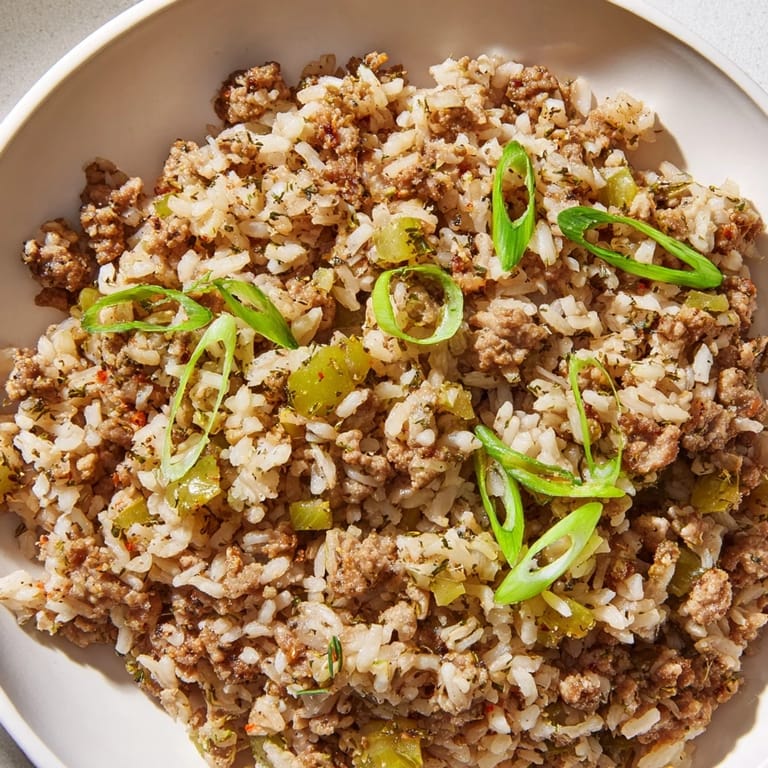
Save This is the kind of dish that reminds you why you cook—not for perfection, but for the way it brings people together and fills a room with warmth. Make it when you want to feel like home.
Recipe Help & FAQs
- → Can I substitute the meats in Cajun Dirty Rice?
Yes, ground pork and beef can be swapped with chicken livers for a traditional touch or other preferred proteins to adjust flavor and texture.
- → What spices give the dish its distinctive flavor?
The bold taste comes from Cajun seasoning blended with thyme, smoked paprika, black pepper, and optional cayenne pepper for heat.
- → How should the rice be prepared for best results?
Rinse the long-grain white rice and toast it briefly with the spiced meat and vegetables to enhance flavor before simmering in broth.
- → Are there any recommended garnishes?
Sliced spring onions add freshness and a mild bite, balancing the richness of the dish perfectly.
- → What can I serve alongside this dish?
This hearty preparation pairs well with crisp lager or chilled white wine, and a side of hot sauce can add extra spice.