 Save
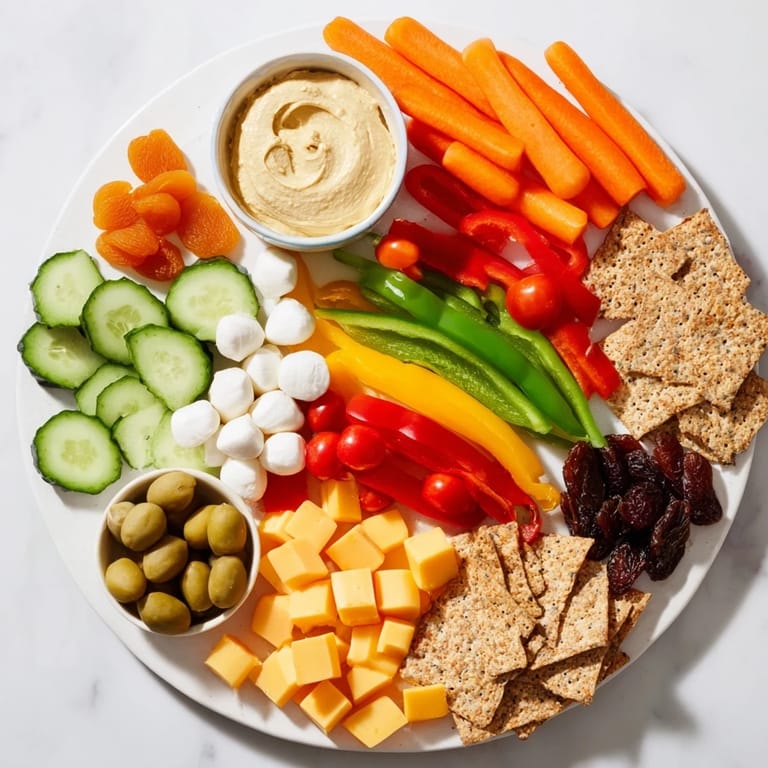
Save Last week, I was scrolling through my phone while sitting at the kitchen counter when a video popped up of someone assembling an impossibly gorgeous charcuterie board in under five minutes. My first thought wasn't that it looked fancy—it was that it looked easy enough to actually do on a Tuesday night. Turns out, there's something deeply satisfying about building an edible landscape where every single thing tastes good and nothing requires more than a knife and a cutting board. That afternoon, I started pulling vegetables from the crisper drawer and suddenly understood why this trend won't die: it's snacking that feels intentional.
I made this for a friend who showed up hungrier than expected, and instead of ordering takeout, I just opened the fridge with confidence. Watching her build her own little combinations—a snap pea wrapped around a cube of gouda, a cherry tomato dipped in ranch, crackers stacked with cheese and olives—felt like I'd unlocked some kind of hosting cheat code. She spent forty minutes picking through the board and talking, which is exactly the kind of lunch that turns an ordinary day into something worth remembering.
Ingredients
- Baby carrots: They're naturally sweet and need zero prep beyond a quick rinse, plus their bright orange catches the eye on every board.
- Cucumber slices: Cut them thick enough that they don't get soggy, and they'll stay crisp for hours even after you assemble everything.
- Cherry tomatoes: Leave them whole if they're small, halve the bigger ones, and pick the ones that smell faintly of the garden.
- Bell pepper strips: Use at least two colors because the visual contrast is half the appeal, and the natural sweetness keeps people reaching back.
- Sugar snap peas: These are the gateway vegetable—even people who claim they don't like veggies will eat them straight.
- Hummus: The creamy anchor that prevents the board from feeling too crunchy, and it works with literally everything.
- Ranch dressing or Greek yogurt dip: Choose whichever one you genuinely like tasting, because it matters.
- Cheddar cheese, cubed: Cut them slightly larger than you think you need so they feel substantial when you pick them up.
- Mozzarella balls: Their mild flavor and soft texture create a nice contrast with hard vegetables.
- Gouda or Swiss cheese, sliced: The nuttier flavors here add sophistication and pair beautifully with the nuts and dried fruit.
- Whole grain crackers: These stay crisp better than delicate ones and have more flavor to stand up to cheese and dips.
- Roasted nuts: Buy them already roasted so you skip a step, or roast your own if you want them warm.
- Olives: They're the salty secret that makes people think you really knew what you were doing.
- Dried fruit: The sweetness balances everything savory and adds pops of color that bring the whole board together.
Tired of Takeout? 🥡
Get 10 meals you can make faster than delivery arrives. Seriously.
One email. No spam. Unsubscribe anytime.
Instructions
- Wash and dry your vegetables like you mean it:
- Water clinging to vegetables makes them wilt faster and creates a soggy board. Pat everything dry, then slice your cucumbers thick and your peppers into long, elegant strips.
- Map out your board like you're telling a story:
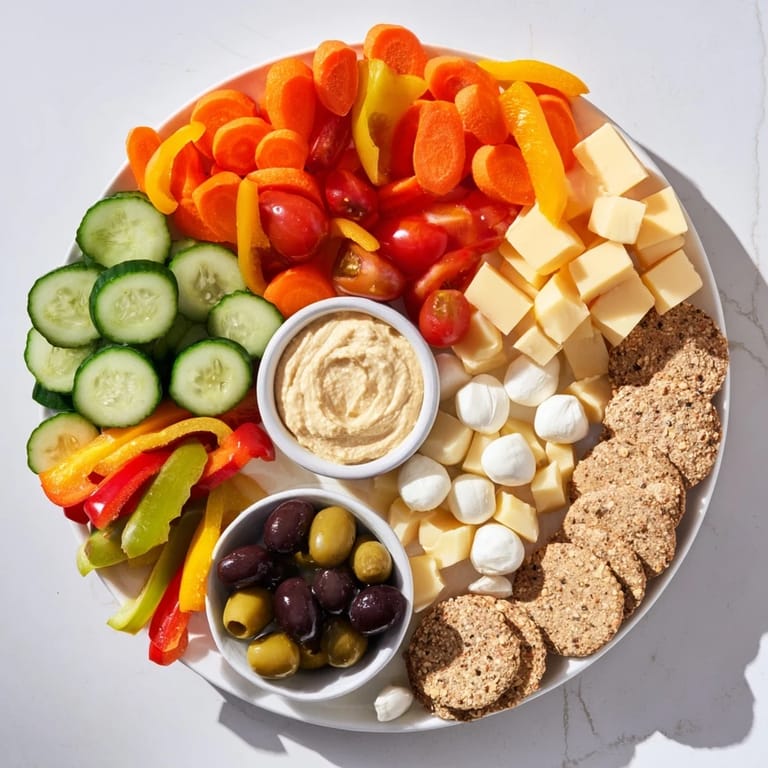
- Start by arranging vegetables in little clusters or lines, leaving room to breathe. Think of it like landscape design—you want your eye to travel around the board, not get stuck in one corner.
- Nestle your dips into the middle:
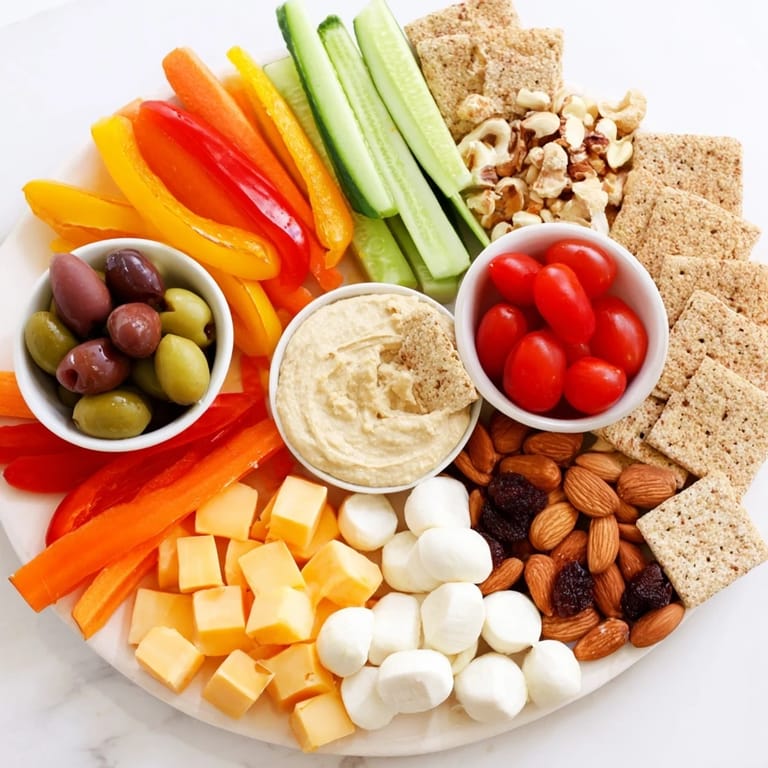
- Put them in small bowls so they stay contained and prevent vegetables from getting unnecessarily soggy. Leave a little spoon in each one so people know they can dig in.
- Add the cheese in strategic bursts:
- Scatter cubes and balls throughout the board like you're hiding little flavor treasures. This forces people to explore the whole thing instead of camping in one section.
- Fill the gaps with intention:
- Crackers, nuts, olives, and dried fruit are your board's punctuation marks. Use them to create visual rhythm and make sure no space feels empty or awkward.
- Time it right:
- Assemble right before serving if possible, but cover and refrigerate if you're prepping ahead. Everything stays fresh for at least a couple of hours under light plastic wrap.
 Save
Save There's a moment during every board session when people stop eating methodically and start eating joyfully—when they find some perfect combination of flavors and textures that makes their eyes light up. That's the moment this becomes more than lunch. It becomes permission to slow down, to savor, to enjoy food without the pressure of a sit-down meal.
The Art of Balance
A good board is never just vegetables or just cheese or just snacks. The magic happens when you have at least one element from each category: fresh and crisp, creamy and rich, salty and savory, sweet and chewy. When someone takes a bite that combines all of those at once, they understand why you made this instead of throwing together a boring lunch. Think of it like building sentences—a vegetable alone is a noun, but add cheese and a dip and suddenly you have a story worth telling.
Color as Your Secret Weapon
The reason these boards look so good in photos and in person is because they're colorful without trying to be cute. Red tomatoes, orange carrots, purple onions, green peppers, white cheese, brown nuts—you're not arranging a rainbow, you're just letting different foods show off their natural personalities. If your board looks dull, you're probably using too many of the same vegetables or cheeses. Swap in something with a different hue and the whole thing suddenly feels more generous and more interesting.
Make It Yours
This is the foundation, but the best board is the one that reflects what you actually want to eat. Some days that means more protein, so add hard-boiled eggs or sliced deli meat. Other days it means going completely plant-based with dairy-free cheese and hummus. The board doesn't care—it's just a framework for putting good things in one place and letting people decide what combination speaks to them.
- Prep vegetables up to a day ahead and store them in airtight containers so assembly day is literally five minutes of arranging.
- If you're serving this for guests, include at least one option that feels indulgent, even if it's just a really good chocolate or a fancy cheese.
- Leftover vegetables and cheese don't go to waste here—they just become tomorrow's snack or the starting point for a quick dinner.
 Save
Save This board is proof that you don't need a recipe that takes hours to make something memorable. Sometimes the best things are the ones that let the ingredients speak for themselves and give people permission to enjoy them however they want.
Recipe Help & FAQs
- → What vegetables work best on the snack board?
Fresh, crisp vegetables like baby carrots, cherry tomatoes, cucumbers, bell peppers, and sugar snap peas provide color and crunch.
- → Which cheeses complement the vegetable selection?
Mild and flavorful cheeses such as cheddar, mozzarella balls, and gouda or Swiss balance the fresh veggies nicely.
- → Can the dips be substituted for dietary needs?
Yes, switch ranch dressing or Greek yogurt dips for plant-based or dairy-free options for vegan or lactose-sensitive preferences.
- → How can crunchiness be added to the board?
Incorporate whole grain crackers and roasted nuts like almonds, cashews, or walnuts for texture contrasts.
- → What extras enhance the snack board flavor?
Adding green or black olives and dried fruits like apricots or cranberries boosts taste complexity and variety.
- → Is advance preparation possible?
Vegetables and cheeses can be pre-cut and chilled. Assemble just before serving for best freshness.