 Save
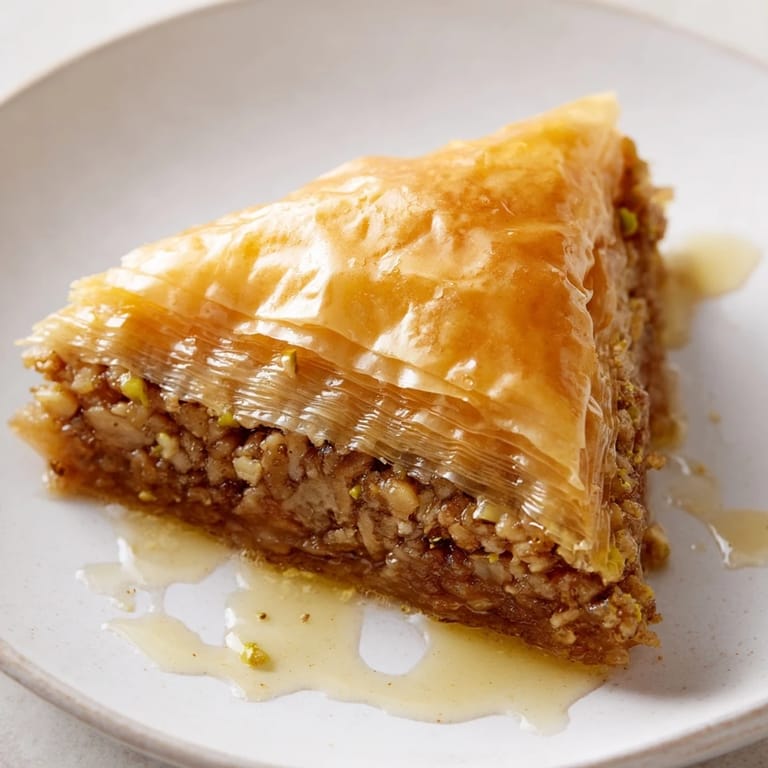
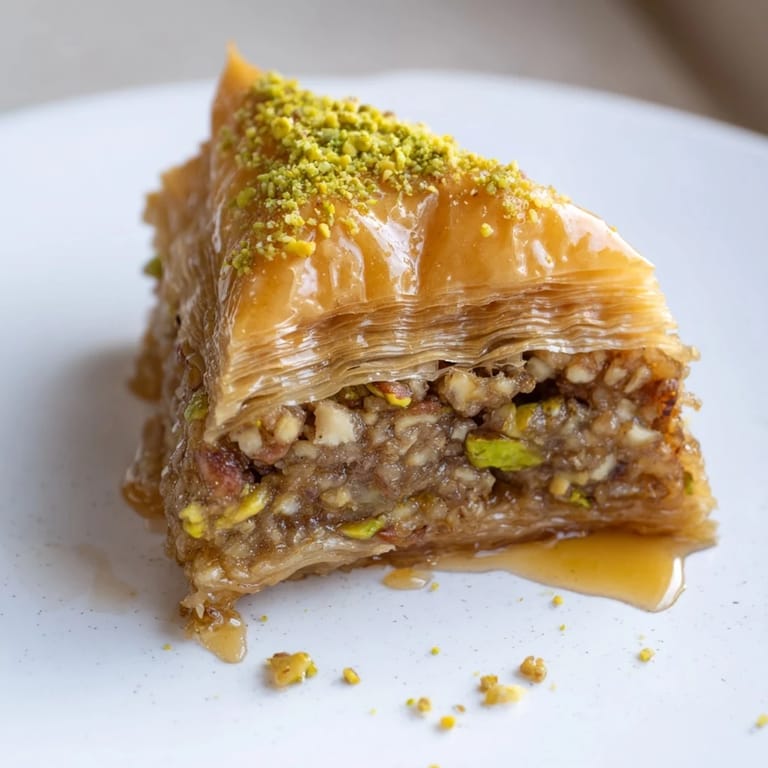
Save The first time I really understood baklava was sitting in a Istanbul café at sunset, watching the owner's hands move with such practiced ease as she brushed butter between phyllo sheets. I'd eaten baklava before, sure, but never paid attention to the artistry—that patient layering, the way the honey syrup pooled in the cuts, how the nuts seemed to whisper their presence beneath the crisp, golden exterior. When she finally brought me a piece still warm from the oven and drizzled that amber syrup over it, something clicked. I realized this wasn't just a dessert; it was a meditation wrapped in pastry.
I still remember bringing these to a potluck and watching people's faces light up when they bit through that crackling exterior—someone actually closed their eyes. That's the magic of baklava: it stops conversation. The combination of walnuts, pistachios, and almonds with a whisper of cinnamon feels luxurious, like you've just shared something precious rather than dessert.
Ingredients
- Walnuts, pistachios, and almonds: The holy trinity of baklava—each nut brings its own voice, so don't skip any or substitute just one.
- Phyllo dough: Handle it like you're tucking in someone you love; it's fragile but more forgiving than you'd think if kept covered.
- Unsalted butter: This is where the golden magic happens, so use good butter and brush every single sheet with intention.
- Honey: Not just a sweetener—it's the soul of the syrup, so taste yours first to match the flavor profile you want.
- Granulated sugar: Half goes into the filling for texture, half into the syrup for that glossy perfection.
- Cinnamon, lemon juice, and zest: These prevent baklava from tasting one-note and add a sophisticated warmth that people taste but can't name.
Tired of Takeout? 🥡
Get 10 meals you can make faster than delivery arrives. Seriously.
One email. No spam. Unsubscribe anytime.
Instructions
- Warm up your workspace:
- Preheat your oven to 350°F and grease your baking dish generously with butter. Have your melted butter in a small bowl and your pastry brush ready—you want everything within arm's reach because phyllo waits for no one.
- Mix your nut treasure:
- Combine the walnuts, pistachios, almonds, sugar, and cinnamon in a bowl. The finely chopped nuts should hold together just slightly when you squeeze a pinch, creating little pockets of flavor throughout the layers.
- Prepare the phyllo:
- Unroll your phyllo sheets and immediately drape a damp kitchen towel over the stack. This simple act prevents them from drying out and becoming impossible to work with—trust me, this makes all the difference.
- Build the base layer:
- Lay one sheet of phyllo in your prepared dish and brush it with melted butter, working gently from the center outward. Repeat this layering and brushing with eight more sheets, building a foundation that will become wonderfully crisp.
- First nut layer:
- Sprinkle a third of your nut mixture evenly over the phyllo, leaving a tiny border so the layers can fuse properly during baking.
- Middle layers:
- Add five more phyllo sheets, brushing each one, then scatter another third of the nuts. Repeat this pattern one more time with five more sheets and the remaining nuts.
- Top off with elegance:
- Finish with eight to ten final phyllo sheets, buttering each one as if you're icing a cake. These layers will turn golden and crispy, creating the textural contrast that makes baklava sing.
- Cut with purpose:
- Using a very sharp knife, cut the baklava into diamonds or squares before baking—this prevents shattering later and helps the syrup soak in. Cut all the way to the bottom, creating clean divisions.
- Bake to golden perfection:
- Slide everything into the oven for 45 minutes, until the top is deep golden and you can hear a faint crackling when you open the door. Your kitchen will smell like a Turkish spice bazaar.
- Make the magic syrup:
- While baklava bakes, combine honey, water, sugar, lemon juice, zest, and a cinnamon stick in a saucepan. Bring it to a boil, then let it simmer gently for 10 minutes—the lemon prevents the syrup from being cloyingly sweet, and the cinnamon adds mysterious depth.
- The crucial moment:
- The second you pull the baklava from the oven, remove the lemon zest and cinnamon stick from your syrup, then slowly and evenly pour it over the piping-hot pastry. This is when the magic happens—the hot phyllo drinks in the warm honey like it's been waiting its whole life for this.
- The patience test:
- Let everything cool completely at room temperature, at least four hours or overnight if you can stand the wait. This allows the syrup to fully soak in and the flavors to deepen.
 Save
Save There's a quiet satisfaction in knowing you've created something that feels impossibly refined with your own hands. Every time I make baklava, I'm reminded that some of the world's most elegant desserts are just butter, pastry, and patience working together beautifully.
Why This Matters in Your Kitchen
Baklava teaches you something essential about cooking that fancy techniques can never quite capture: that restraint and repetition create excellence. Each layer brushed with butter is an act of faith, a belief that these simple ingredients will transform into something greater than themselves. Once you've made baklava, you stop being intimidated by phyllo dough anywhere else in the kitchen.
The Syrup Makes or Breaks It
I learned this lesson the hard way, once pouring syrup that had cooled too much over baklava that was just slightly warm, and everything turned out dense and heavy instead of that cloud-like perfection. The syrup isn't just a topping—it's a transformation. That lemon juice isn't there by accident either; it cuts through the richness and makes you taste the nuts and spices more clearly, preventing the whole thing from becoming one-note sweetness.
Serving and Storage Wisdom
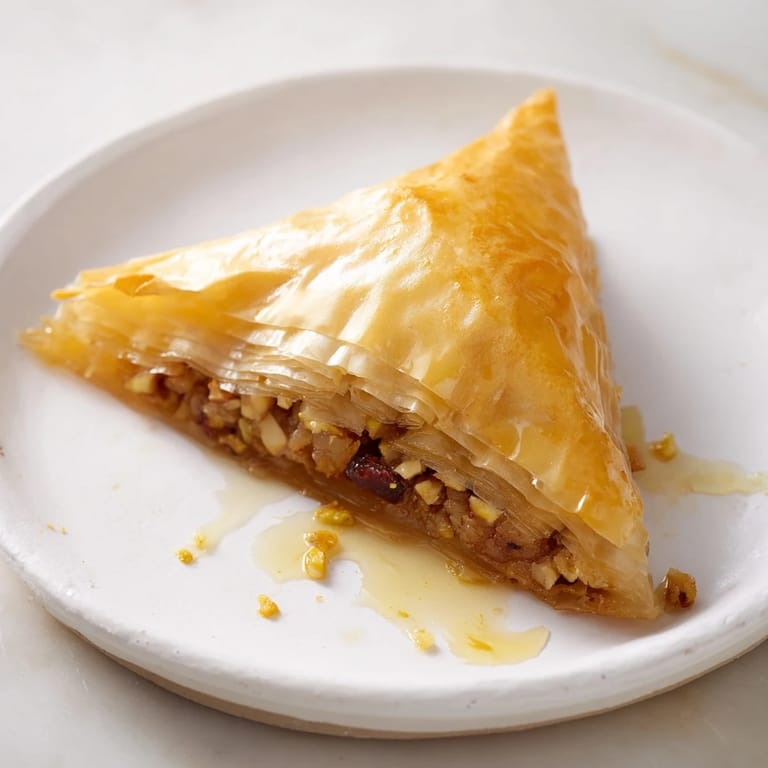
Serve baklava at room temperature with strong Turkish coffee or black tea, never cold from the fridge. The flavors are muted when chilled, and honestly, baklava shouldn't be rushed. Store it covered at room temperature—it actually stays fresh for up to a week, though if you're anything like me, it won't last that long.
- A small cup of strong coffee or fragrant tea is mandatory; baklava without it feels incomplete.
- If you want to gift these, layer them in a beautiful box with parchment between the pieces so they stay crisp.
- These freeze beautifully for up to three months if wrapped well, so you can make them ahead and feel instantly sophisticated whenever needed.
 Save
Save Making baklava at home is a gift you give yourself as much as anyone else. Every buttery layer is an investment in creating something that tastes like care.
Recipe Help & FAQs
- → What kind of nuts are used in this dish?
This version features a combination of walnuts, pistachios, and almonds, finely chopped for texture and flavor.
- → How do I keep the phyllo dough from drying out during preparation?
Cover the phyllo dough with a damp towel while working to prevent it from drying and becoming brittle.
- → What temperature should the oven be for baking?
Preheat your oven to 350°F (175°C) to ensure even baking and a golden, crisp finish.
- → How is the honey syrup prepared and applied?
The syrup is made by boiling honey, water, sugar, lemon juice, lemon zest, and a cinnamon stick, then poured warm over the hot pastry immediately after baking.
- → How long should the dessert rest after syrup application?
Allow it to cool and soak for at least 4 hours so the syrup fully permeates the layers, enhancing the flavor and texture.
- → Can this be stored and for how long?
Keep covered at room temperature for up to one week; this helps maintain its crisp texture and rich flavors.