 Save
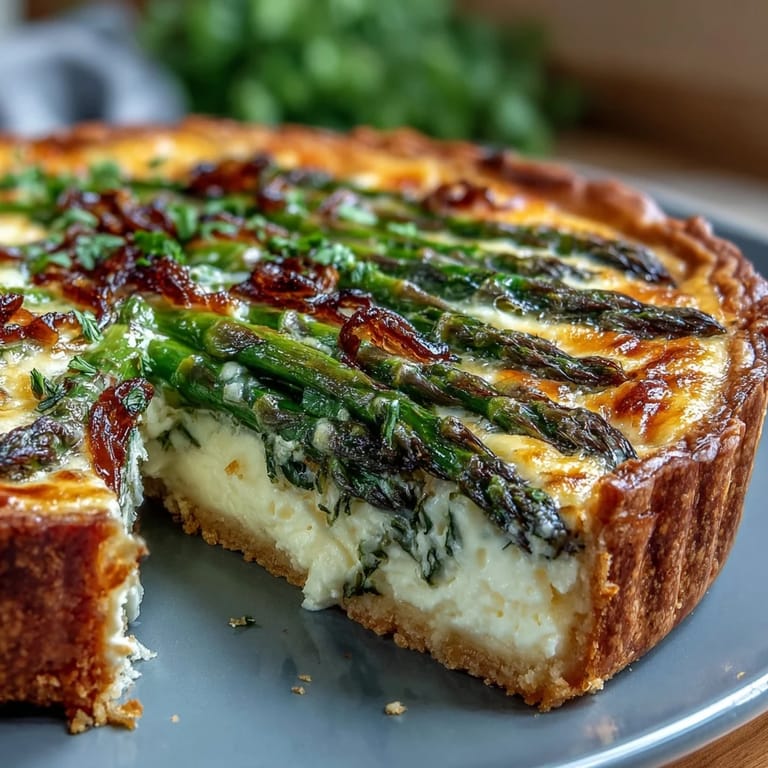
Save When I first tried making quiche on a spring morning, it wasn’t the aroma I expected that got my attention, but the symphony of sizzling shallots and the ever-so-faint snap as asparagus hit the cutting board. Crisp sunlight through the window seemed to nudge me toward using those fresh green stalks, and I couldn't resist turning them into the centerpiece of something elegant. There’s an easy magic in combining simple ingredients like eggs, Gruyère, and buttery pastry until they’re transformed into a dish worthy of any brunch or impromptu midday feast. Sometimes, it’s the ritual—the gentle rolling of dough, the smooth whisk of cream into eggs—that turns a recipe into a favorite. Making this Spring Asparagus Quiche feels as much like an act of self-care as it does a culinary triumph.
Last Mother’s Day, I set this quiche on the patio table as birds argued in the trees overhead, and the conversation swirled as warmly as the coffee. Watching everyone help themselves—someone snuck a second slice before I’d even poured the orange juice—reminded me how something as simple as caramelized shallots can feel like generosity on a plate. This quiche stirs up laughter, gentle arguing over last pieces, and—once in a while—requests for the recipe scrawled out on napkins.
Ingredients
- All-purpose flour: Ensures the crust is crisp and sturdy; always spoon and level to avoid packing it down.
- Unsalted butter: Cold cubes give the crust tender layers; work fast to keep everything chilled.
- Salt: Just a touch sharpens the crust flavor, making each bite just a little more satisfying.
- Ice water: The trick to a flaky pastry is adding this little by little—stop as soon as it holds together.
- Olive oil: Brings out gentle sweetness when sautéing the shallots; choose something fruity if you can.
- Shallots: Caramelizing these fills the kitchen with a mellow fragrance that lets you know something delicious is coming.
- Fresh asparagus: Blanched briefly, they retain a pretty green crunch that signals spring is here.
- Gruyère cheese: Melts into creamy ribbons; a little bit nutty, a little bit sweet—try hand grating for best texture.
- Eggs: The backbone of your filling, whisked gently to hold everything tender but set.
- Heavy cream: Lends richness; whisk until silky so the custard stays supple.
- Whole milk: Lightens the filling just enough so it doesn’t overwhelm the asparagus.
- Fine sea salt: Use less than you think at first—Gruyère already brings some saltiness.
- Freshly ground black pepper: A sparse pinch wakes up the eggs and greens.
- Ground nutmeg: Just enough to coax out the creaminess; anything more, and it’ll take over.
Tired of Takeout? 🥡
Get 10 meals you can make faster than delivery arrives. Seriously.
One email. No spam. Unsubscribe anytime.
Instructions
- Make the pastry:
- Stir flour and salt in a bowl, then quickly cut in the cold butter—your hands will get a little chilly, but that's a good sign. Drizzle in ice water until it just comes together; press it into a disk, wrap, and chill to let the gluten relax.
- Roll and blind bake:
- Dust the counter with flour and roll out your dough, fitting it into the tart pan like tucking in a blanket. Prick the base, line with parchment and weights, then bake until it starts to smell nutty—take care not to over-brown.
- Caramelize the shallots:
- Add sliced shallots to warm olive oil; let them sizzle and soften slowly, stirring often, until golden and sweet-smelling. Take your time—if they start to catch too quickly, lower the heat and keep going.
- Blanch the asparagus:
- Quickly submerge asparagus pieces in boiling salted water for just a couple minutes until their color pops. Rinse under cold water so they keep their bite, then dry them gently on a towel.
- Prepare the custard:
- Whisk eggs, cream, milk, salt, pepper, and nutmeg in a just-large bowl until smooth and slightly frothy. This is your chance to chat or sip coffee—it doesn't need to be rushed.
- Assemble the quiche:
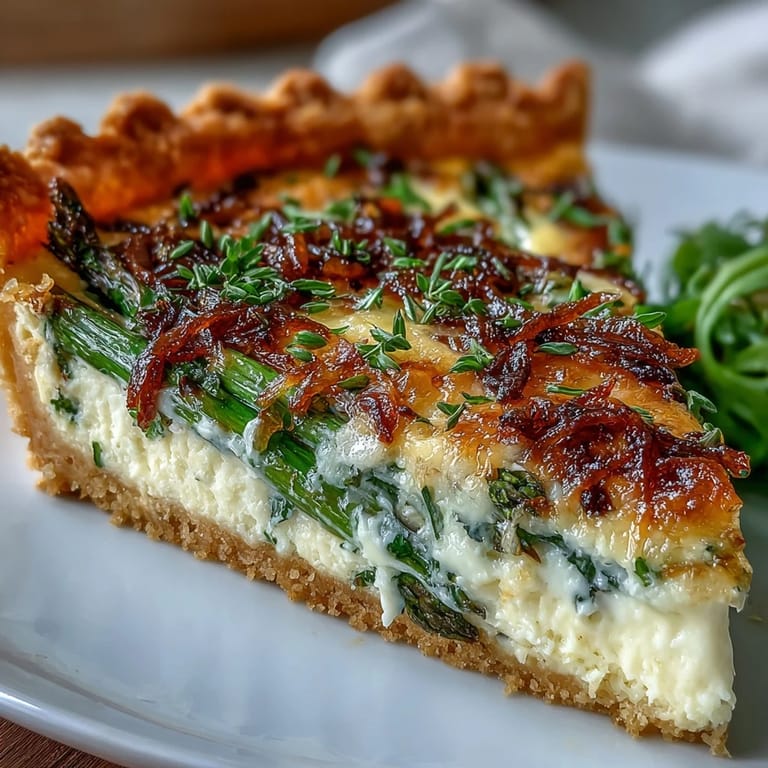
- Scatter the shallots over the crust, followed by asparagus and Gruyère, layering flavors so every slice feels special. Pour over the custard, tilting the pan gently to help it settle evenly between all the fillings.
- Bake to perfection:
- Slide the quiche into the oven and peek after 35 minutes; when it puffs slightly in the middle and turns a warm gold on top, it’s ready. Give it a brief rest before slicing so the custard stays creamy but holds its shape.
 Save
Save  Save
Save Once, after a long rainy week, I made this quiche for myself to break out of a rut—it was pouring so hard that the window fogged up, but the scent of baking pastry and bubbling cheese was a tiny rebellion against the weather. Right then, it hit me that cooking like this is more than just feeding people; it’s a way to reroute your day and carve out a little celebration for no reason at all.
How To Store and Reheat
If you're lucky enough to have leftovers, let the quiche cool fully before covering it—otherwise, the crust can get soggy and lose its charm. Slices reheat gently in the oven, covered with foil, so nothing dries out; the microwave will do in a pinch, but you risk losing that dreamy flakiness.
Switching Up the Flavors
I’ve swapped Gruyère for sharp cheddar on days the fridge beckoned with substitutions, and tossed in a handful of fresh herbs from the garden when the mood struck. Feel free to experiment: try roasted red peppers or chopped spinach in the filling, or sprinkle fresh chives on top just before serving for a punch of color and flavor.
Making Ahead & Serving Suggestions
You can prep the crust and even caramelize the shallots a day ahead if you’re pressed for time or entertaining a crowd—just assemble and bake when you’re ready. Serve the quiche warm or at room temperature, cut into wedges alongside a peppery arugula salad, and let conversation linger over the last crumbs.
- If possible, use fresh, local asparagus for the best flavor.
- The quiche sets best if you let it stand at least 10 minutes before slicing.
- Don't worry if the crust shrinks—just call it rustic.
 Save
Save  Save
Save May your slice of quiche bring you a moment of brightness, whether it’s a celebration with friends or a quiet treat for yourself. Here’s to more cheerful mornings and savory pies.
Recipe Help & FAQs
- → How long should I blind-bake the crust?
Blind-bake for 15 minutes with weights, remove the weights and bake another 5 minutes until the edges are lightly golden. This prevents a soggy bottom once the custard is added.
- → Can I use a store-bought crust?
Yes. A chilled, store-bought crust speeds prep—just blind-bake it the same way to ensure a crisp base. Check the package for baking instructions and allergens.
- → What's the best way to cook asparagus for this dish?
Blanch asparagus in salted boiling water for 2 minutes, then shock in ice water to stop cooking. Pat dry before layering so excess water doesn't loosen the custard.
- → What are good cheese substitutions for Gruyère?
Emmental, Swiss, or a sharp white cheddar work well. Choose a melty cheese with a slightly nutty or tangy profile to complement the shallots and asparagus.
- → How can I make this ahead of time?
Prepare the crust and caramelize the shallots up to a day ahead. Assemble and bake the quiche the next day, or bake fully and reheat gently in a low oven before serving.
- → How should leftovers be stored and reheated?
Cool completely, then refrigerate in an airtight container for up to 3 days. Reheat slices in a 325°F (160°C) oven until warmed through to retain texture.