 Save
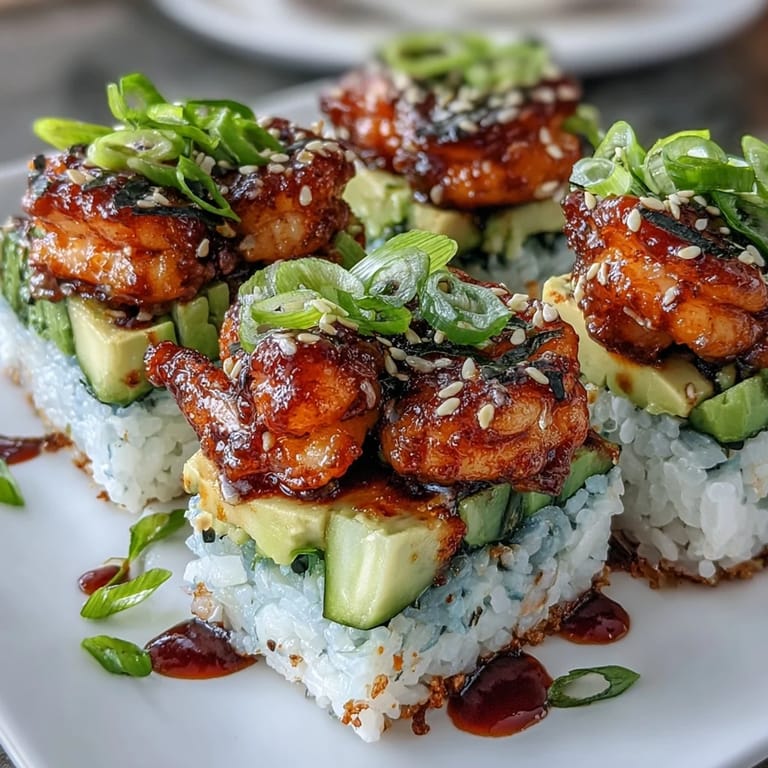
Save The first time I made these spicy shrimp sushi stacks, the kitchen was alive with the sound of my friend’s laughter as rice steamed and the sizzle of shrimp hit the hot skillet. I’d always admired elaborate sushi plates in restaurants, but my impatience for rolling pushed me to experiment. Before long, I was pressing layers into a ramekin, nervously hoping they’d stack like the pictures I’d seen. The outcome was nothing short of delightful—tidy towers with a playful messiness, every bite alive with texture and heat. That little risk turned into a favorite, especially for casual dinner guests eager for sushi but not the fuss of rolling it on bamboo mats.
I once made these for a summer picnic, slipping the stacks out of their molds just as my cousin peeked into the kitchen—her look of surprise when they held their shape was priceless. That afternoon, as we sat on a blanket in the backyard, the sun turning the avocado a deeper green, the stacks disappeared fast, always too quick compared to how long I'd fussed over their layers. Friends kept passing them along, debating whether the sriracha or the shrimp was the real showstopper. It’s those simple moments—sticky fingers, sesame seeds sticking to hands—that make me go back to this recipe again and again.
Ingredients
- Shrimp: I always go with large shrimp for their juicy texture; remember to dry them before marinating so the flavors cling better.
- Soy Sauce: Adds a salty foundation—don't overdo it, or you'll overpower the shrimp's sweetness.
- Sriracha: The heart of the heat—start small if you’re spice-shy, and dip a pinky in to taste before adding more.
- Sesame Oil: Just a dash lends that unmistakable nutty aroma; too much can easily take over.
- Sushi Rice: Short grain is essential for that sticky, stand-up stack; rinse until the water is clear for the best texture.
- Rice Vinegar: Mix it in gently—my first time, I stirred too hard and busted the rice’s shape.
- Sugar and Salt: Balances the tang of vinegar; dissolve into the vinegar before folding it in so you don’t end up with gritty bites.
- Mayonnaise: Use real mayo—the creaminess is what tames the sriracha fire in the spicy mayo.
- Lime Juice: Fresh is key; bottled tastes harsh and just isn't the same.
- Avocado: Go ripe but still firm, or you’ll battle slipping layers.
- Cucumber: English cucumber works best—seedless, crisp, and holds up in the stack.
- Nori: Either select pre-snipped strips or use scissors for even pieces; stale nori will ruin the crunch.
- Green Onions: Slice thinly for a gentle bite and a pretty finish.
- Sesame Seeds: Toast them for a burst of aroma when you sprinkle them on top—untaosted just don’t have the same pop.
Tired of Takeout? 🥡
Get 10 meals you can make faster than delivery arrives. Seriously.
One email. No spam. Unsubscribe anytime.
Instructions
- Steam and Season Your Rice:
- Rinse the sushi rice until the water turns clear—almost meditatively—then simmer gently with water until fluffy. Stir in your vinegar, sugar, and salt while the grains are still hot, folding carefully to keep the beautiful pearls intact.
- Marinate & Sauté the Shrimp:
- Coat shrimp in soy sauce, sriracha, and a splash of sesame oil, letting them sit just a few minutes to soak it in. Sauté over medium-high heat until pink and lightly caramelized, then cool and chop for easy layering.
- Whip Up the Spicy Mayo:
- In a small bowl, whisk together mayo, sriracha, and lime juice until it’s streak-free and creamy—taste and adjust for zing or heat to your liking.
- Dice and Prep the Veggies:
- Dice avocado and cucumber into neat cubes—keep them similar in size so your bite is balanced. Slice green onions thin, and cut nori into strips using kitchen scissors for tidy toppers.
- Assemble Your Sushi Stacks:
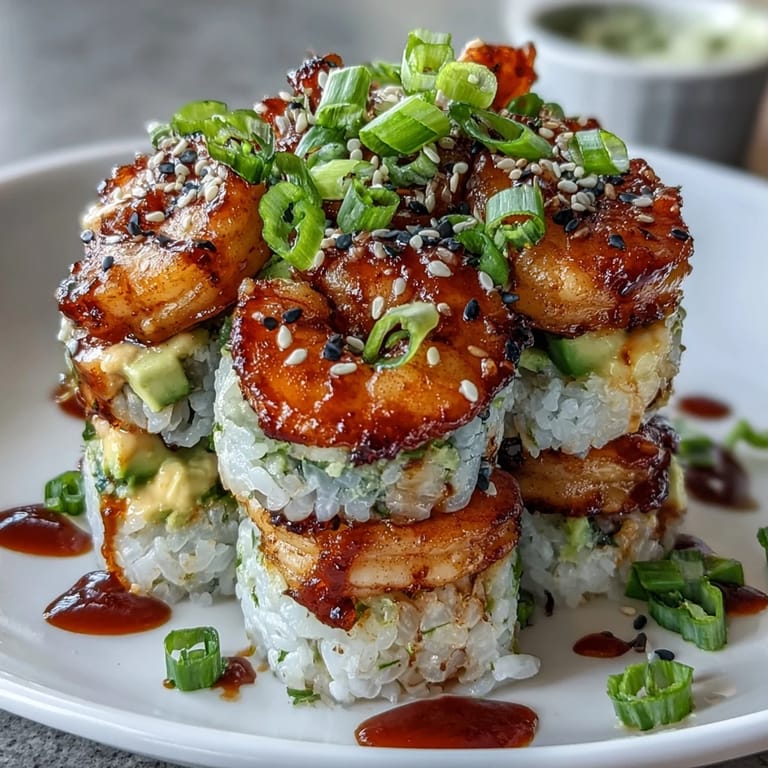
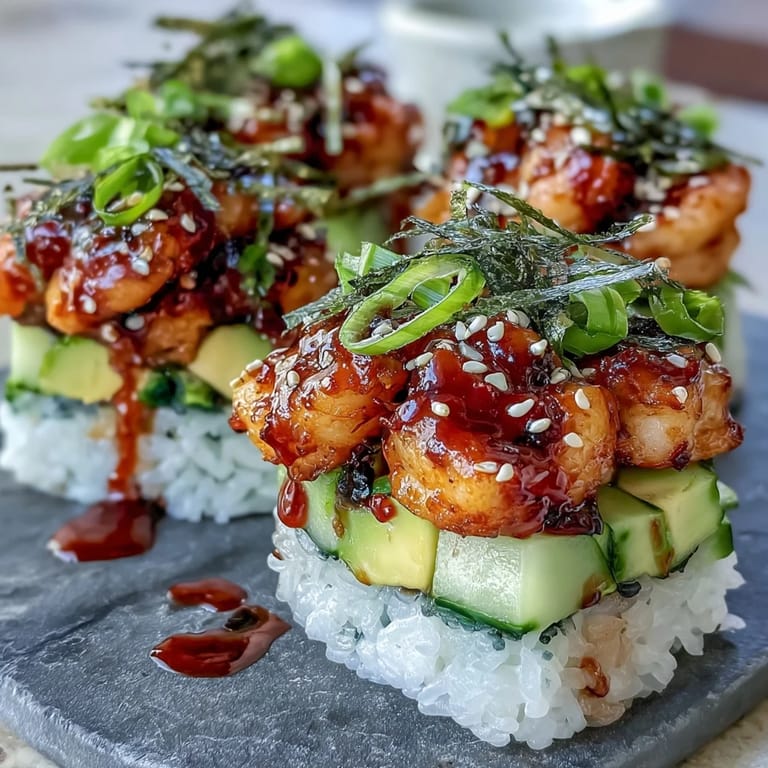
- Using food rings or ramekins, pack a layer of seasoned rice firmly, then add cucumber, avocado, and a generous scoop of shrimp. Drizzle with spicy mayo, sprinkle with nori, green onions, and sesame seeds, then gently lift the ring or invert for a tall, pretty stack.
- Serve Up & Enjoy:
- Repeat with remaining ingredients to make four, then serve immediately when the rice is just cool enough and the shrimp still tastes a touch warm.
 Save
Save There was one evening when these stacks turned a regular Tuesday into a little celebration: candles on the table, music in the background, and everyone grinning at their tidy towers. That’s when I realized, food crafted with a little intention really does make moments stick.
Stacking Without Stress
If you’re new to using food rings or ramekins, don’t worry about perfection—press each layer just enough to hold, but not so hard you smash the rice. The fun is in building and revealing the layers, and even when the first stack comes out a little crooked, it still tastes amazing.
Swaps and Dietary Tweaks
One friend can’t eat shellfish, so we tried it once with flaked cooked salmon—just as satisfying. If you need it gluten-free, tamari swaps in seamlessly for soy sauce, and you can even use tofu for a vegetarian stack that soaks up all the spicy marinade. This recipe’s flexible enough to let you play—just make sure the layers stay vibrant and fun.
Flavor Twists for Next Time
Once, on a whim, I tucked a bit of ripe mango between the shrimp and avocado—sweet, spicy, creamy magic that disappeared quickly. Adding a dab of wasabi to the mayo gives an extra kick, or leave out sriracha for a gentler version if you’re not a spice fan.
- Have pickled ginger and extra soy on the table for dipping.
- Let kids help with stacking; it makes for surprisingly pretty (and wonky) towers.
- Don’t hesitate to make extra sauce—it’s always the first thing people want more of.
 Save
Save If you’ve craved sushi at home but looked for simplicity, these stacks bring it all together—bold flavors, no rolling required. Here’s to building your own sushi moments, one delightful layer at a time.
Recipe Help & FAQs
- → How is the shrimp prepared for the dish?
Shrimp is tossed with soy sauce, sriracha, and sesame oil, then sautéed quickly until cooked through and chopped into small pieces for layering.
- → What type of rice is used in this dish?
Short-grain sushi rice is rinsed, cooked, then mixed with rice vinegar, sugar, and salt to achieve a slightly tangy and sticky texture ideal for layering.
- → How do you assemble the sushi stack layers?
Using a ring mold, start with a layer of seasoned rice, followed by diced cucumber, creamy avocado, and spicy shrimp, topped with spicy mayo, chopped nori, green onions, and sesame seeds.
- → Are there any suggested substitutions for shrimp?
You can replace shrimp with cooked crab, salmon, or tofu for different textures and flavors while maintaining the dish’s layered appeal.
- → What toppings enhance the flavor of the final dish?
A drizzle of sriracha mayo and a sprinkle of black or white sesame seeds add creaminess and a nutty crunch to complement the layers.