 Save
Save The first time I made paella, I didn't have a proper paella pan and borrowed one from a neighbor who rolled her eyes—then rolled them again when the golden crust formed at the bottom. That sound, that gentle crackling when the rice hits just right, became my favorite proof that something extraordinary was happening. Now whenever I make this dish, I chase that same moment: when saffron-infused steam rises and seafood starts nestling into burnished grains, and you know everyone's about to have the best meal of their week.
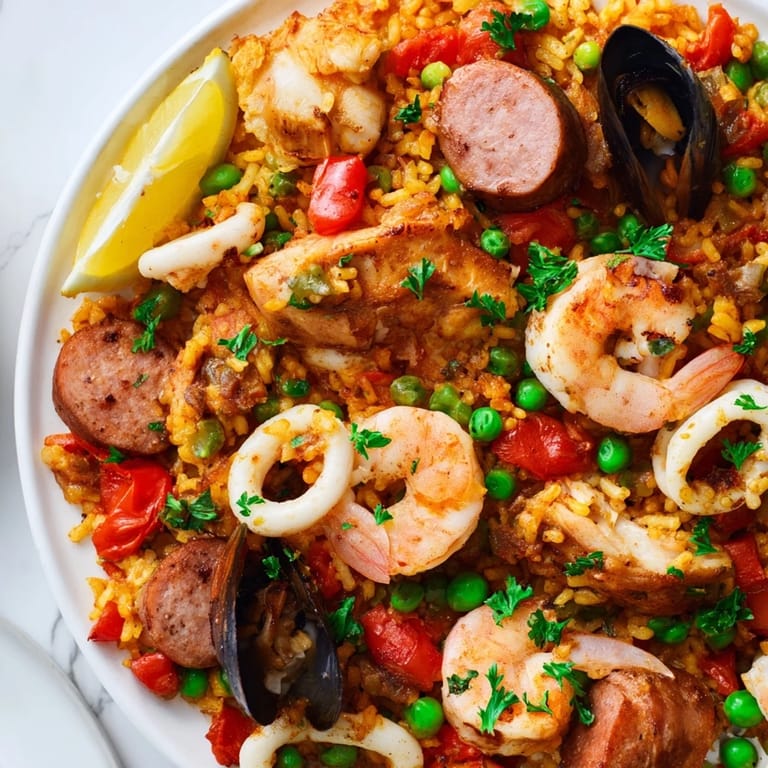
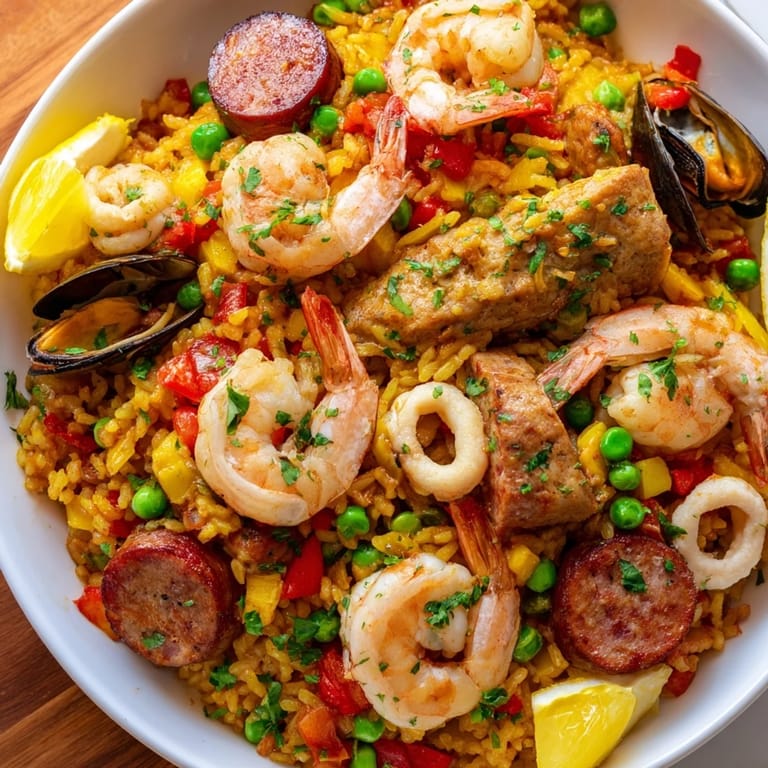
I made this for my sister's birthday dinner on a chilly October evening, and I remember her face when she saw that glossy pan of rice studded with shrimp and mussels. The peas had turned this brilliant jade against the golden rice, and somehow the whole thing felt like edible jewelry. She took one bite and looked at me with this surprised smile—like she suddenly understood why people travel to Spain just for the food.
Ingredients
- Chorizo sausage (200 g): The smoky backbone of paella—slice it thick enough to get caramelized edges and let it render its oil into the pan before anything else touches the heat.
- Boneless, skinless chicken thighs (250 g): Skip the breast meat; thighs stay tender and juicy through the whole cooking process, even when they're not covered.
- Large shrimp (250 g): Peel and devein them yourself if you can—you'll taste the difference, and frozen works beautifully if fresh isn't available.
- Mussels (250 g): Choose ones that close when tapped, and discard any that refuse to open after cooking—they're telling you something.
- Calamari rings (200 g, optional): A last-minute luxury that adds texture and authenticity; cook them briefly or they'll turn rubbery.
- Short-grain paella or Arborio rice (400 g): This is non-negotiable—the grain structure holds broth without turning mushy, and develops that prized socarrat crust on the bottom.
- Chicken or seafood stock (1 L, heated): Warm it before it touches the rice; cold stock will shock the cooking process and uneven rice is regret on a plate.
- Saffron threads (1/2 tsp): Steep them in hot stock first to release their golden color and subtle floral complexity—never skip this step.
- Olive oil (2 tbsp): Use good quality but not your finest; this needs to withstand heat and carry flavor without dominating.
- Onion (1 medium): Finely chopped so it dissolves into the rice and becomes part of the backbone rather than chunky texture.
- Red and yellow bell peppers: Slice them thin so they cook down and sweeten into the dish instead of remaining firm.
- Tomatoes (2 medium): Diced and cooked down to concentrate their acidity and balance the richness of the proteins.
- Frozen peas (150 g): They add pops of brightness and stay slightly firmer than fresh, which somehow works better here.
- Garlic (3 cloves): Minced fine and added after aromatics have softened so it doesn't burn and turn bitter.
- Smoked paprika (1 tsp): The soul of Spanish paella—use true pimentón if you can find it, and never confuse it with sweet paprika.
- Bay leaf (1): Adds an herbal whisper that ties everything together; remember to fish it out before serving.
- Fresh parsley and lemon wedges: Parsley brightens the final bite, and lemon cuts through the richness like a small miracle.
Tired of Takeout? 🥡
Get 10 meals you can make faster than delivery arrives. Seriously.
One email. No spam. Unsubscribe anytime.
Instructions
- Awaken the saffron:
- Pour 3 tablespoons of your heated stock over the saffron threads in a small bowl and let them steep while you prep everything else. This is where the magic begins—the threads release their golden color and delicate flavor.
- Brown the proteins:
- Heat olive oil in your paella pan over medium heat until it shimmers, then add chorizo and chicken pieces. Let them sit long enough to develop golden edges (5-7 minutes), stirring occasionally—don't rush this step, as it builds the depth of flavor everything else will rest on.
- Soften the vegetables:
- Remove the browned proteins and set aside, then add your finely chopped onion and sliced bell peppers to the same oil. Cook for 4-5 minutes until they begin to surrender and soften, then stir in the minced garlic and diced tomatoes.
- Toast the rice:
- Add your rice and smoked paprika, stirring gently for about 1-2 minutes so each grain gets coated in the oil and vegetables—you're toasting them lightly, awakening their nutty potential.
- Build the foundation:
- Return the chorizo and chicken to the pan, then pour in the saffron-infused stock (with the threads) and the remaining stock, stirring gently to combine with the bay leaf, salt, and pepper.
- The undisturbed simmer:
- Bring everything to a boil, then reduce heat to low and let it simmer uncovered for 15 minutes without stirring—this is when the rice begins its transformation and the bottom of the pan develops that beloved socarrat crust.
- Welcome the seafood:
- Nestle your shrimp, mussels, and calamari into the rice, scatter the peas across the top, then cover loosely with foil. Cook for another 10-12 minutes until the shrimp turns pink, the mussels have opened, and you can smell the ocean meeting saffron.
- Rest and reveal:
- Remove from heat and let the paella rest covered for 5 minutes—this allows the rice to finish cooking with residual heat and everything to settle into harmony. Discard any mussels that stubbornly refused to open.
- The final flourish:
- Scatter fresh chopped parsley across the top and arrange lemon wedges around the pan, then bring it straight to the table so everyone can see what just happened.
 Save
Save My dad tasted this once and said it was the first time rice made him feel fancy without feeling fussy. There's something about paella that transforms an ordinary Tuesday night into an event, like the dish itself insists on celebration.
The Socarrat: Your Secret Weapon
That golden, slightly crispy layer of rice clinging to the bottom of the pan is called socarrat, and it's the difference between good paella and the kind people remember for years. You'll hear it before you see it—a gentle crackling sound about 5 minutes before you're done cooking. Some cooks intentionally increase the heat for the last couple of minutes to deepen this crust, and I won't stop you, but listen carefully because there's a razor-thin line between beloved and burnt.
Why Seafood Matters Here
Paella isn't paella without the sea in it—the briny sweetness of shrimp and mussels transforms rice from a side dish into a conversation between land and ocean. When you're shopping, ask your fishmonger for the freshest option, but don't hesitate with frozen shrimp; they're often frozen at peak freshness and thaw beautifully. Mussels should smell like a clean ocean and close when tapped, which is nature's way of promising they're alive and ready.
Building Flavor in Layers
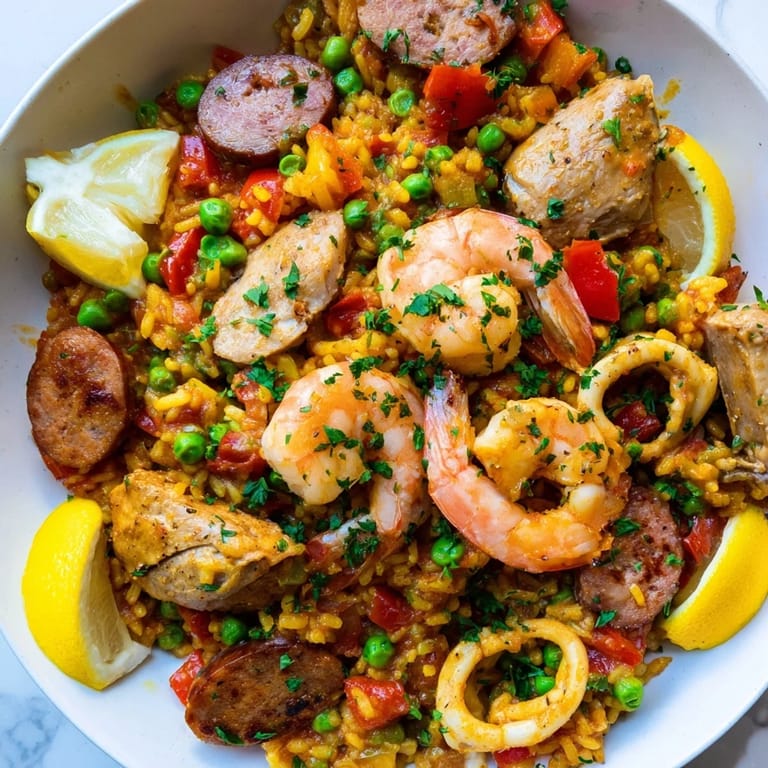
The genius of paella lives in how it builds flavor—first the chorizo renders its smoky oil, then chicken browns and deepens, then vegetables soften and sweeten, then rice gets toasted and kissed with saffron. Each step matters because each layer becomes the foundation for the next layer. This is why you can't rush it or combine steps; the dish knows what it needs and when it needs it.
- Toast your rice with the paprika and vegetables so it drinks in their flavor before any liquid touches it.
- Taste the broth before it goes into the pan and adjust seasoning now, because the rice will absorb everything.
- Save a handful of parsley and those lemon wedges for the very last moment—they're your final adjustment of brightness and life.
 Save
Save There's a reason paella is cooked in an open pan at the table in Spain—because the journey matters as much as the destination. Serve it straight from the paella pan with that crusty bottom intact, and watch your guests understand why this dish has endured for centuries.
Recipe Help & FAQs
- → What is essential for authentic flavor?
Steeping saffron threads in hot stock before adding infuses the rice with signature aroma and color.
- → Can I substitute seafood types?
Yes, clams or scallops can replace or complement shrimp and mussels for variety.
- → How to achieve the smoky taste?
Using smoked Spanish paprika and chorizo brings the distinctive smoky notes characteristic of the dish.
- → Is it necessary to avoid stirring during cooking?
Correct—once simmering starts, avoid stirring to develop the crusty bottom layer and keep textures intact.
- → What side complements this dish well?
A crisp Spanish white wine such as Albariño or Verdejo complements the dish's rich and complex flavors.