 Save
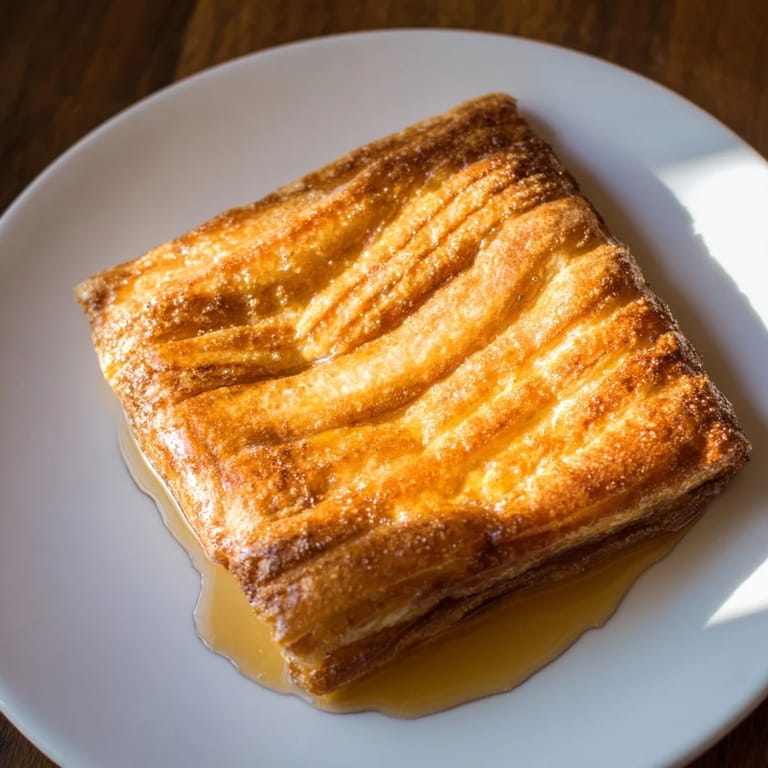
Save The first time I truly understood msemen was watching my neighbor's hands work the dough with such casual confidence, stretching it paper-thin without tearing it, her fingers moving in rhythm to some unspoken kitchen music. She'd been making these since childhood in Fez, and when she handed me a warm square dripping with honey, I realized that this wasn't just breakfast—it was a conversation between flour and butter, patience and speed. That day, I stopped thinking of pastry as intimidating and started seeing it as a language I could learn.
I remember bringing a batch to my book club last spring, still warm and glistening, and watching everyone stop mid-sentence to taste one. The conversation paused—genuinely paused—for about three minutes while people chewed slowly, eyes closed, murmuring things like "oh my" and "this is what I didn't know I needed." That's when msemen stopped being a recipe I was testing and became something I made for moments that deserved a little magic.
Ingredients
- All-purpose flour (2 cups / 250 g): This is your foundation, and it needs to be fresh—old flour drinks water differently and your dough will feel off before you even start shaping.
- Fine semolina (1 cup / 120 g): Not cornmeal, not coarse semolina—the fine stuff gives you that tender crumb inside while you're building those flaky layers.
- Sugar (1 tsp): A whisper of sweetness that feeds the yeast and helps the pastry brown beautifully without being obvious about it.
- Salt (1 tsp): This is non-negotiable for flavor, and it actually strengthens the gluten, making your dough more elastic and forgiving.
- Warm water (1 1/4 cups / 300 ml): Temperature matters—too hot kills the yeast, too cold and nothing happens; aim for what feels gentle on your wrist, like a baby's bathwater.
- Instant yeast (1 tsp, optional): This is the choice between denser and airier; skip it for tradition, include it if you want msemen that feels almost brioche-light.
- Vegetable oil (1/2 cup / 120 ml plus extra): You'll use this for greasing hands, the work surface, and frying—it keeps everything from sticking and creates steam for those crucial layers.
- Unsalted butter, melted (1/4 cup / 60 g): Butter is what separates good msemen from the kind that tastes like sadness; use real butter, not margarine, and brush it generously.
- Fine semolina for layering (1/4 cup / 30 g): This prevents the layers from fusing together while they rest, and it adds a subtle texture and nutty flavor.
- Honey, warmed: Not just a topping—it's the reason this pastry exists, so choose honey you'd actually eat by the spoonful.
Tired of Takeout? 🥡
Get 10 meals you can make faster than delivery arrives. Seriously.
One email. No spam. Unsubscribe anytime.
Instructions
- Build your dough base:
- Mix your dry ingredients, then slowly add water while stirring, watching the dough come together like it's being born. Knead for ten minutes—this isn't arbitrary; your hands will tell you when it shifts from shaggy to smooth, when it starts fighting back just a little, meaning the gluten network is there.
- Give it rest time:
- Cover your bowl and step away for fifteen minutes; this pause lets the gluten relax and the flour fully hydrate, making everything easier when you shape.
- Portion and oil your workspace:
- Divide into eight equal pieces—use a scale if you want consistency, but honestly, your hand learns pretty fast. Slick your work surface and hands with oil; this is the secret to working the dough without tearing it.
- Stretch the first square:
- Take one ball and flatten it gently with your palms, working from the center outward, letting gravity help you. The dough should become almost transparent—this is what separates msemen from other pastries, so be patient and trust the stretch.
- Build the layers:
- Brush with melted butter, scatter semolina, then fold one edge in about two inches, brush that fold, sprinkle more semolina, and repeat around the square, creating a smaller square within a square. These layers are everything.
- Rest the folded squares:
- Five minutes on the counter lets the gluten remember itself and the butter set slightly, which helps with crispness during frying.
- Pan-fry with attention:
- Heat your skillet over medium heat—too high and you'll burn the outside before the inside gets flaky—and gently flatten each square to about a quarter-inch thick. Watch for the moment when the bottom turns golden and sounds crispy when you nudge it with your spatula.
- Finish both sides:
- Fry two to three minutes per side, until both sides are spotted deep gold and the pastry sounds hollow when you tap it.
- Serve in the moment:
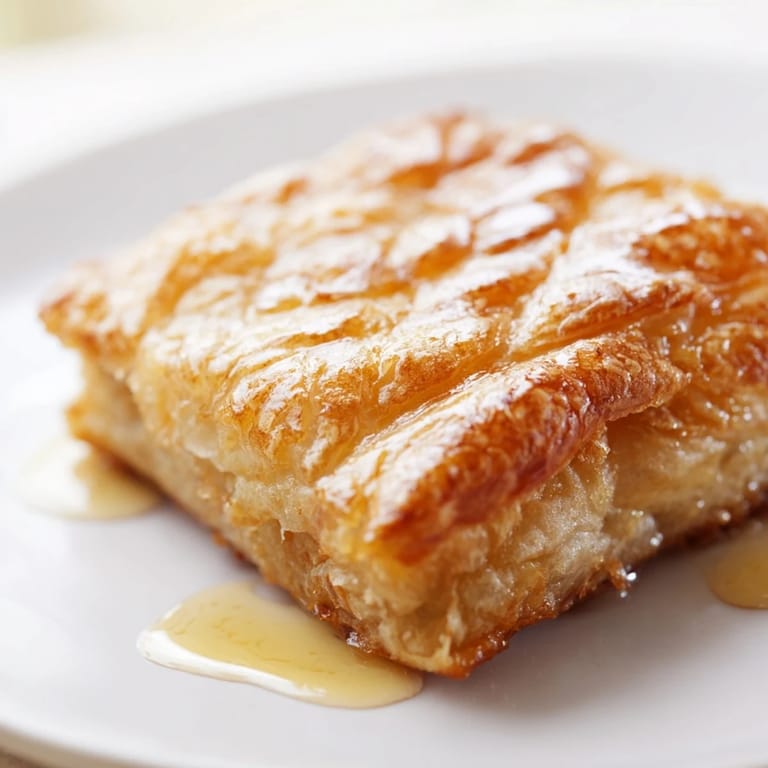
- Drizzle warm honey over warm msemen and eat it while it's still steaming; this is non-negotiable.
 Save
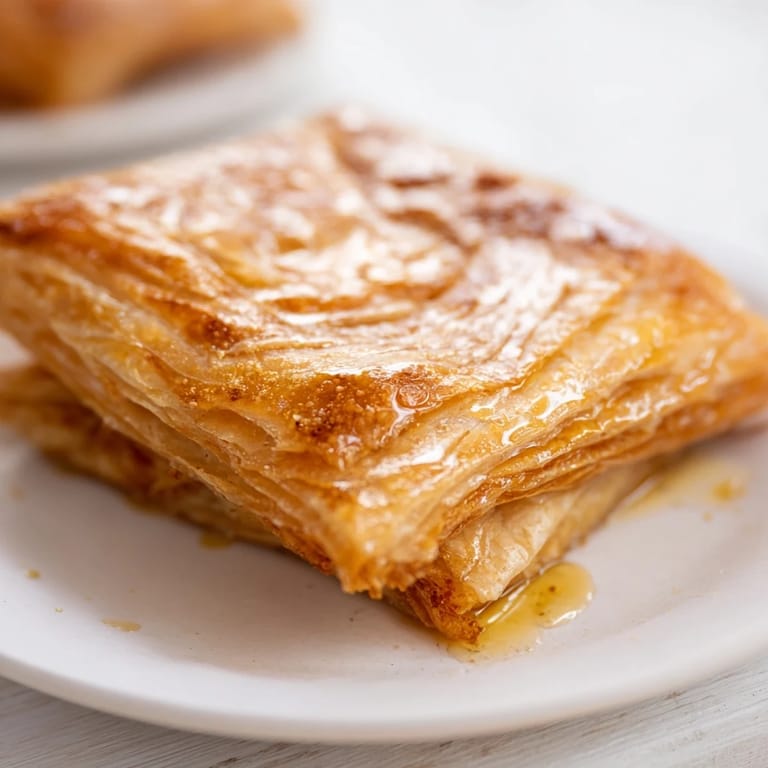
Save There's a particular silence that falls when someone takes that first bite of msemen, when the exterior shatters under their teeth and they taste butter and honey meeting in the warm, tender layers inside. It's the kind of small, quiet joy that makes you understand why people have been making this same pastry for generations—not because it's complicated, but because it's perfect, and it tastes like someone cared enough to stretch dough by hand.
The Magic of Lamination
What happens when you fold and brush msemen isn't magic, but it almost feels like it—you're creating hundreds of paper-thin butter and dough layers, and when heat hits them, the butter melts and the water in the dough turns to steam, puffing everything apart into those crispy flakes. The semolina you sprinkle acts as a barrier between layers, preventing them from fusing into one dense sheet. This is the same principle behind croissants, just executed with speed and hands instead of a rolling pin and hours of patience.
When to Make This
Msemen is breakfast royalty in Morocco—served in the morning with strong coffee or mint tea, and also at afternoon break time when energy dips and something warm and sweet becomes absolutely essential. It's also brilliant for unexpected guests because the dough comes together quickly and frying happens fast, so you can have fresh pastry on a plate within thirty minutes of someone arriving. I've made batches on Sunday mornings when I had zero plans, just because the smell of butter and frying dough seemed like the right way to start the day.
Variations and Additions
Once you master the basic msemen, the pastry becomes a canvas—I've brushed the layers with a mixture of ground almonds and honey before folding, creating something between msemen and baklava that tastes like a secret I'm not supposed to know. A pinch of cinnamon or cardamom in the dough adds warmth without overwhelming, and orange blossom water instead of plain water gives everything a floral undertone that feels unexpectedly modern. Some people like to serve msemen with amlou, a thick almond-honey-argan oil spread that tastes like concentrated essence of Morocco, though honestly, nothing beats it with just honey and maybe some strong coffee on the side.
- Try brushing layers with a paste of ground almonds, sugar, and a touch of water for a nuttier variation.
- A drizzle of orange blossom syrup instead of plain honey changes the whole mood.
- Leftover squares reheat perfectly in a dry skillet over low heat, emerging crispy again.
 Save
Save Making msemen connects you to something ancient and alive, a pastry that tastes the same whether it's eaten in a café in Marrakech or your kitchen on a Tuesday morning. Once you understand the rhythm of stretching and brushing and folding, you'll find yourself making these again and again, because they're worth the ten minutes of attention and always taste like you know something other people don't.
Recipe Help & FAQs
- → What flour types are used in Msemen dough?
All-purpose flour combined with fine semolina creates the dough, giving it a unique texture and slight crispness.
- → How is the layered texture achieved in Msemen?
The dough balls are flattened and brushed with melted butter, layered with semolina, then folded repeatedly to create thin, flaky layers.
- → What’s the best cooking method for Msemen?
Pan-frying in a non-stick skillet with vegetable oil ensures a golden, crispy exterior while keeping the interior tender.
- → Can the dough be made ahead of time?
Yes, the dough can be prepared and rested, then shaped and cooked shortly after for best results.
- → What are common serving suggestions?
Msemen is delicious served warm with honey, and can also be paired with almond-honey spread, fresh jam, or a sprinkle of cinnamon.