 Save
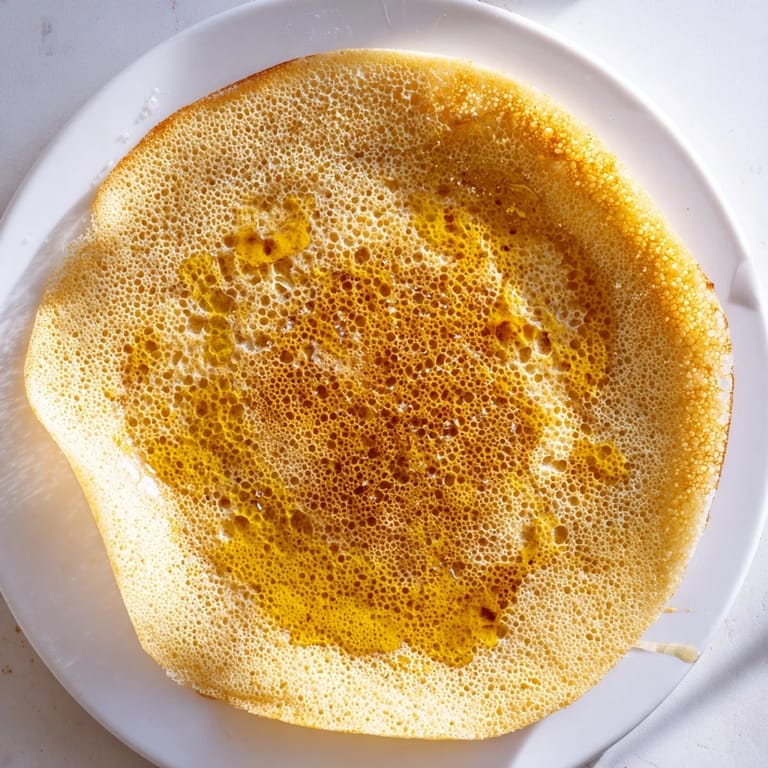
Save The first time I made baghrir, I was standing in a tiny kitchen in Marrakech watching my neighbor pour batter onto a hot pan without using any oil. I was convinced it would stick, but within seconds the surface erupted into these perfect little holes, like honeycomb emerging from nowhere. She smiled at my amazement and handed me a warm crepe dripping with honey and melted butter. That moment taught me that some of the most magical dishes come from the simplest techniques.
Years later, I made these for my roommate on a Saturday morning when she was feeling homesick. She took one bite of that warm, honeycomb-textured crepe with the butter-honey mixture soaking into the holes, and her eyes actually watered. Sometimes food is the closest thing to a conversation that can bridge distance.
Ingredients
- Fine semolina: This is what creates that signature spongy texture with all the tiny holes. Don't skip it or substitute with regular flour, or you'll end up with a dense crepe instead of the delicate honeycomb structure.
- All-purpose flour: Keeps the baghrir tender and helps balance the semolina's density for the perfect bite.
- Warm water: The temperature matters more than you'd think. Cold water will slow down the yeast and baking powder, so warm (not hot) is the sweet spot.
- Granulated sugar: A touch of sweetness that helps the yeast activate and gives the crepes a subtle golden flavor.
- Active dry yeast: This is what creates the bubbles that become those gorgeous honeycomb holes. Fresh yeast makes all the difference.
- Baking powder: Works alongside the yeast to create lift and those delicate air pockets throughout.
- Salt: Enhances all the other flavors and prevents the batter from tasting one-dimensional.
- Unsalted butter: For serving warm and melting into those holes. Salted butter will make the honey-butter sauce unbalanced.
- Honey: Use the best honey you can find. It's the star of the show, and its warmth melting into the crepes is non-negotiable.
Tired of Takeout? 🥡
Get 10 meals you can make faster than delivery arrives. Seriously.
One email. No spam. Unsubscribe anytime.
Instructions
- Mix your dry ingredients:
- Whisk together semolina, flour, sugar, yeast, baking powder, and salt in a large bowl until evenly combined. This step ensures the yeast and baking powder are distributed throughout so you get consistent honeycomb holes in every crepe.
- Add water slowly and whisk:
- Pour warm water in gradually while whisking constantly to avoid lumps. The batter should be smooth, pourable, and free of any gritty bits. Think of it as the consistency of thin pancake batter, not thick like crepe batter.
- Let the magic happen:
- Cover the bowl loosely and set it at room temperature for 30 minutes. You'll see bubbles forming on the surface as the yeast wakes up and the baking powder starts working. This resting time is crucial for the texture.
- Heat your pan without oil:
- Place a nonstick skillet or crepe pan over medium heat and let it get hot. Don't add butter, oil, or any grease. The batter won't stick because of its composition, and oil would prevent those perfect holes from forming.
- Pour and let it spread:
- Ladle about ¼ cup of batter into the center of the hot pan and give it just one gentle swirl to distribute it evenly. Resist the urge to spread it too thin. The batter will settle and spread naturally as it cooks.
- Watch for the holes:
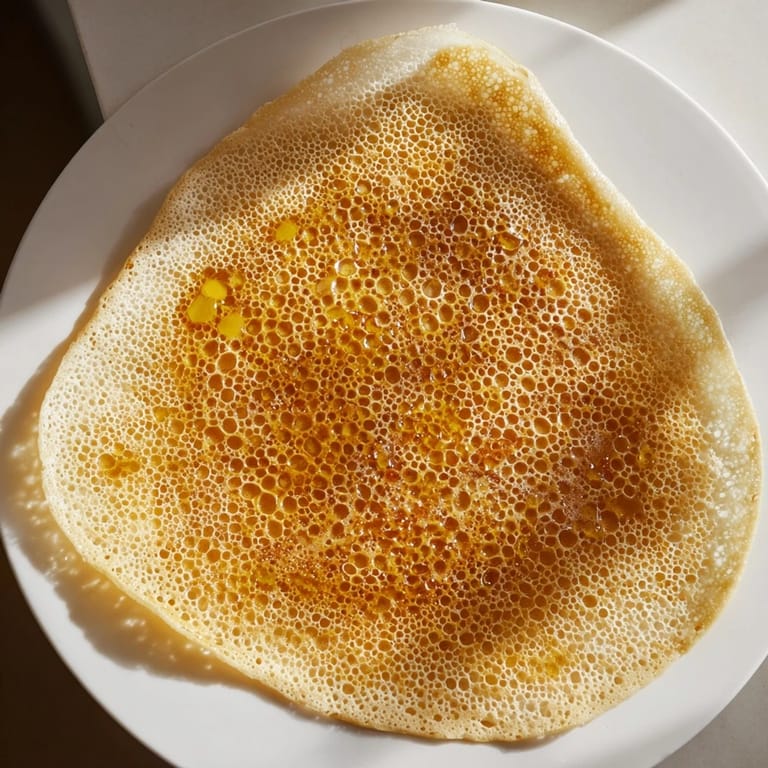
- Cook for 2 to 3 minutes without moving the pan. You'll watch the surface transform into a honeycomb of tiny holes as the steam from the batter creates them. The top should look dry and set, with no raw batter visible.
- Transfer and move on:
- Slide a spatula under the baghrir and transfer it to a plate. Never flip it. The bottom will be light golden and slightly crispy while the top is tender and full of holes.
- Repeat the process:
- Stir the batter occasionally between crepes (it settles) and cook the remaining batter. You should get 8 to 10 crepes depending on how much batter you use for each one.
- Warm the honey-butter:
- In a small saucepan over low heat, melt the butter with the honey, stirring gently until they're combined and warm. Don't let it boil.
- Serve immediately:
- Stack warm baghrir on a plate and drizzle generously with the warm honey-butter mixture so it pools into all those delicate holes. Eat while it's still warm.
 Save
Save I remember my grandmother telling me that baghrir was poor man's luxury in Morocco. The ingredients were affordable, but the result felt like something special. That idea stuck with me. Even now, when I watch that honeycomb form and drip with honey, I'm reminded that the best meals don't need to be complicated.
The Texture Is Everything
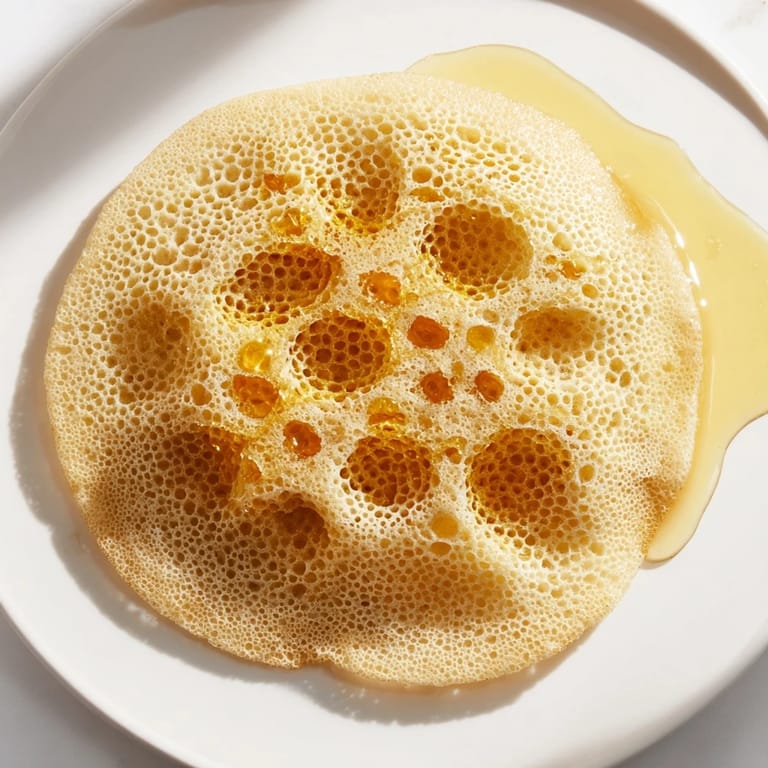
The honeycomb holes aren't a design choice. They're a byproduct of the yeast and baking powder creating steam, and the ratio of semolina to flour is what makes them form instead of collapse. This is why baghrir feels so different from other pancakes or crepes. The holes absorb the honey-butter mixture and create pockets of sweet, buttery softness that contrast beautifully with the slightly crispy edges.
Why This Deserves Room Temperature Batter
Letting the batter rest at room temperature allows the yeast to slowly activate and the semolina to fully hydrate. If you try to cook it immediately, you'll get a dense crepe with very few holes. If the room is cold, the process slows down, so in winter you might need 45 minutes instead of 30. Patience here creates texture.
Serving and Variations
Baghrir is traditionally eaten warm with honey and butter, and honestly, that's perfect as is. But I've also served these with a sprinkle of toasted almonds or a pinch of cinnamon mixed into the honey for subtle depth. Some people add a drizzle of orange blossom water to the honey, which gives it a delicate floral note.
- Chopped pistachios or almonds scattered on top add a welcome crunch.
- A tiny pinch of cinnamon or nutmeg stirred into the honey brings warmth without overpowering.
- These are best enjoyed immediately while still warm and the holes are soft enough to absorb the honey.
 Save
Save Making baghrir is less about perfecting a technique and more about understanding that some dishes are built on generosity. The warm honey melting into those honeycomb holes, the soft texture, the simplicity of it all. That's the point.