 Save
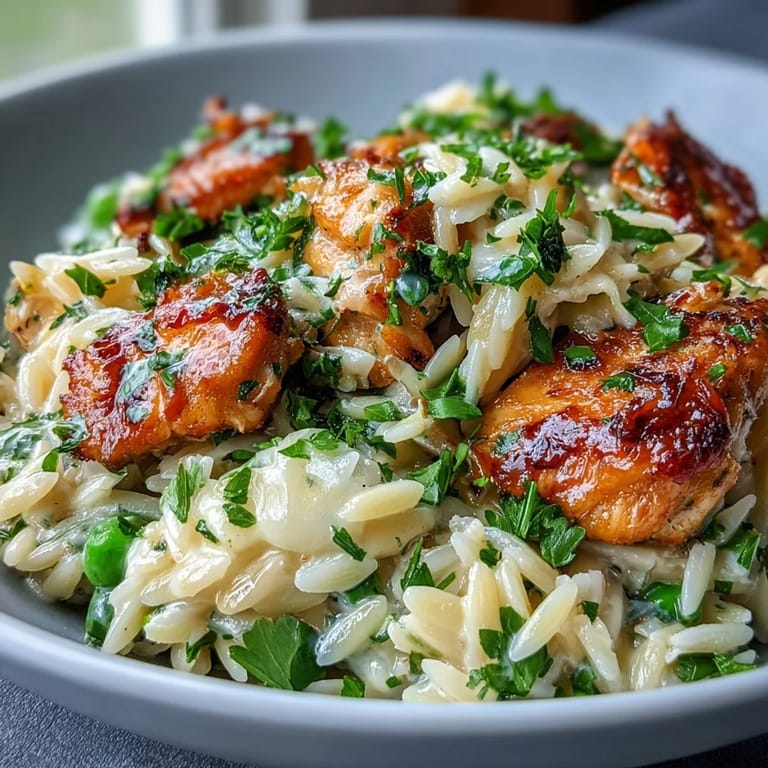
Save The first time I made this one-pot lemon orzo dish, the zing of fresh citrus hit me even before chopping the parsley. I was craving something that felt like spring, and the chicken, peas, and orzo felt just right for chasing away lingering winter blues. Cooking it all in a single pot felt oddly liberating after a week of sink-full dishes. As the aroma of sautéed onions mingled with lemon, my kitchen actually seemed brighter. I’m still surprised how such simple ingredients transform dinner from ordinary to memorable.
Cooking this for my neighbor after her move-in was my first chance to share the recipe beyond family. We crowded around the stove, laughing as the orzo bubbled—her toddler kept popping peas off the cutting board. Finishing with an extra grate of Parmesan felt like the right touch and everyone dove in before I even had a chance to plate it neatly. There was something delightful about serving it straight from the pot, no ceremony needed. We all agreed lemon should be a permanent dinner guest.
Ingredients
- Boneless, skinless chicken breasts: Using fresh, tender chicken gives the dish its hearty base, and cutting it into bite-sized chunks ensures quick, even cooking.
- Frozen green peas: Thawed peas bring sweetness and vibrant color; I’ve learned to add them near the end to keep them from getting mushy.
- Yellow onion: Finely chopping the onion makes it melt into the dish, adding gentle depth without overpowering the lemon.
- Garlic: Mincing garlic helps it infuse the orzo with subtle warmth—you want it just fragrant, not browned.
- Lemon zest and juice: Fresh zest makes the whole pot smell alive, and juice brightens the finish; zest before juicing to make things easier.
- Fresh parsley: Sprinkle chopped parsley at the end for a hit of color and herbaceous freshness.
- Orzo pasta: Stirring uncooked orzo into the pot thickens the sauce and gives a creamy texture without needing extra cream.
- Parmesan cheese: Grated Parmesan melts smoothly into the warm orzo, making every bite comforting.
- Unsalted butter: Butter adds richness—swapping in olive oil makes it a bit lighter, but the creaminess is worth it.
- Low-sodium chicken broth: Three cups will flavor the orzo and keep the whole dish tender; choose low-sodium so you can control the salt.
- Olive oil: Starting with olive oil helps sear the chicken nicely and keeps everything from sticking.
- Dried oregano: Oregano quietly brings a Mediterranean flair; don’t overdo it, as too much can dominate the fresh lemon.
- Salt: Seasoning the chicken well at the start builds a good flavor base.
- Freshly ground black pepper: A pinch at each stage wakes up the subtle flavors; grind it fresh for best aroma.
Tired of Takeout? 🥡
Get 10 meals you can make faster than delivery arrives. Seriously.
One email. No spam. Unsubscribe anytime.
Instructions
- Sear the Chicken:
- Heat olive oil in a large deep skillet or Dutch oven over medium-high, and spread the chicken pieces in a single layer. You’ll hear them sizzle; sprinkle with salt, pepper, and oregano, then sauté for 4–5 minutes until golden and just cooked through—move the chicken to a plate and set aside.
- Sauté Aromatics:
- Add butter to the same pot, followed by chopped onion—watch as the onion turns translucent in about 3 minutes. Toss in minced garlic and let it cook for 1 minute, stirring until the scent is just barely sweet.
- Toast the Orzo:
- Pour the orzo right into the buttery mixture; stir constantly for 1–2 minutes. You’ll notice the pasta getting opaque and nutty-smelling.
- Add Broth & Simmer:
- Pour in chicken broth, bring to a gentle boil, then reduce to a simmer and cover. Stir every couple of minutes and cook 7–8 minutes—the orzo should be tender but not mushy.
- Mix in Veggies & Lemon:
- Return the chicken to the pot along with peas, lemon zest, and juice. Keep it uncovered as you cook 4–5 more minutes, letting the orzo finish and the liquid mostly absorb.
- Finish & Serve:
- Take the pot off the heat and fold in Parmesan and parsley. Taste and adjust seasoning, then serve warm with an extra sprinkle of lemon zest or cheese if you like.
 Save
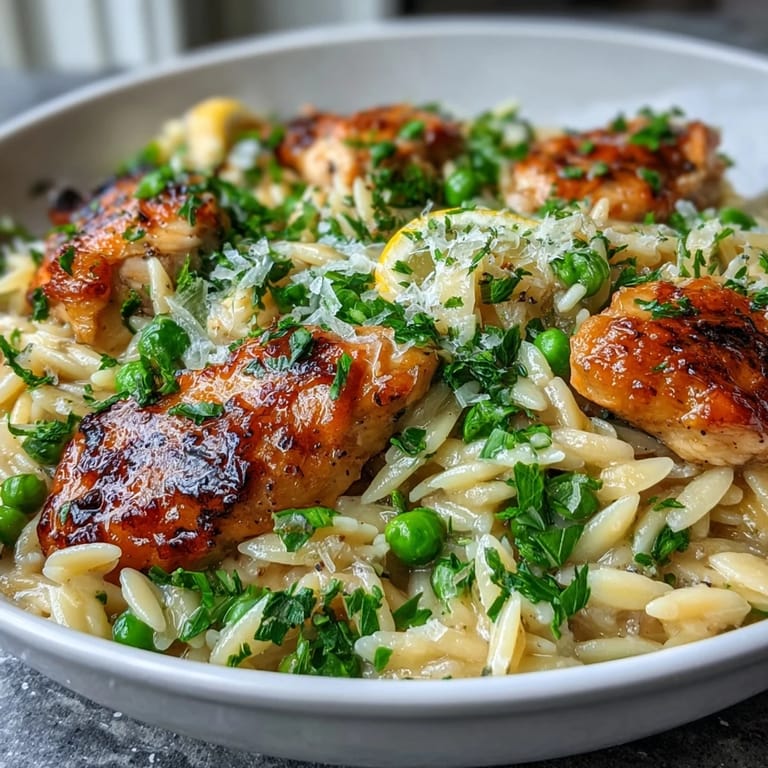
Save The evening we made this as a midweek pick-me-up, the lemon scent lingered long after everyone left, making the kitchen feel like a cheerful safe haven. Sharing stories over second helpings, I realized food really can pause a hectic day and turn it around.
Cooking with One Pot: Life Made Simple
Using a single pot means flavors meld together; I find the orzo absorbs both lemon and chicken juices for an almost risotto-like creaminess but without fussing over constant stirring. Cleanup takes minutes, leaving more time for chatting with guests or enjoying a quiet evening. Surprisingly, the one-pot method keeps the peas lively and green rather than dull or overcooked. The result is cozy but vibrant, perfect for busy nights or spontaneous gatherings.
Lemon’s Role: Freshness in Every Bite
Adding zest before juicing guarantees a flood of fragrance—I learned this after fishing chunks of lemon rind out of boiling orzo the hard way. The lemon’s brightness cuts through rich Parmesan and butter, making each bite taste lively. Balance is key; too much juice overwhelms, so measure both zest and juice for just-right flavor. The aroma alone signals dinner’s almost ready, inviting everyone toward the kitchen.
Orzo Pasta: Creamy Made Easy
Unlike rice, orzo cooks quickly and gets creamy without extra dairy; letting it toast a moment in butter gives a nutty undertone. I’ve come to appreciate stirring gently but not obsessively—too much and it goes mushy, too little and it sticks. Tasting the orzo before finishing is the best way to judge doneness. If you’re tempted to add cream, just a splash at the end makes it especially indulgent.
- If orzo feels too dry, adding a splash of broth loosens things up beautifully.
- Don't forget to taste and adjust salt right at the end—a little extra can make all the flavors pop.
- Finish with fresh parsley for maximum color and a subtle zing.
 Save
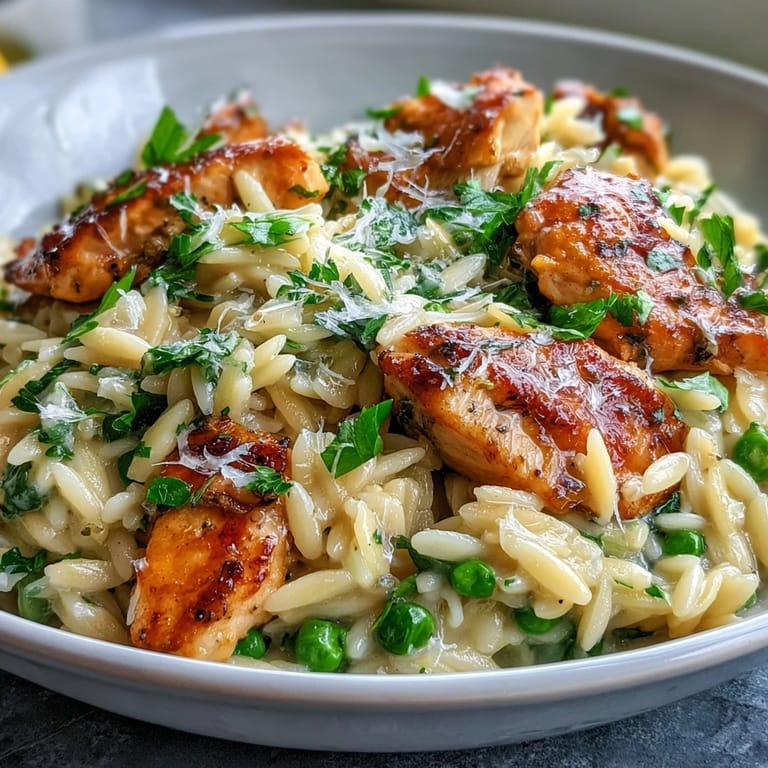
Save Letting everyone serve themselves from the steaming pot created a kind of casual camaraderie. If you cook it, make sure to savor both the flavors and the moment you share.
Recipe Help & FAQs
- → How do I make this extra creamy?
Stir in a splash of heavy cream before serving to enhance the texture and richness of the dish.
- → Can I substitute the chicken?
Yes, shrimp or tofu can be used in place of chicken for a pescatarian or vegetarian option.
- → What tools are needed for cooking?
A large deep skillet or Dutch oven, wooden spoon or spatula, measuring cups, and a zester are recommended.
- → How should I adjust seasoning?
Season with salt, pepper, and oregano initially, then taste and adjust before serving for optimal flavor.
- → What pairs well with this meal?
A light Sauvignon Blanc or Pinot Grigio complements the bright flavors. Fresh green salad is also a good side.
- → Are there any allergens to consider?
The dish contains dairy, gluten, and chicken. Always check ingredient labels for hidden allergens.