 Save
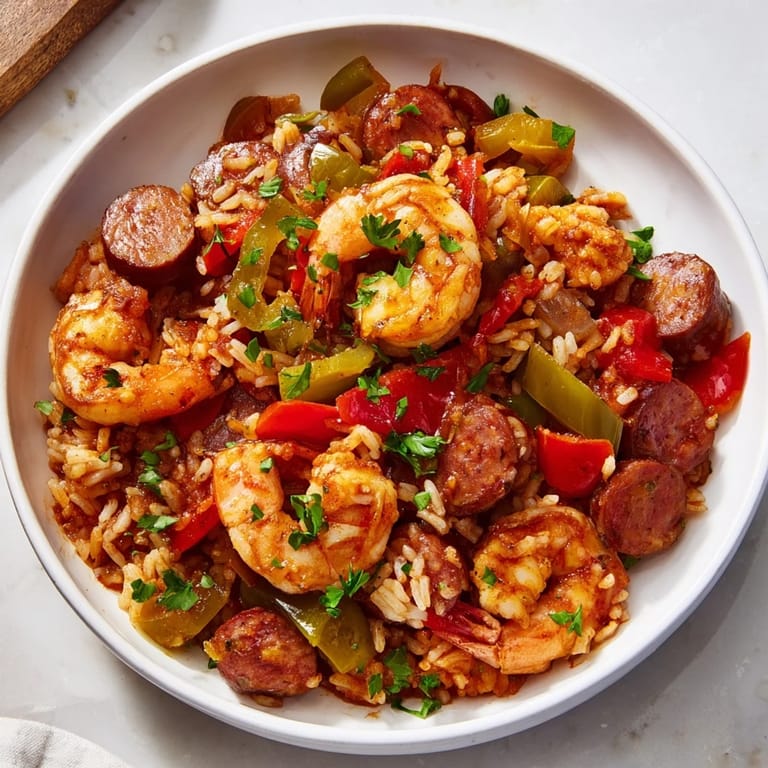
Save The first time I made jambalaya, I wasn't following a recipe at all—I was standing in my kitchen with leftover sausage, some shrimp I'd forgotten to use, and a stubborn determination not to order takeout. One skillet, some rice, and whatever vegetables looked decent in my crisper drawer. What came out was this gorgeous, steaming dish that tasted like someone who actually knew what they were doing had made it. That moment taught me that jambalaya isn't fussy or intimidating; it's forgiving, alive, and genuinely excited to be made.
I remember cooking this for my neighbor Sarah on a random Thursday when she mentioned her kids were tired of the usual rotation. Watching their faces when they tasted it—that moment when you realize a meal has landed—that's when I understood why people become obsessed with jambalaya. It's not just food; it's a conversation starter, a comfort that somehow feels adventurous at the same time.
Ingredients
- Andouille sausage or smoked sausage (225 g / 8 oz), sliced: The smoky backbone of this dish—buy the good stuff because it seasons everything around it, and those edges get crispy and almost caramelized as they cook.
- Large shrimp (225 g / 8 oz), peeled and deveined: They cook in just minutes at the end, staying tender and sweet, so don't skip this step or add them too early or they'll turn rubbery.
- Medium yellow onion, diced: The flavor foundation that sweetens slightly as it softens, creating depth without overpowering anything else.
- Red bell pepper and green bell pepper, diced: These aren't just color; they bring subtle sweetness and texture that balances the spice beautifully.
- Celery stalks (2), diced: The holy trinity wouldn't be complete without it—celery adds an earthiness that ties everything together.
- Garlic (3 cloves), minced: A full minute of cooking with the vegetables brings out its sweetness and mellows the bite into something aromatic and warm.
- Long-grain white rice (200 g / 1 cup): The canvas that soaks up all these incredible flavors—toasting it briefly in the spices makes a difference you'll taste.
- Low-sodium chicken broth (400 ml / 1 2/3 cups): The liquid foundation that becomes infused with everything cooking around it; low-sodium lets the spices shine instead of fighting salt.
- Diced tomatoes (400 g / 1 can), undrained: Their acidity brightens everything and adds body to the sauce without needing cream or butter.
- Smoked paprika (1 tsp): This is where the smoke lives—don't skip it or substitute regular paprika, because that smoky whisper is essential.
- Dried thyme and oregano (1/2 tsp each): These dried herbs tolerate the long simmer and infuse the rice with subtle herbal notes.
- Cayenne pepper (1/2 tsp): Start here and adjust upward if your crew likes heat; it builds warmth without making anyone cry.
- Freshly ground black pepper and salt (1/2 tsp and 1 tsp): Taste as you go because the broth and sausage contribute salt too, and you don't want it oversalted.
- Olive oil (2 tbsp total): Split between browning the sausage and sautéing the vegetables for even flavor development.
- Fresh parsley (2 tbsp), chopped: The bright finishing touch that makes everything look alive and adds a clean, grassy note to each bite.
Tired of Takeout? 🥡
Get 10 meals you can make faster than delivery arrives. Seriously.
One email. No spam. Unsubscribe anytime.
Instructions
- Brown the sausage:
- Heat a tablespoon of olive oil in your large skillet over medium-high heat until it shimmers slightly. Add sausage slices and let them sit for a moment—don't stir immediately—so they develop those caramelized edges that taste smoky and rich. After about 3–4 minutes, flip and cook until the other side is golden, then lift everything out onto a plate.
- Build the vegetable base:
- Pour the remaining oil into the same skillet (all those browned bits are staying behind, which is exactly what you want). Add onion, bell peppers, and celery, and sauté for about 4–5 minutes, stirring occasionally, until the vegetables soften and become translucent at the edges. Add minced garlic and give it just a minute more so it becomes fragrant but doesn't brown or turn bitter.
- Toast the rice and spices:
- Stir in your rice, and all those spices—smoked paprika, thyme, oregano, cayenne, black pepper, and salt. Keep stirring for about a minute so every grain gets coated with oil and the spices toast slightly, releasing their aromas and flavoring the rice from the inside.
- Simmer the mixture:
- Return the browned sausage to the skillet, then pour in the diced tomatoes (with all that juice) and the chicken broth. Stir everything together so the rice isn't clumping, bring it to a simmer, then reduce heat to low and cover. Let it cook undisturbed for about 20 minutes, until the rice has absorbed most of the liquid and is tender but not mushy.
- Cook the shrimp:
- Arrange the shrimp on top of the rice mixture (they'll nestle into it slightly), cover again, and cook for 5–7 minutes. The shrimp will go from gray to pink and opaque—that's your signal they're done; a minute longer and they'll start to get tough.
- Finish and serve:
- Remove from heat, let it sit covered for a minute, then fluff everything gently with a fork to separate the grains. Scatter fresh parsley over the top and serve straight from the skillet if you're keeping things casual, or transfer to a serving dish for something slightly more composed.
 Save
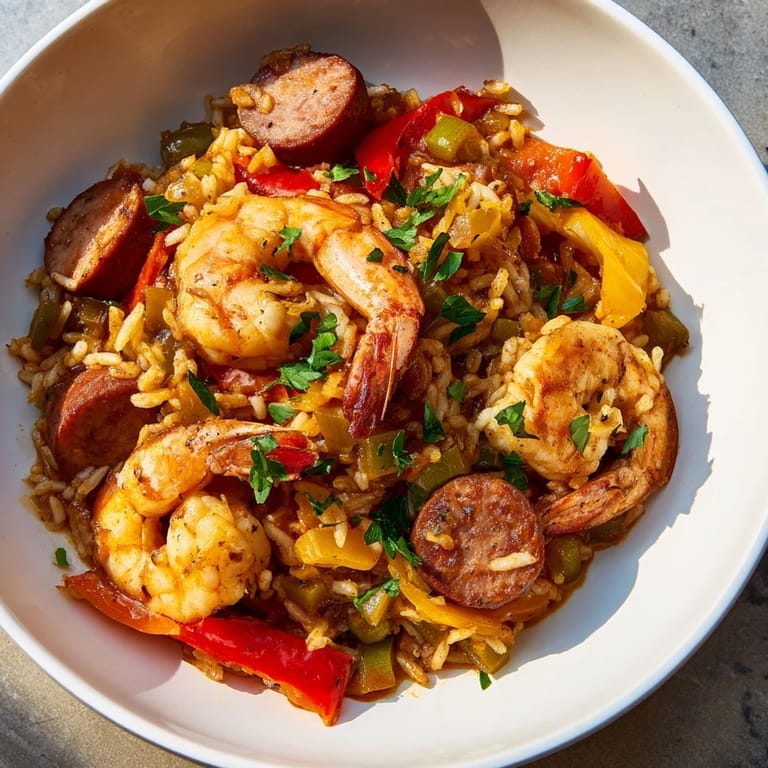
Save There's something about eating jambalaya that makes conversation flow easier—maybe it's because the spices warm you from the inside, or maybe it's just that sharing one skillet feels inherently communal. I've noticed people relax around this dish in a way they don't with fancier things, and they ask for seconds without hesitation.
The Magic of One Skillet
Cooking jambalaya in a single skillet isn't just about convenience, though that's certainly part of it. Each layer builds on the one before it—the sausage seasons the oil, the oil carries those flavors to the vegetables, the vegetables melt into the rice, and everything together creates a cohesive dish that tastes far more intentional than its straightforward method would suggest. There's also something deeply satisfying about looking into one pot and seeing your entire meal developed and ready, with minimal waste and maximum flavor.
Heat Level and Personalization
Jambalaya is genuinely forgiving when it comes to spice adjustment because the cayenne builds gradually as you cook. I've served this to people who hate anything spicy and people who eat hot sauce on toast, and everyone's found their comfort zone. Some folks double the cayenne, others skip it entirely, and a few brave souls add extra hot sauce at the table. The recipe works beautifully at any of these extremes because the sausage, shrimp, and tomatoes provide so much flavor that the spice is just an accent, not the entire story.
- Start with the cayenne amount given and add a pinch more if you're cooking for heat lovers, tasting as you go.
- If someone in your group is sensitive to spice, you can offer hot sauce on the side so they can control their own experience.
- Fresh jalapeño sliced thin and stirred in during the vegetable stage adds heat and a bright, crisp note that cayenne alone can't provide.
What to Serve Alongside
Jambalaya doesn't ask for much company, but a few things make it sing. Crusty bread is essential—something you can tear with your hands and use to soak up the sauce pooling at the bottom of your bowl. A crisp, cold glass of Sauvignon Blanc or a light lager beer cuts through the richness of the sausage and shrimp beautifully, and the acidity refreshes your palate between bites. If you want to add vegetables, a simple green salad dressed with lemon and olive oil provides brightness and balance without competing for attention.
 Save
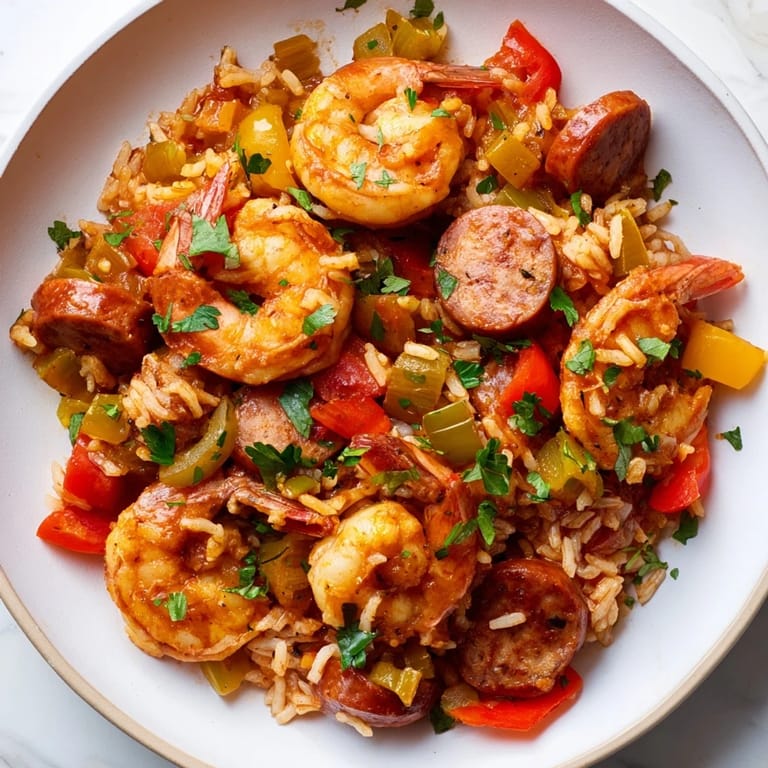
Save This dish proves that some of the most memorable meals come not from following someone else's perfect recipe, but from trusting your instincts and knowing that good ingredients and a little patience almost always work out. Make it once, and you'll find yourself making it again.
Recipe Help & FAQs
- → Can I substitute the shrimp with another protein?
Yes, chicken works well as a substitute or you can even use both sausage and chicken together for varied flavors.
- → What type of sausage is recommended for this dish?
Andouille or smoked sausage adds a smoky depth, complementing the Creole spices perfectly.
- → How can I adjust the spice level?
Add extra cayenne pepper or serve with hot sauce to increase heat to your preference.
- → Is this dish suitable for dairy-free diets?
Yes, this meal is naturally dairy-free as long as you check sausage labels for hidden ingredients.
- → What is the best rice type to use?
Long-grain white rice is ideal as it cooks evenly and absorbs the flavors without becoming mushy.
- → Can I prepare this dish ahead of time?
It is best enjoyed fresh, but leftovers can be refrigerated and gently reheated later.