 Save
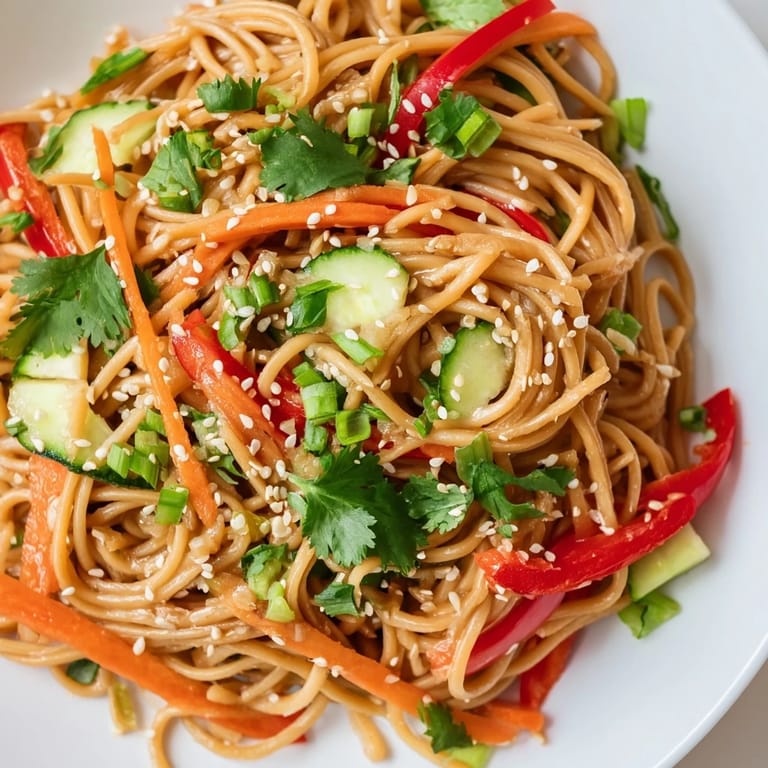
Save There's something about a bowl of glistening noodles on a hot afternoon that just works. I discovered this garlic noodle salad by accident, really—I had leftover noodles, a glut of vegetables from the market, and I was tired of heavy meals. The first time I mixed the fragrant garlic oil through those cold strands, I realized I'd stumbled onto something quietly perfect. It's become my go-to when I need lunch that feels both indulgent and light.
I made this for a friend who'd been craving something Asian but felt overwhelmed by restaurant prices. She sat at my counter while I chopped vegetables and she told me about her week, and by the time we sat down with our bowls, the whole mood had shifted. Food does that sometimes—it's the excuse to slow down together.
Ingredients
- Dried wheat noodles (250 g): Lo mein, spaghetti, or soba all work beautifully—choose whatever you have or prefer, just make sure you rinse them cold or they'll clump.
- Neutral oil (3 tbsp): Grapeseed or vegetable oil won't overpower; this is the base for your garlic infusion and it matters more than you'd think.
- Garlic cloves (5 large, minced): Mince them fine so they cook evenly and distribute their flavor through every bite—whole cloves will overpower you.
- Toasted sesame oil (1 tsp): A small amount goes a long way; it's the whisper of richness that ties everything together.
- Carrot (1 cup, julienned): The sweet crunch that anchors the salad, and the bright color makes it visually alive.
- Red bell pepper (1 cup, thinly sliced): Fresh, crisp, and slightly sweet—it balances the umami of the soy sauce.
- Cucumber (1 cup, deseeded and julienned): Cooling and hydrating, and deseeding keeps it from watering down the whole dish.
- Spring onions (2, thinly sliced): A sharp bite that wakes everything up; don't skip them.
- Fresh cilantro (1/2 cup, roughly chopped): Herbal and herbaceous, it adds life—though if you're cilantro-averse, parsley works fine too.
- Soy sauce (3 tbsp): The savory backbone; low sodium lets you control the salt level.
- Rice vinegar (1 tbsp): Brightness and acidity to cut through the oil and keep everything balanced.
- Honey or maple syrup (1 tsp): Just enough sweetness to round out the edges and marry the flavors.
- Chili flakes (1/2 tsp optional): Only if you want heat; it's subtle but warming.
- Black pepper (to taste): Freshly ground makes a real difference here.
- Toasted sesame seeds (2 tbsp): The final flourish—nutty, textured, and they catch the light on your plate.
- Lime wedges (optional): A squeeze at the end brightens everything like you just added a new layer of flavor.
Tired of Takeout? 🥡
Get 10 meals you can make faster than delivery arrives. Seriously.
One email. No spam. Unsubscribe anytime.
Instructions
- Bring water to boil and cook the noodles:
- Follow the package timing exactly, then drain and immediately run cold water over them—this stops them cooking and keeps them from turning into mush. Let them sit while you make the rest so they dry out just slightly.
- Infuse the oil with garlic gently:
- Heat the neutral oil over medium-low heat and add your minced garlic slowly, stirring often. You want it golden and fragrant, about 2 to 3 minutes, not brown or burnt—that's the difference between aromatic and acrid. Take it off heat and stir in the sesame oil while it's still warm so the flavors bloom.
- Build the dressing in a bowl:
- Whisk the soy sauce, rice vinegar, honey, chili flakes, and pepper together until the honey dissolves. Taste it—it should be savory with a hint of sweetness and a subtle tang. You can adjust now.
- Marry the noodles with the oil and dressing:
- Pour both the warm garlic oil and the dressing over the cooled noodles and toss hard, making sure every strand gets coated. This is where the magic happens—the noodles absorb the flavor and become glossy.
- Add the vegetables and herbs with a gentle hand:
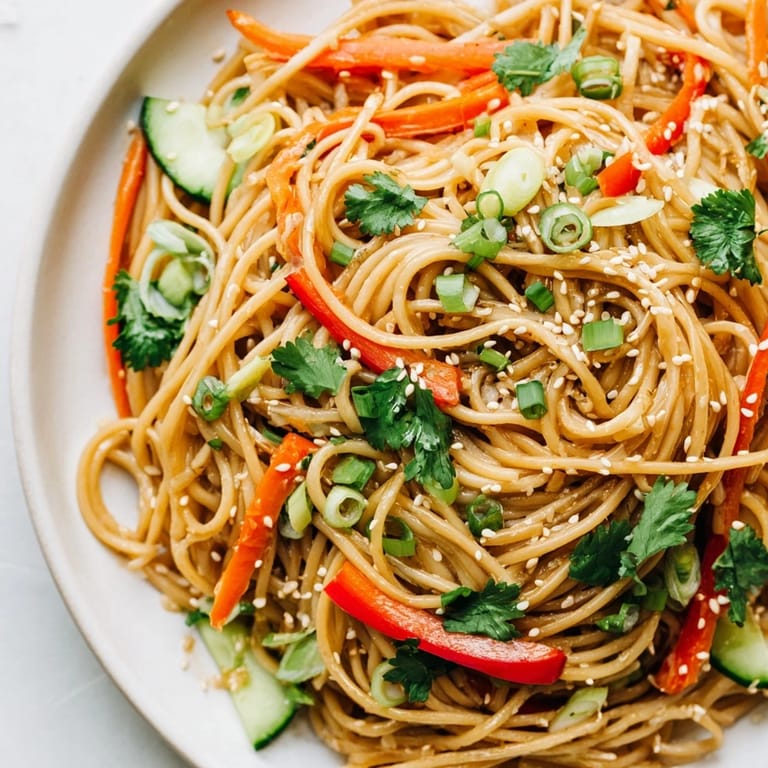
- Fold in the carrots, bell pepper, cucumber, spring onions, and cilantro carefully so you don't crush them. You want them to stay crisp and bright, not bruised.
- Plate and finish:
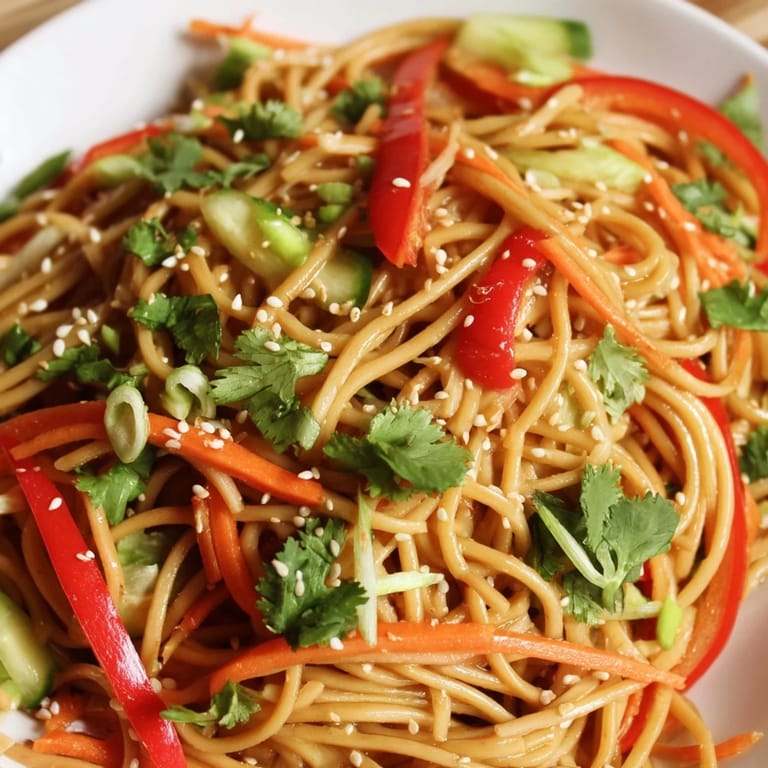
- Transfer to a serving platter or individual bowls, scatter the sesame seeds on top, and add lime wedges on the side. The presentation matters—this is a dish meant to be eaten with your eyes first.
 Save
Save I served this at a summer dinner when everyone was too hot to really eat, and it became the only thing people went back for. Sometimes the best meals are the ones that feel like a relief.
Variations and Swaps
The skeleton of this recipe is flexible enough to meet you where you are. If you're adding protein, shredded cooked chicken is quiet and lets the garlic shine, while tofu takes on the flavors boldly and edamame adds a different kind of textural interest. For gluten-free, swap in soba or rice noodles and use tamari instead of regular soy sauce—the dish shifts slightly but stays true. You can swap almost any crisp vegetable into the mix: snap peas have a different kind of pop, radish brings heat, shredded cabbage adds another layer of crunch. I've made it with what I had on a weeknight and what I planned for company, and both versions have been honest and good.
Make-Ahead and Storage
This salad actually holds its own for up to two days in the fridge, which makes it ideal for meal prep or bringing to work. The noodles keep absorbing the flavors slightly, so it might even taste better the next day—though the vegetables will soften some, so keep them separate and add them fresh if you're thinking ahead. If you're packing it for travel, keep the sesame seeds and lime wedges in a separate container and toss them together just before eating.
Tips for Success
There are small moves that make a real difference with this one. Mince your garlic fine so it cooks evenly and distributes without overpowering any single bite. Don't skip the sesame oil—it's a small amount but it brings warmth and richness that you'll feel. And taste as you build: the soy sauce, dressing, and garlic oil all have different salt levels, so season thoughtfully at the end rather than assuming the package amounts are right for you.
- If you're worried about the salad being too oily, you can reduce the neutral oil slightly, but go easy—it's what carries the garlic flavor through.
- Toast your sesame seeds yourself if you have time; the smell will tell you when they're perfect, about 2 minutes in a dry pan.
- Use a lime wedge at the end even if you think you won't; the bright acid is the secret to making everything taste fresher than it is.
 Save
Save This is the kind of recipe that taught me cooking isn't always about complexity—sometimes it's just about respecting good ingredients and letting them taste like themselves. Make it, share it, and notice how a simple bowl of noodles can become its own kind of comfort.
Recipe Help & FAQs
- → What type of noodles work best?
Wheat noodles like lo mein, spaghetti, or soba work well for texture and flavor, but gluten-free noodles can substitute.
- → How is the garlic oil prepared?
Garlic is gently cooked in neutral oil until golden, then mixed with toasted sesame oil to infuse aroma and richness.
- → Can this dish be served warm?
Though designed as a cold dish, noodles can be served slightly warm but chilling enhances flavor melding and crispness.
- → What vegetables add the best crunch?
Carrots, red bell pepper, cucumber, and spring onions provide crisp textures and vibrant colors in every bite.
- → How can I add protein to this dish?
Adding shredded cooked chicken, tofu, or edamame boosts protein without altering the refreshing balance of flavors.
- → Is it possible to make this gluten-free?
Yes, use gluten-free noodles and tamari instead of soy sauce to maintain flavor while avoiding gluten.