 Save
Save My neighbor Fatima taught me to make basbousa on a humid Cairo afternoon, the kind where the heat makes you move slowly through the kitchen. She had a way of pressing the semolina mixture into the pan with such confidence, as if the cake already knew it would turn golden. I watched her crack an almond in half to taste the dough—a small ritual I never forgot—before committing it to the oven. That first bite, warm with syrup pooling underneath, made me understand why this dessert appears at every celebration.
I made this for my daughter's study group last winter, and watching four teenagers devour a whole pan in under ten minutes told me everything I needed to know. One of them asked for the recipe before they even finished, crumbs still on their plates. That's when I realized basbousa isn't just a dessert—it's the kind of thing people remember you for making.
Ingredients
- Fine semolina: The soul of basbousa; it gives you that distinctive tender crumb that shatters slightly between your teeth.
- Granulated sugar: Sweetness in both the cake and syrup, balanced just right so it's indulgent without being cloying.
- Desiccated coconut: Use unsweetened so you control the sugar level; it adds moisture and that unmistakable tropical note.
- Plain yogurt: The secret to keeping basbousa impossibly moist even days later, plus it adds a subtle tang.
- Unsalted butter or ghee: Ghee gives a more authentic flavor, but butter works beautifully and you can control the saltiness.
- Baking powder: Just enough lift to make the texture tender, not dense.
- Vanilla extract: A small addition that rounds out the flavor without announcing itself.
- Whole blanched almonds: More than garnish—they're tradition, and their slight bitterness plays against the sweetness.
- Sugar, water, and lemon juice for syrup: The lemon keeps the syrup from tasting one-dimensional, and it should smell bright and sharp.
- Rose or orange blossom water: Optional but transformative if you can find it; just a teaspoon shifts the whole character of the dessert.
Tired of Takeout? 🥡
Get 10 meals you can make faster than delivery arrives. Seriously.
One email. No spam. Unsubscribe anytime.
Instructions
- Heat your oven and prepare the pan:
- Set the temperature to 350°F and lightly grease a 9x9 inch pan with butter or tahini so the edges don't stick. You want the pan ready before you mix anything so the batter doesn't sit around waiting.
- Mix the dry base:
- Combine semolina, sugar, coconut, baking powder, and salt in a large bowl and stir until no pockets of anything remain. This might feel like you're mixing sand, which is exactly the point.
- Bring the dough together:
- Add yogurt, melted butter, and vanilla, then stir until a thick, almost paste-like batter forms. Don't overmix; you're just bringing everything into agreement.
- Spread and score:
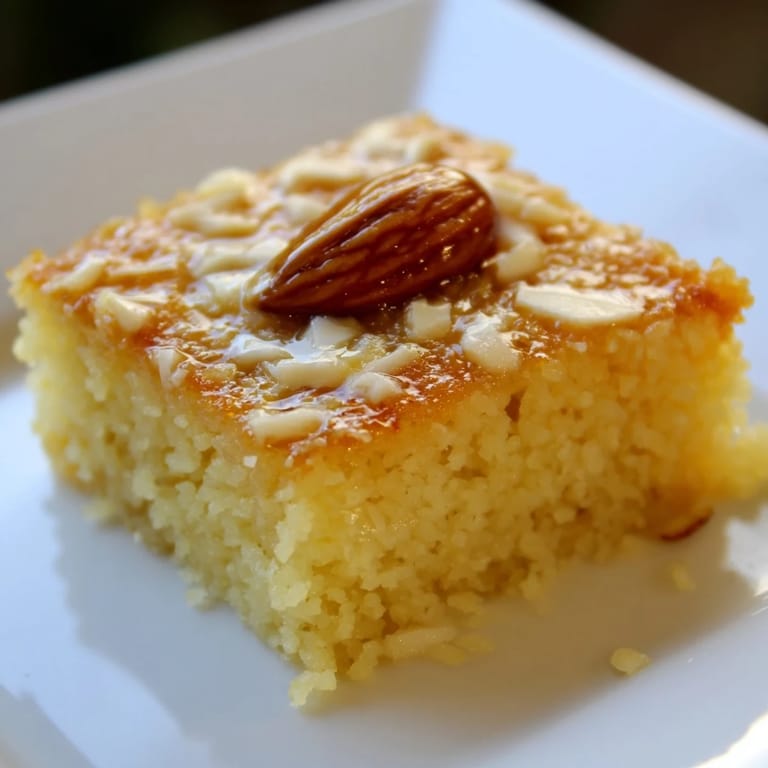
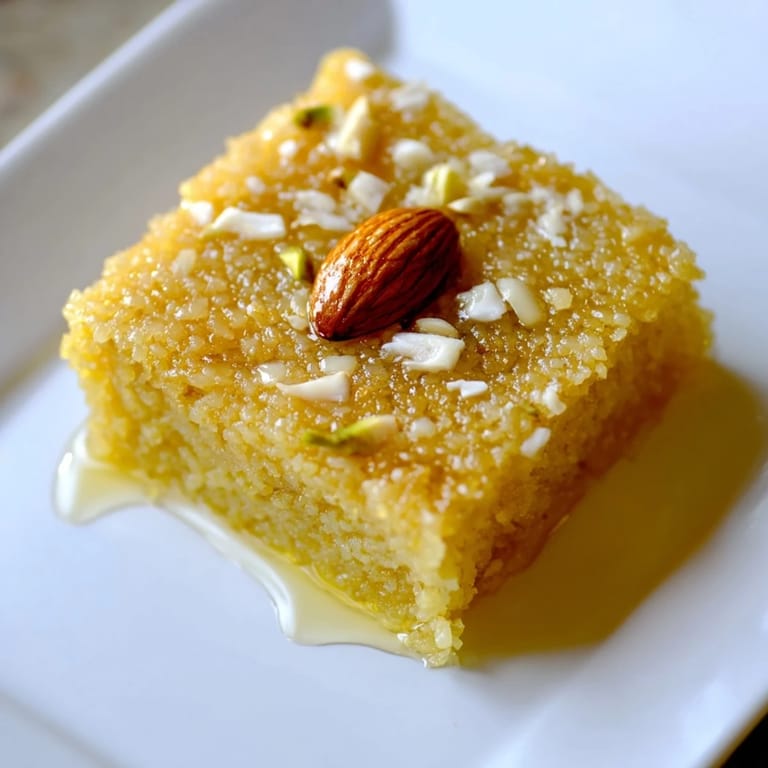
- Press the batter evenly into the prepared pan using the back of a wet spoon or your fingers. Score it into 12 squares or diamonds while it's still soft, then place one almond in the center of each piece—this gives you built-in handles for each bite.
- Bake until golden:
- Slide it into the oven for 30 to 35 minutes until the top is deeply golden and a toothpick comes out clean. The kitchen will smell like coconut and caramelized butter, and that's your signal it's almost done.
- Make the syrup while it bakes:
- In a saucepan, combine sugar, water, and lemon juice, then bring to a boil and simmer for 8 to 10 minutes until it thickens slightly. You want it pourable but with a little body to it, and the lemon aroma should be bright and clear.
- Cool the syrup briefly:
- Remove from heat, stir in rose or orange blossom water if using, and let it sit for a few minutes. It needs to be cool enough that you won't curdle any bottom layers but still warm enough to soak in properly.
- Soak immediately:
- The moment basbousa comes out of the oven, pour the syrup over it slowly and evenly, letting it find its way into every crack and crevice. This is the magic moment—watch it glisten as the syrup settles.
- Cool and serve:
- Let it cool completely before re-cutting along your scored lines with a sharp knife. This prevents crumbling and gives you clean pieces to lift out.
 Save
Save There's something about sharing basbousa that turns an ordinary afternoon into a ritual. My mother used to serve it on a brass tray alongside hot tea, and somehow those small, syrup-soaked squares made everyone linger longer at the table, conversations stretching into hours.
The Coconut Question
When I first made this without the coconut, thinking I'd adapt it for someone who didn't like it, the texture fell flat and the flavor became one-note sweet. The coconut does more than add taste—it holds moisture like a sponge and gives the cake its signature tender structure. After that mistake, I understood why Fatima was so particular about using unsweetened coconut and never skipping it.
Syrup Timing and Temperature
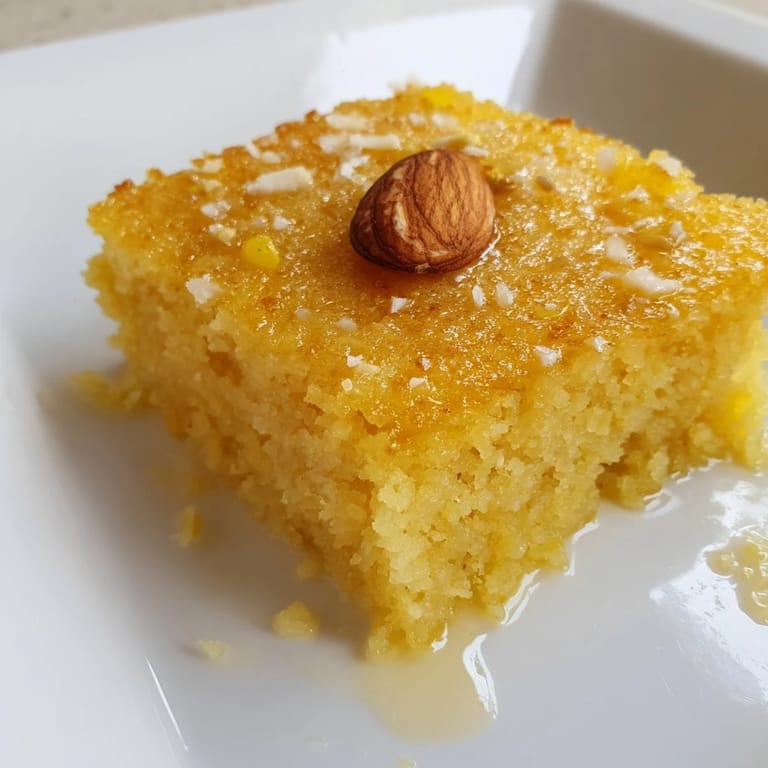
The syrup needs to be just right, and I've learned this through small disasters. If you pour it over a completely cold cake, it just sits on top like glaze. If you pour boiling syrup, the outside gets sticky while the inside stays dry. The sweet spot is warm cake, cooled syrup—this is when the magic happens and the cake drinks it in evenly.
Variations and Serving Ideas
Basbousa is forgiving enough to play with while still tasting like itself. I've added a splash of milk to the yogurt when I wanted it even moister, swapped half the coconut for ground pistachios, and even brushed the top with a little extra melted butter before baking for deeper color. Serve it warm with strong mint tea or Turkish coffee, and if anyone at your table has room for seconds, you'll know you've done something right.
- For richer flavor, use ghee instead of butter and add half a teaspoon of almond extract to the batter.
- Make it ahead—basbousa actually improves after a day when the syrup has fully settled, so feel free to bake it the morning of a gathering.
- Store it covered at room temperature for up to three days, though it rarely lasts that long.
 Save
Save Basbousa is the kind of recipe that teaches you something every time you make it. The kitchen fills with warmth and the smell of something ancient and beloved, and somehow that matters as much as the cake itself.
Recipe Help & FAQs
- → What gives the cake its moist texture?
The combination of yogurt and melted butter in the batter, along with the fragrant syrup soak, ensures a moist and tender crumb.
- → Can I use a different nut for garnish?
Yes, pistachios make a great alternative to almonds, providing a nice color contrast and complementary flavor.
- → How can I enhance the coconut flavor?
Sprinkl extra desiccated coconut on top before baking for a more pronounced coconut aroma and taste.
- → Is it necessary to score the cake before baking?
Scoring helps portion the cake evenly and allows the syrup to soak through more effectively after baking.
- → What role does the syrup play in this dish?
The syrup adds sweetness and moisture, making the cake aromatic and tender while balancing the semolina's texture.