 Save
Save My neighbor handed me a jar of candied orange slices one November afternoon, fresh from her kitchen project, and I stood there wondering what on earth to do with them. That evening, I found myself reaching for almond flour instead of all-purpose, drizzling in good olive oil, and layering those glossy orange rounds into a cake pan like I was composing something beautiful. The result was so unexpectedly tender and aromatic that I made it again the next week, and then the week after that.
I brought this cake to a book club meeting where someone was going through a rough patch, and watching her face when she took the first bite—that little moment of surprise and comfort—reminded me why baking matters. The combination of citrus brightness and rich olive oil somehow said everything I couldn't put into words that night.
Ingredients
- Candied Oranges: These take a few minutes of gentle simmering, and they're what make this cake sing—don't skip the step of letting them cool properly on parchment, or they'll stick.
- Almond flour: Use blanched almond flour for a lighter crumb and milder flavor; it's finer and blends into the batter more seamlessly than raw versions.
- Gluten-free flour blend: If you're not avoiding gluten, regular all-purpose works just fine, but the blend adds a tender structure that feels refined.
- Extra-virgin olive oil: This is your star ingredient after the oranges—reach for something you'd actually taste in salad dressing, because that flavor carries through beautifully.
- Greek yogurt: It keeps the cake tender and adds subtle tang that balances the sweetness; don't use whipped varieties that are already aerated.
- Orange zest: Fresh zest makes a real difference—use a microplane if you have one so you get those tiny, fragrant flakes.
- Eggs at room temperature: Cold eggs won't incorporate smoothly into the batter, so pull them out about 15 minutes before you start mixing.
Tired of Takeout? 🥡
Get 10 meals you can make faster than delivery arrives. Seriously.
One email. No spam. Unsubscribe anytime.
Instructions
- Candying your oranges:
- Slice the oranges thin enough to see light through them, and let them simmer gently in the sugar syrup until they turn translucent and glassy. Don't rush this—you're not cooking them, you're infusing them with sweetness, and it takes about 20–25 minutes of patient simmering to get there right.
- Setting up the pan:
- Grease your cake pan well and line it with parchment so the candied oranges have something to grip. Arrange the cooled slices on the bottom in an overlapping pattern—this becomes the crown of your finished cake when you invert it.
- Building the dry ingredients:
- Whisk the almond flour, gluten-free flour, baking powder, and salt together until combined, making sure there are no pockets of baking powder that could cause odd flavors. This simple step prevents lumps from forming in your batter.
- Creating the wet base:
- Beat eggs and sugar until they're pale and slightly thickened, which takes about 2–3 minutes and means you're incorporating air into the cake. Then whisk in the olive oil, yogurt, orange zest, and vanilla until everything is smooth and silky.
- Folding everything together:
- Pour the wet ingredients into the dry and fold gently with a spatula until just combined—don't overmix or you'll knock out all the air you worked to build. You want to see no streaks of flour, but the batter should still look a bit soft and forgiving.
- Baking to perfection:
- Pour the batter over those candied orange slices and smooth the top gently. Bake for 40–45 minutes at 350°F until a toothpick comes out clean, then let it cool in the pan for 10 minutes before inverting so the cake sets just enough to hold together.
- The reveal:
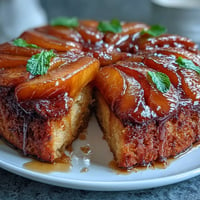
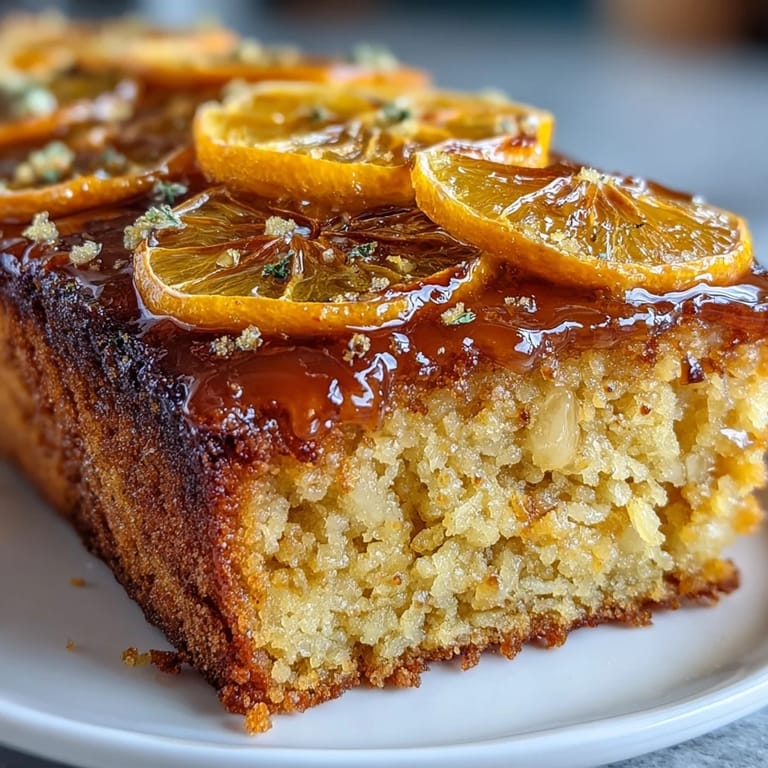
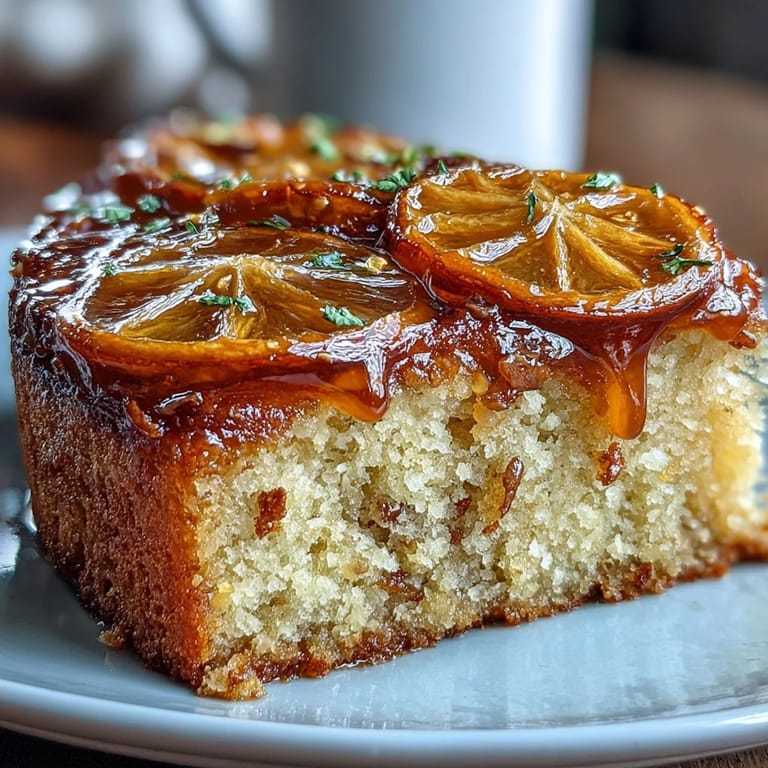
- Invert the cake onto your serving plate and peel off the parchment to show those beautiful candied orange slices on top. If you want, dust with powdered sugar and a few mint leaves for a final touch of elegance.
 Save
Save There's something almost meditative about watching those orange slices transform in the syrup, and then seeing them set the stage for everything that comes after. This cake taught me that sometimes the most memorable desserts are the ones where you take your time with just a few really good ingredients.
Why Candied Oranges Matter
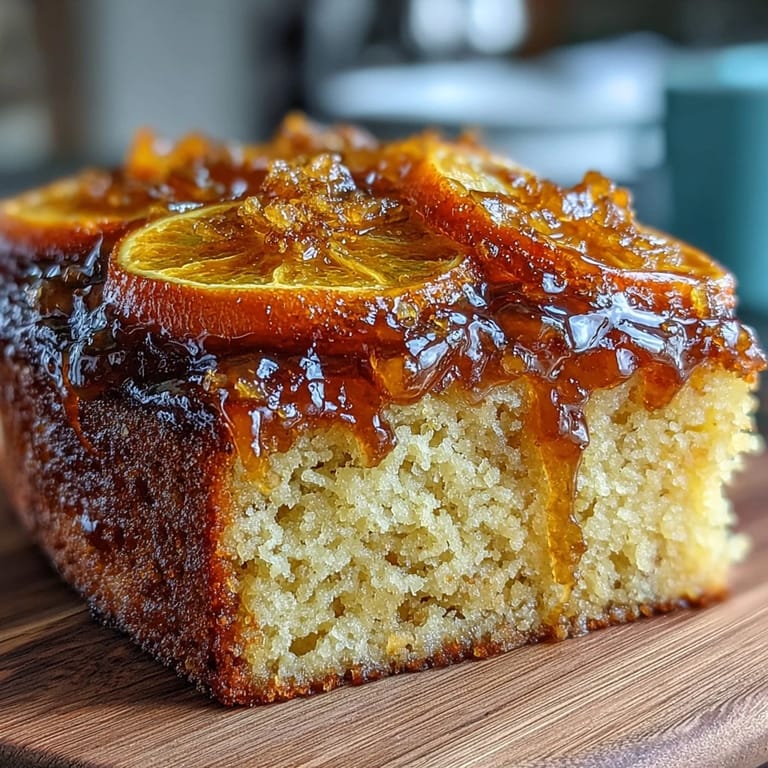
The candied orange slices aren't just a garnish—they're what gives this cake its personality and brightness. When they caramelize slightly during baking, they create a sweet, chewy layer that anchors everything else, so don't think about skipping this step or substituting something else.
The Olive Oil Secret
Using olive oil instead of butter keeps the cake tender and adds a subtle sophistication that makes people lean in and wonder what they're tasting. It also makes the cake naturally vegan-friendly if you swap the eggs and yogurt for plant-based versions, and it stays moist for days without ever feeling greasy.
Serving and Storage Ideas
This cake shines at room temperature with afternoon tea or after dinner with a small glass of something sweet, and it doesn't need much adornment beyond what you've already built into it. Serve it with whipped cream if you're feeling indulgent, or just let those candied oranges be the star.
- Keep the cake covered at room temperature for up to 2 days, and it actually tastes even better on day two when the flavors have had time to settle.
- If you want to use blood oranges for a deeper color and slightly tart twist, follow the exact same method—they'll give you a magenta-hued cake that looks extraordinary.
- Dust with powdered sugar right before serving rather than ahead of time, so it stays looking fresh and pristine.
 Save
Save This cake has become my go-to when I want to make something that feels special without spending hours in the kitchen. There's real joy in how something this simple can feel so completely worth making again and again.
Recipe Help & FAQs
- → How are the candied oranges prepared?
Orange slices are simmered gently in a simple syrup of sugar and water until translucent and tender, then cooled before layering.
- → Can I use blood oranges instead?
Yes, blood oranges add a vibrant color and a deeper citrus flavor, enhancing the visual appeal and taste.
- → Is almond flour necessary for this cake?
Almond flour provides a moist texture and nutty flavor essential to the cake's character, but slight substitutions may alter the taste.
- → What role does olive oil play in the cake?
Olive oil enriches the crumb with moisture and imparts a fragrant, fruity dimension that complements the oranges.
- → How should the cake be stored?
Keep covered at room temperature for up to two days to maintain freshness and texture.