 Save
Save There's something about the sizzle of beef hitting a hot wok that instantly transported me back to a Seoul street market, even though I was standing in my tiny apartment kitchen. I'd been craving that specific salty-sweet character of bulgogi for weeks, and one Thursday night I finally decided to stop ordering takeout and make it myself. What started as a simple attempt turned into something I've made countless times since, each batch better than the last because I learned to respect the marinade and trust the high heat.
I remember cooking this for my friend Maya, who'd just moved to the neighborhood and was homesick for Korean food. She watched the beef caramelize in the wok with this quiet, delighted expression, and when she tasted it, she teared up a little. It wasn't fancy or complicated, but it felt like I'd handed her a small piece of home in a bowl.
Ingredients
- Beef sirloin or ribeye, thinly sliced (500 g): The thinness is everything here—it cooks in moments and absorbs the marinade like a sponge, so ask your butcher to slice it for you or partially freeze it yourself for easier slicing.
- Soy sauce (3 tbsp): This is your umami foundation, but taste your marinade before committing because soy sauces vary wildly in saltiness.
- Brown sugar (2 tbsp): It caramelizes beautifully during cooking and balances the salty bite of the soy, creating that addictive sweet-savory tension.
- Sesame oil (1 tbsp): Use the darker, toasted kind—a little goes a long way and gives you that nutty depth that screams authentic.
- Rice vinegar (1 tbsp): The acid cuts through the richness and keeps everything from feeling heavy.
- Garlic and ginger (2 cloves minced, 1 thumb-sized piece grated): Fresh is non-negotiable; the aroma alone will make you feel like you're cooking in someone's home kitchen in Gangnam.
- Asian pear or sweet apple, grated (1 pear): This is the ingredient people always ask about—it tenderizes the meat and adds a fruit-forward sweetness that rounds out all the sharp flavors.
- Gochujang (1 tbsp, optional): Korean chili paste brings heat and funk, but only if you want it; leave it out for a gentler version.
- Scallions (2, finely sliced for marinade, 2 more for garnish): Use the white and light green parts in the marinade for punch, save the dark greens for color on top.
- Toasted sesame seeds (1 tbsp in marinade, 1 tbsp for garnish): The toasted kind has infinitely more flavor than raw, and those little pops of nuttiness are essential.
- Black pepper (1/4 tsp): Just enough to add a whisper of bite without overwhelming anything else.
- Jasmine or short-grain rice (2 cups cooked): The starchiness of short-grain absorbs all the beautiful beef juices that pool at the bottom of your bowl.
- Fresh vegetables for assembly (carrot julienned, cucumber matchsticked, bean sprouts blanched, kimchi optional): These aren't just garnish—they're textural contrast that makes every spoonful feel fresh and alive.
Tired of Takeout? 🥡
Get 10 meals you can make faster than delivery arrives. Seriously.
One email. No spam. Unsubscribe anytime.
Instructions
- Build your marinade:
- In a large bowl, combine soy sauce, brown sugar, sesame oil, rice vinegar, minced garlic, grated ginger, grated pear, gochujang if using, sliced scallions, sesame seeds, and black pepper—whisk until the sugar dissolves and everything smells intoxicating. Taste it; if it tastes right to you now, it'll be right on the beef.
- Coat the beef:
- Add your thinly sliced beef to the marinade and toss until every piece is glossy and coated. Cover the bowl, let it sit at room temperature for 15 minutes, or refrigerate for up to an hour if you want deeper flavor—either way, you're building something special.
- Get the wok screaming hot:
- Heat your skillet or wok over high heat until it's almost smoking; this is where the magic happens. Working in batches so you don't crowd the pan, add the beef and let it sear for 2 to 3 minutes, stirring occasionally, until it's caramelized on the edges and cooked through but still tender.
- Assemble your bowls:
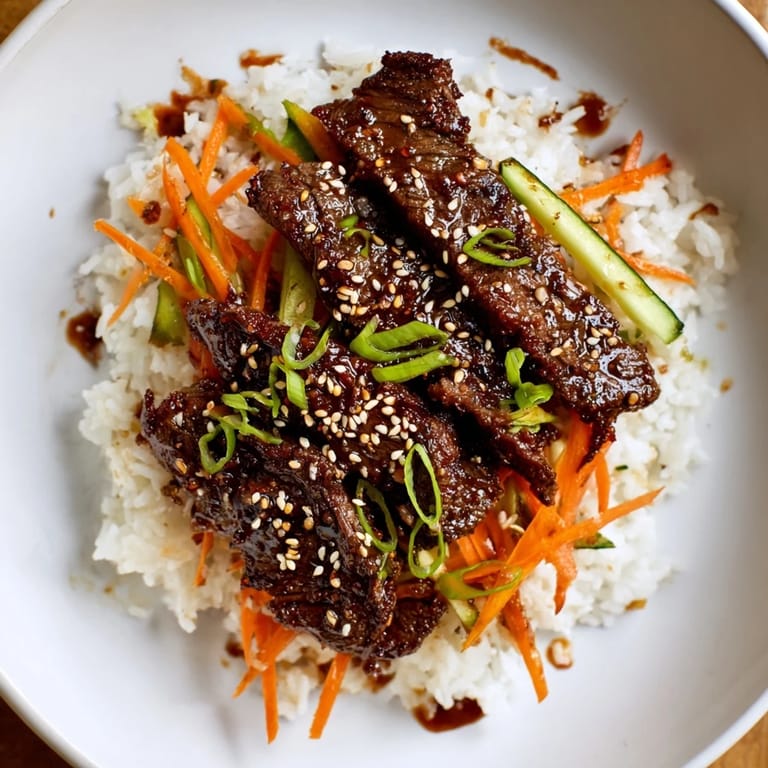
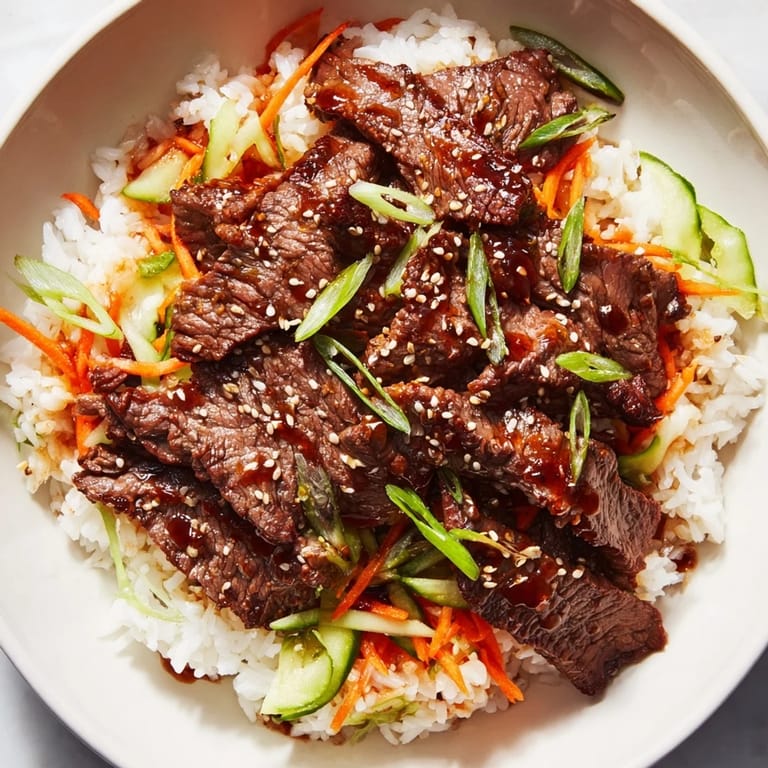
- Divide the warm rice among four bowls, then arrange the cooked beef on top along with the fresh vegetables—carrot, cucumber, bean sprouts, and kimchi if you're using it. The colors should look like a painting, and the temperature contrast between hot beef and cool vegetables is part of the appeal.
- Finish and serve:
- Scatter extra scallions and sesame seeds over everything and bring it straight to the table while the beef is still warm and the rice is still steaming. This moment—that first bite when all the components hit together—is why you made this.
 Save
Save There was an afternoon when my partner came home exhausted from a terrible day, and I had this bowl waiting. He didn't say much, just ate quietly, and by the third spoonful, something shifted—the tension in his shoulders eased. Food can do that sometimes, especially when it's made with intention.
Why the Marinade is Your Secret Weapon
The magic isn't in any single ingredient—it's in how they talk to each other. The pear breaks down the muscle fibers while adding sweetness, the soy provides umami depth, and the sesame oil wraps everything in richness. I used to think marinades were optional, a nice-to-have, until I stood beside my grandmother while she explained that beef needs time to listen, to absorb, to become what you want it to be. Now I never rush this step.
Building Your Bowl Like You Mean It
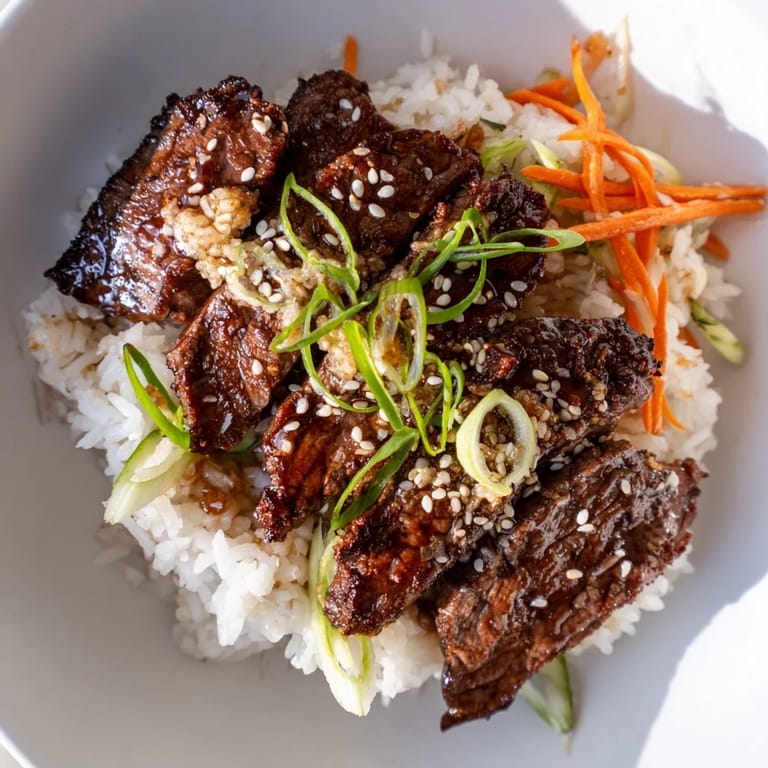
The rice is your canvas, the beef your statement, and the vegetables your subtlety. I've learned that temperature matters—hot beef on warm rice, cool vegetables offering a fresh counterpoint—and that the arrangement should feel generous, not stingy. When you're piling vegetables into a bowl, do it like you're setting a table for someone you love, because you are.
Variations and Kitchen Freedom
This recipe is forgiving enough to bend toward your preferences and bold enough to handle experimentation. The structure holds; the details can shift. I've made it with chicken for a lighter version, added a fried egg for richness, substituted cauliflower rice for low-carb nights, and cranked up the gochujang when I wanted more heat.
- For gluten-free, swap regular soy sauce for tamari and check your gochujang label—small details that open this dish up to more people at your table.
- A drizzle of spicy mayo or sriracha mayo over the top adds a creamy dimension that changes everything about how the bowl comes together.
- Make the beef ahead and reheat it gently; the flavors actually deepen when it sits overnight, and sometimes the best meals are the ones we've already half-made.
 Save
Save This bowl has become my answer to almost any question about what to cook—quick enough for weeknights, special enough for guests, and adaptable enough that it never feels like you're making the same thing twice. That's the kind of recipe worth keeping close.
Recipe Help & FAQs
- → What cut of beef works best?
Thinly sliced ribeye or sirloin are ideal for quick cooking and tender texture.
- → Can I omit the pear in the marinade?
The grated pear adds natural sweetness and tenderizes the beef, but a sweet apple is a good substitute or it can be skipped if desired.
- → How spicy is the dish with gochujang?
Gochujang adds a mild to moderate heat and depth of flavor; adjust amount to suit your spice preference.
- → What rice is recommended for serving?
Jasmine or short-grain white rice provides a fluffy, slightly sticky base that complements the beef and vegetables.
- → Are there gluten-free options?
Use tamari instead of soy sauce and ensure the gochujang is gluten-free to accommodate gluten-sensitive diets.