 Save
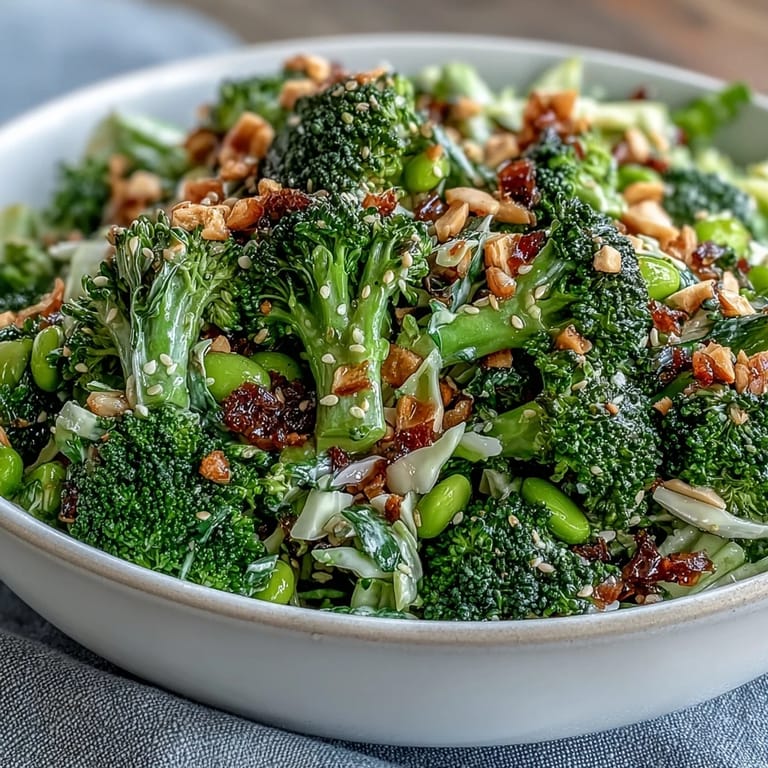
Save My neighbor handed me a takeout container one afternoon, insisting I try her broccoli crunch salad before deciding if I could replicate it at home. One bite and I understood why she'd been making it twice a week—the crunch was immediate, the colors practically glowed, and that dressing hit every note at once. It took me three attempts to nail the balance, but now it's become my go-to when I need something that feels both nourishing and exciting, without spending hours in the kitchen.
I brought this to a potluck once thinking it would disappear among all the heavier dishes, but people kept coming back for second servings, asking if the dressing had some secret ingredient I wasn't sharing. The answer was simpler than they expected—just fresh ginger and good sesame oil doing their job, nothing fancy. That's when I realized this salad had quietly become the dish people actually wanted to eat.
Ingredients
- Broccoli florets: Choose heads with tight, vibrant green crowns and chop them small enough that you get crunch in every bite without needing a knife while eating.
- Purple cabbage: This isn't just for color—it stays crisp longer than regular cabbage and brings a subtle sweetness that balances the salty dressing beautifully.
- Carrots: Shred them on the thicker setting so they maintain some body and don't turn mushy after a day in the fridge.
- Edamame: If you can find them already shelled and steamed in the frozen section, grab those—one less step between you and eating.
- Green onions: Slice them on a slight diagonal and use both the white and light green parts for the most flavor impact.
- Bell pepper: Red ones bring sweetness, yellow brings brightness, orange brings both—pick whatever color makes you smile.
- Sesame seeds: Toasting them dry in a skillet for a few minutes wakes up their nutty flavor and prevents them from tasting raw or bitter in the finished salad.
- Soy sauce: Use tamari if gluten is a concern, but don't skip the umami depth that soy brings to the dressing.
- Rice vinegar: Its mild acidity won't overwhelm the vegetables like harsher vinegars might, keeping the whole salad balanced.
- Sesame oil: A little goes a long way here—it's potent and aromatic, so resist the urge to splash.
- Honey or maple syrup: Either works, though maple adds an interesting complexity that honey can't quite match.
- Garlic and ginger: Fresh is non-negotiable here; jarred versions lack the brightness that makes this dressing sing.
Tired of Takeout? 🥡
Get 10 meals you can make faster than delivery arrives. Seriously.
One email. No spam. Unsubscribe anytime.
Instructions
- Prep your vegetables with intention:
- Chop the broccoli into pieces you'd actually want to eat whole, shred the cabbage and carrots to a consistent thickness so nothing dominates, thinly slice the bell pepper, and cut the green onions so they're visible in every forkful. Take your time here because this step sets the tone for how satisfying the final salad will be.
- Handle the edamame gently:
- If frozen, follow package instructions but be careful not to overcook them—they should stay tender, not mushy. Once cooled, shell them and set aside, making sure you remove any that seem stubborn because leftover pods are nobody's friend.
- Toast sesame seeds until they smell like a dream:
- Heat a dry skillet over medium heat and scatter the sesame seeds in, stirring constantly for two to three minutes until they turn golden and smell impossibly good. The moment you catch that nutty aroma, transfer them to a plate immediately so they don't burn—they'll continue cooking from residual heat.
- Whisk the dressing to harmony:
- In a small bowl, combine soy sauce, rice vinegar, sesame oil, honey, minced garlic, and freshly grated ginger, whisking until the honey dissolves completely and everything emulsifies into something glossy. Taste it on a piece of broccoli and adjust—if it needs more salty punch, add soy sauce; if it needs more depth, grate in a tiny bit more ginger.
- Combine everything with care:
- Toss all the vegetables and edamame in a large bowl, pour the dressing over, and mix gently but thoroughly so every piece gets coated without anything getting bruised. This is the moment the salad comes alive.
- Crown and serve at peak freshness:
- Sprinkle the toasted sesame seeds over everything and give one final gentle toss. Eat immediately if you're after maximum crunch, or refrigerate if you're planning ahead—the flavors actually deepen after a few hours, though the texture softens slightly.
 Save
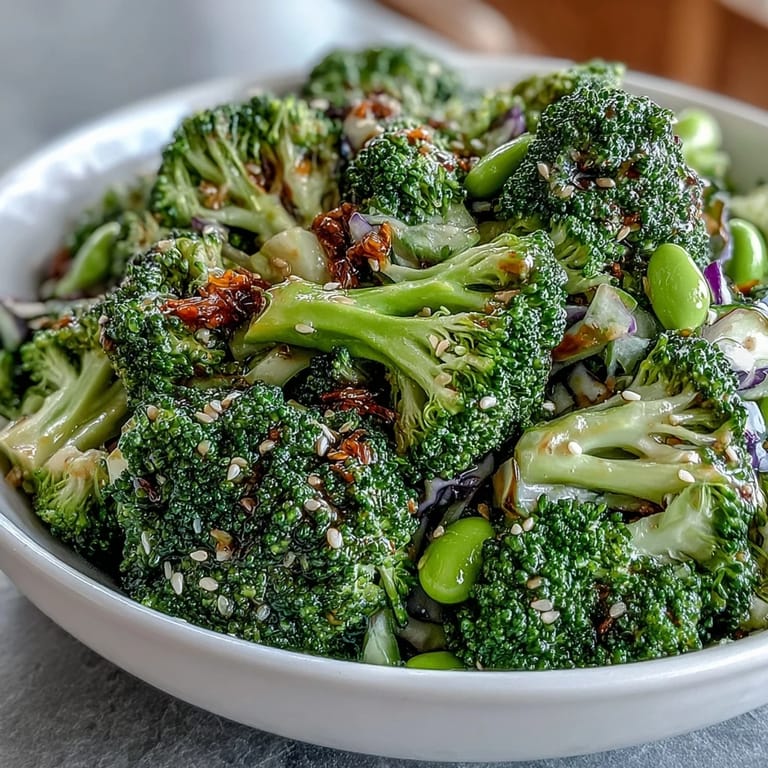
Save I realized this salad stopped being just lunch when my daughter asked if she could bring it to school instead of the usual sandwich, and I knew I'd created something she genuinely wanted to eat. That moment matters more than any recipe review ever could.
Why This Salad Stays in My Regular Rotation
There's something deeply satisfying about a salad where every vegetable maintains its own identity instead of wilting into a sad pile. The broccoli stays bright and crunchy, the cabbage holds its structure, and the dressing acts as a connector rather than a drowning medium. I've stopped seeing salads as obligation and started seeing them as actual food I choose to eat.
Making It Your Own
This recipe is flexible enough to adapt to whatever you have in the crisper drawer—swap broccoli for cauliflower, add snap peas, throw in thinly sliced radishes for extra bite. The dressing stays the same, which means you can experiment without worrying about ruining anything. I've learned that the best recipes are the ones that give you guardrails but leave room to play.
Storage and Meal Prep Wisdom
Store the dressing separately from the vegetables if you're planning to eat this throughout the week, combining them only when you're ready to serve. The sesame seeds stay crisper if you sprinkle them on just before eating rather than tossing them in with the dressing hours earlier. This small habit keeps your salad tasting fresh on day three instead of tired.
- Keep undressed salad components in an airtight container for up to three days; the vegetables actually stay crunchier when stored this way.
- Dressing keeps refrigerated for about a week, so you can make double batches and use it on other bowls or as a marinade.
- Always taste and adjust seasoning right before serving since flavors can fade or intensify depending on how long everything sat together.
 Save
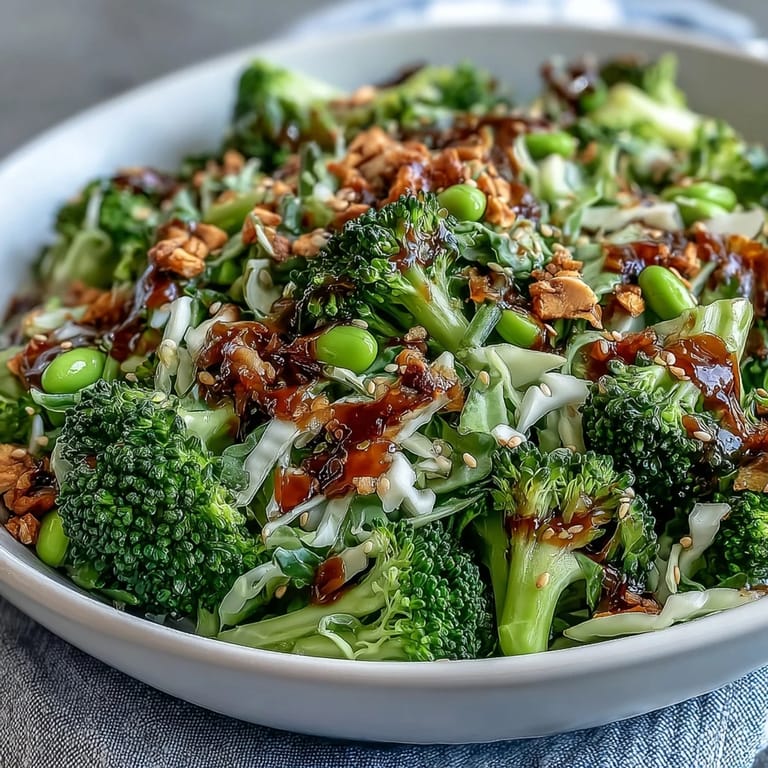
Save This salad proved to me that vegetables don't need to hide behind heavy toppings or complicated techniques to be exciting—sometimes they just need to be cut well, dressed thoughtfully, and treated with respect. I make it often now, and it tastes like good health feels.
Recipe Help & FAQs
- → Can I use frozen edamame without cooking?
Frozen edamame should be cooked and cooled before adding to ensure optimal texture and flavor in the dish.
- → What alternatives can I use for soy sauce?
Tamari is a great gluten-free alternative to soy sauce, maintaining the umami flavor in the dressing.
- → How long can this salad be stored?
Stored in the refrigerator, it keeps well for up to two days, allowing flavors to meld and enhance.
- → Can I add nuts for extra crunch?
Yes, chopped almonds or cashews can be added to increase texture and flavor.
- → Is this dish suitable for meal prep?
Absolutely, its quick assembly and lasting freshness make it ideal for meal prepping vibrant, nutrient-packed servings.