 Save
Save The first time I attempted macarons, I stood in my kitchen at midnight with a bowl of egg whites, convinced I'd finally crack this French pastry code. My friend had just returned from Paris with a box of these delicate shells, and I spent the next week studying them like they held ancient secrets. What started as intimidation turned into obsession when I realized the magic wasn't in complexity but in patience and understanding each tiny moment. Black currant macarons became my proving ground, and now whenever I pipe those perfect little domes, I think about how close I came to giving up after my first batch spread like pancakes across the sheet.
I made these for my sister's engagement dinner last spring, and watching her bite into one while her fiancé asked what made them taste like tiny clouds changed how I saw cooking. The kitchen had been chaos all afternoon, but those macarons sitting on the table felt like proof that something beautiful can come from focusing entirely on one small thing done well. She still messages me photos of macarons from fancy bakeries with a laughing emoji, as if to say she knows they'll never be quite like mine.
Ingredients
- Egg whites, aged: Using eggs that have sat in your fridge for at least 24 hours makes them thinner and more stable, which sounds backwards but absolutely transforms your meringue into something that holds its shape without deflating.
- Granulated and powdered sugar: The granulated sugar creates structure in your meringue while the powdered sugar keeps the shells tender, so don't skip either one or your texture will suffer.
- Finely ground almond flour: This is where many people falter, buying regular almond flour when they need the finest possible grind, or it'll create a grainy shell instead of that signature smooth dome.
- Blackcurrant purée: If you can't find fresh or frozen blackcurrants, strain out every last seed because they'll create an uneven filling and catch between your teeth in the worst way.
- White chocolate and butter: Choose quality here because there's nowhere to hide in a ganache, and the butter needs to be softened, not cold, so it incorporates into a silky finish.
- Lemon juice: This tiny amount brightens the blackcurrant and prevents the ganache from tasting one-dimensional sweet.
Tired of Takeout? 🥡
Get 10 meals you can make faster than delivery arrives. Seriously.
One email. No spam. Unsubscribe anytime.
Instructions
- Sift your dry ingredients like your life depends on it:
- Combine the almond flour and powdered sugar in a food processor, pulse until it's fine as talcum powder, then push it through a sieve to catch any stubborn lumps that'll ruin your shells. This step feels tedious, but it's the foundation for those smooth, glossy domes you're after.
- Beat your aged egg whites into submission:
- Start with medium speed until foamy, then rain in the granulated sugar while the mixer runs, watching the peaks go from soft and droopy to stiff and glossy like meringue should be. When you lift the whisk, the peak should stand straight up without bending, and that's when you know you're ready to move forward.
- Tint and fold with intention:
- Add your food coloring and mix just to combine, then fold the almond mixture into the meringue in three separate additions using a spatula, not the mixer. Each fold should be deliberate and gentle, and you'll know you're done when the batter flows like lava and you can draw a figure-8 without the ribbon breaking.
- Pipe and tap with confidence:
- Fit your piping bag with the round tip and pipe small circles about 3.5 centimeters wide, then lift the bag straight up so they sit as perfect domes. Bang those trays on the counter hard enough to release the air bubbles, then hunt down any remaining ones with a toothpick because trapped air makes hollow shells.
- Rest your shells in the stillness:
- Set them on the counter for 30 to 45 minutes, and they'll develop a thin skin on top that's crucial, making them set properly in the oven instead of spreading like pancakes. Resist the urge to touch them, even though your fingers will itch to check if they're ready.
- Bake one tray at a time for even magic:
- Preheat to 150 degrees Celsius, then bake each tray for 13 to 15 minutes, rotating halfway, until the shells sit firm and lift cleanly from the parchment. The oven's hotspot doesn't care about your impatience, so honor the slower bake.
- Cool completely before touching:
- Let the shells rest on their trays until they reach room temperature, then gently lift them, knowing that rushing this step means broken feet and cracked shells.
- Melt your blackcurrant ganache with precision:
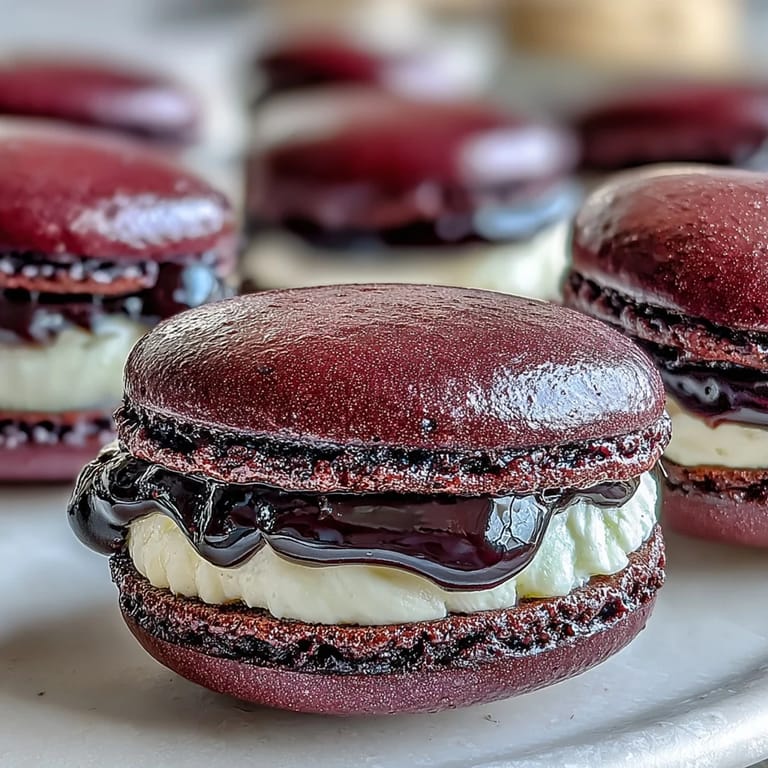
- Heat the blackcurrant purée until steam rises, pour it over your chopped white chocolate, wait one full minute without stirring, then stir gently until it's completely smooth and glossy. Once it's melted, stir in the softened butter and lemon juice, which transforms it from good to transcendent.
- Chill until it's pipeable but not rock hard:
- You want the ganache to thicken enough to hold its shape when piped but still spread slightly when sandwiched, which usually takes 30 to 45 minutes in the fridge depending on your kitchen's temperature.
- Match and sandwich with care:
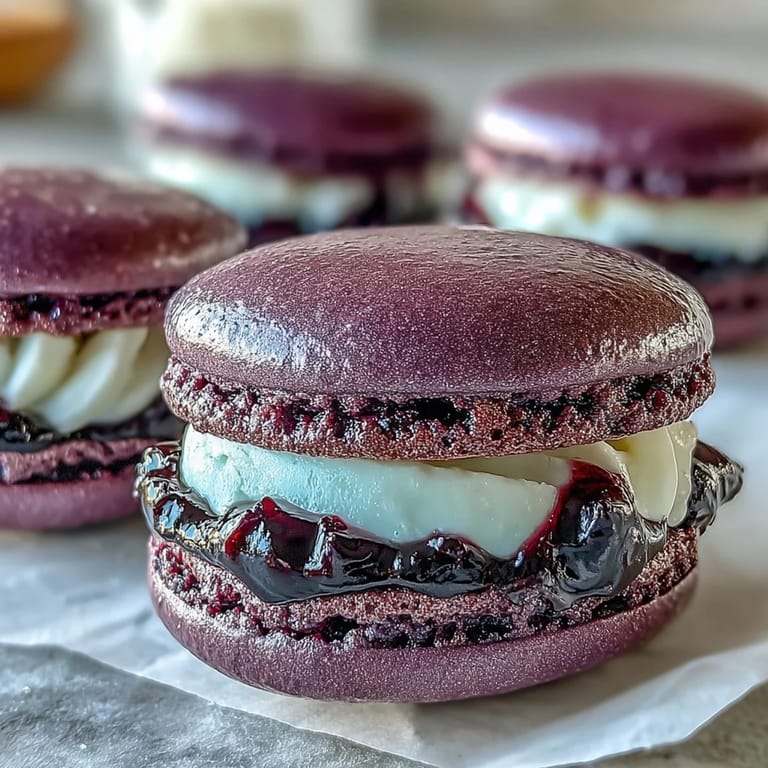
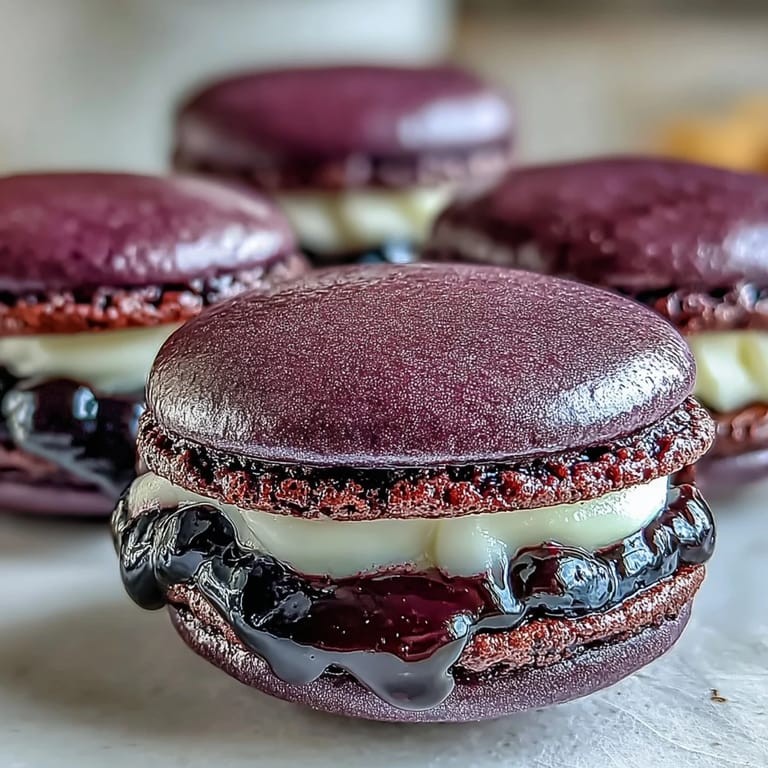
- Pair your cooled shells by size so they look intentional, pipe a small dollop of ganache on one shell, then press down gently with the matching shell, twisting slightly so it settles evenly. The filling should peek out just slightly at the edges, like a tiny jewel.
- Refrigerate for 24 hours to let flavors marry:
- This isn't negotiable, even though you want to eat them immediately, because the shells soften slightly and the ganache flavor deepens into something more complex and satisfying. Bring them to room temperature before serving so each bite tastes perfect.
 Save
Save There's a moment when you pull a perfect tray of macarons from the oven and see them intact with those little ruffled feet, and suddenly every moment of doubt and frustration feels absurd. This is the dish that taught me that precision and patience aren't boring, they're how you create something worth remembering.
The Science Behind the Shine
Macarons work because of a technique called macaronage, where you fold a dense meringue with finely ground almonds until the batter reaches exactly the right consistency. I learned this by making six batches in a row, each one teaching me something different about how meringue behaves, how almond flour absorbs moisture differently than flour, and how the smallest adjustment changes everything. The egg whites need to be old because the proteins are thinner and more stable, creating a structure that can support the heavier almond mixture without collapsing. Understanding this changed the way I approached the recipe, moving from blind faith to actual comprehension of why each step mattered.
Blackcurrant: A Flavor Worth Chasing
Blackcurrants taste like tart berries had an argument with plum jam and came up with something that tastes refined instead of simple. The flavor surprised me the first time I used it, because it's not sweet like raspberries or mild like blueberries, it's unapologetically bold and demands respect. When you pair this with the delicate sweetness of the macaron shell and creamy white chocolate, you get a balance that feels intentional and mature. The lemon juice I add isn't really about lemon flavor, it's about cutting through richness and keeping the whole thing from feeling cloying, which is the move that made people actually taste the blackcurrant instead of just sweet.
Troubleshooting Your Path to Perfect Macarons
If your shells spread like puddles, either your oven is too hot, your meringue was beaten to stiff peaks and then deflated during folding, or you folded in the almonds too gently and didn't achieve macaronage. If they crack across the top, they didn't rest long enough before baking or your oven temperature is off, so invest in an oven thermometer because ovens lie. If they're hollow inside, you didn't tap the trays hard enough to release air bubbles, or you baked them too quickly and the outside set before the inside could cook. If the filling is grainy, you overheated the ganache or used low-quality chocolate, so treat these ingredients like the stars they are.
- Use an oven thermometer because home ovens have wild temperature swings that ruin macarons.
- Tap your trays like you mean it, hard enough that the sound echoes and you feel a little ridiculous.
- Let everything cool completely, every single thing, because rushing this step leaves you with disappointed shells.
 Save
Save Macarons stopped being impossible the moment I stopped thinking of them as fancy and started thinking of them as a technical skill worth learning slowly. These black currant ones are proof that restraint and complexity can dance together on your tongue.
Recipe Help & FAQs
- → How can I ensure smooth macaron shells?
Aging egg whites for 24–48 hours helps achieve stable meringue peaks. Also, folding the dry ingredients gently until batter flows in thick ribbons prevents overmixing.
- → What is the purpose of resting macaron shells before baking?
Resting allows a thin skin to form on the shells, which helps develop the classic smooth top and prevents cracking during baking.
- → How is the blackcurrant ganache prepared?
Heat blackcurrant purée until simmering, pour over chopped white chocolate, let sit to melt, then gently stir in softened butter and lemon juice.
- → Can I substitute blackcurrant purée with another fruit?
Cassis purée makes a suitable alternative, maintaining a similar tart berry flavor that complements the almond shells.
- → What allergen considerations should be noted?
This dish contains eggs, almonds, dairy from butter and white chocolate, and may have soy lecithin. Always verify ingredient labels if allergies are a concern.
- → How should assembled macarons be stored?
Store in an airtight container in the refrigerator for at least 24 hours to allow flavors to mature, then bring to room temperature before serving.