 Save
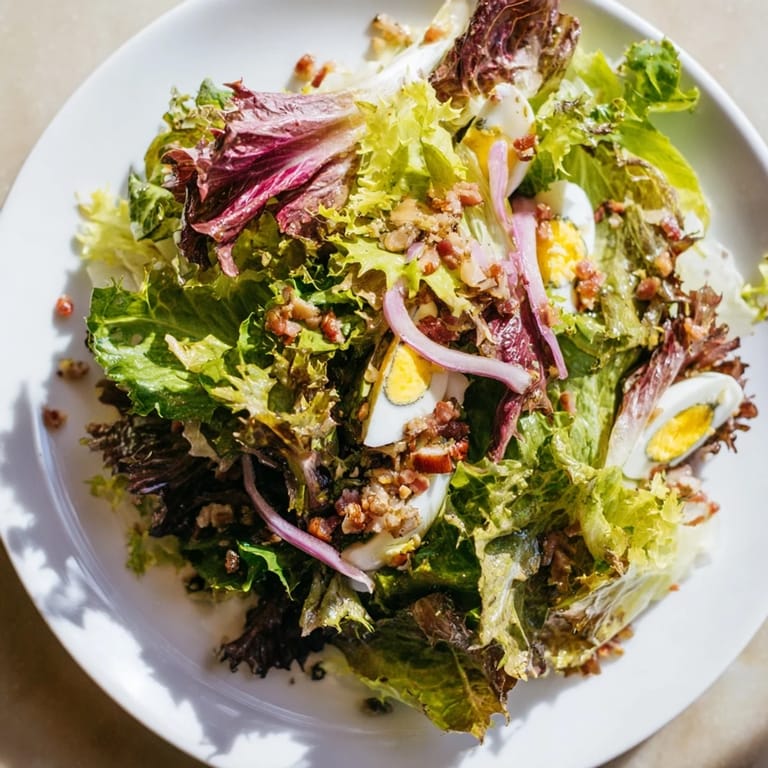
Save There's something about the smell of bacon hitting a cold pan that makes everything else in the kitchen fade away. Years ago, my neighbor mentioned she'd been making a bitter greens salad with warm bacon dressing, and I remember thinking it sounded too simple to be interesting. But then I tasted it, and the contrast between the crispy, salty bacon and those peppery, slightly sharp greens made complete sense. Now it's become one of those dishes I make when I want to impress people without fussing, or when I'm craving something that feels both comforting and alive on the plate.
I made this for a dinner party once where someone arrived already stressed about work, and by the time we got to the salad course, the warmth of the dressing and the way the bacon flavor filled the room seemed to shift something. People lingered over their bowls, asking questions about where the greens came from and whether they could make it at home. That's when I realized this salad does more than fill you up; it creates a moment where people slow down.
Ingredients
- Mixed bitter greens (4 cups): Escarole, frisée, dandelion, and radicchio each bring their own edge—mix them up based on what looks good at the market, and tear them into pieces that won't overpower your fork.
- Red onion (1 small): Slice it thin so the warm dressing can soften its rawness without losing its snap.
- Thick-cut bacon (6 slices): Don't skimp here; thicker bacon gives you more rendered fat and better texture, and it's worth seeking out.
- Red wine vinegar (2 tablespoons): This is your backbone; it cuts through the richness and wakes up the greens.
- Dijon mustard (1 tablespoon): It acts as an emulsifier and adds a subtle depth that you'll taste but not quite name.
- Honey (1 teaspoon): Just enough sweetness to balance the vinegar and make the dressing feel complete.
- Black pepper & salt: Freshly ground pepper matters here; pre-ground loses its bite.
- Extra-virgin olive oil (2 tablespoons): Add it slowly to create that silky emulsified texture that clings to every leaf.
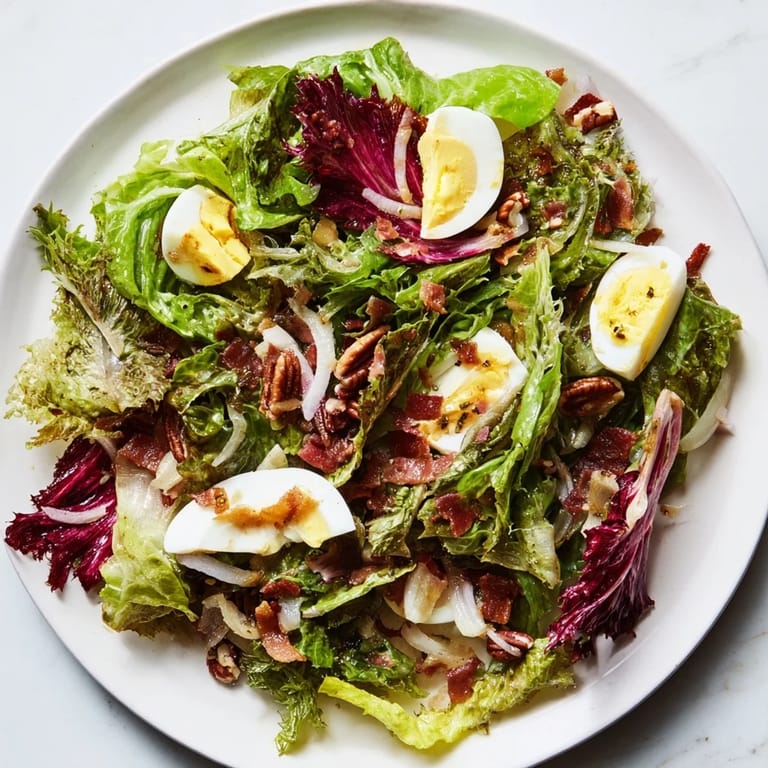
- Hard-boiled eggs & toasted nuts (optional): These turn a side dish into something you could eat as a main.
Tired of Takeout? 🥡
Get 10 meals you can make faster than delivery arrives. Seriously.
One email. No spam. Unsubscribe anytime.
Instructions
- Prep your greens:
- Rinse and dry them thoroughly—any water clinging to the leaves will dilute your dressing, so pat them really dry. Tear them into bite-size pieces and toss them in a large bowl with the sliced red onion.
- Render the bacon:
- Dice it and cook it over medium heat until it's deeply crisp and brown at the edges, which takes about 7 to 9 minutes. The sound changes when it's done; listen for that quiet sizzle. Scoop the bacon onto a paper towel and leave all that gorgeous fat in the pan.
- Build your dressing:
- Turn the heat down to low and add your vinegar, mustard, honey, pepper, and salt straight to the bacon fat. Whisk it together, scraping up any browned bits stuck to the bottom of the pan—that's where all the flavor lives. It should smell sharp and alive.
- Emulsify with oil:
- Slowly pour in the olive oil while whisking constantly until the dressing comes together into something silky and unified. This takes patience; rushing it can break the emulsion and you'll end up with separated oil.
- Dress the greens:
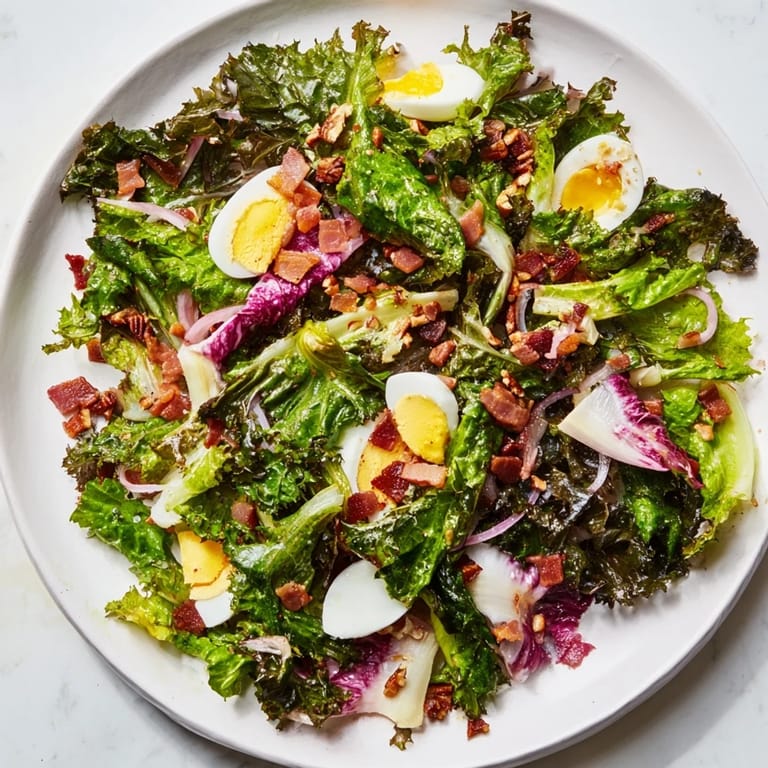
- Pour that warm dressing directly over the greens and onions while everything is hot—the heat is what makes the magic happen. Toss gently but thoroughly so the greens are lightly wilted and every piece gets coated. Add the crispy bacon back in and toss once more.
- Plate and serve:
- Arrange the salad on plates while it's still warm, and top with hard-boiled eggs and toasted nuts if you're using them. Serve immediately so you catch that perfect moment when warm meets fresh.
 Save
Save I've made this salad in winter when the house feels dark and heavy, and there's something restorative about the combination of bacon warmth and sharp greens that feels almost medicinal. It reminds me that good food doesn't need to be complicated to matter.
Variations That Work
The beauty of this salad is how forgiving it is. I've swapped in maple syrup when I wanted something earthier, and the dressing took on a completely different character. Sliced pears or apples add a subtle sweetness that plays nicely against the bitterness, especially in fall. If you're cooking for someone who doesn't eat bacon, sautéed mushrooms with a little extra olive oil create a version that's just as rich and satisfying; the key is building that warm element that contrasts with the cool greens.
Why Bitter Greens Matter
Most people grow up avoiding bitter flavors, trained by sugary foods and mild lettuces to think that's what salad should taste like. But once you realize bitter greens are where the real flavor lives, everything changes. Escarole is hearty and slightly nutty, frisée has a sharp edge that keeps you awake, dandelion brings a peppery kick, and radicchio adds sweetness beneath its bite. When you warm them slightly with bacon fat and vinegar, none of that bitterness disappears—it just becomes something you understand and want more of.
Building Your Own Warm Salads
Once you understand how this salad works, you'll start seeing warm dressings everywhere. The principle is simple: render some kind of fat, add acid and seasoning, emulsify gently, and pour it hot over something green and raw. I've done it with crispy chicken skin, toasted nuts, roasted mushrooms, and even just shallots and garlic. The texture contrast between warm and cool, the way the heat softens without cooking, the way acid wakes everything up—these are tools you can use in a hundred different directions.
- Always taste your dressing before it hits the greens so you can adjust the seasoning and acid level to your liking.
- Keep your salad bowl large enough that you can toss properly without sending greens flying across the counter.
- If you're cooking ahead, you can prep the greens and make the dressing separately, then combine them just before serving for the best results.
 Save
Save This salad has taught me that sometimes the simplest combinations are the ones people remember. Warm, crispy, sharp, and fresh all on one plate—it's a conversation waiting to happen.
Recipe Help & FAQs
- → What types of greens work best in this salad?
Bitter greens such as escarole, frisée, dandelion, radicchio, and chicory add depth and balance well with the warm dressing.
- → How is the warm bacon dressing prepared?
Bacon is cooked until crisp and the rendered fat is used to whisk together red wine vinegar, Dijon mustard, honey, and seasonings, then emulsified with olive oil and warmed before tossing with greens.
- → Can the honey be substituted?
Maple syrup can be used as a substitute for honey to introduce a different sweetness profile.
- → Is there a vegetarian alternative for the bacon dressing?
Omit the bacon and rendered fat, and sauté mushrooms instead, using extra olive oil to create a similar warm dressing effect.
- → What optional garnishes enhance this salad?
Hard-boiled eggs and toasted walnuts or pecans add richness and texture to the salad, complementing the bitter greens and warm dressing.